How to Care Less About Other People's Opinions
TL;DR
Choose carefully what deserves your limited time, energy, and attention, then accept the discomfort that comes with pursuing it. Lasting happiness does not come from constant positivity, perfection, or a problem-free life. It emerges as a side effect of accepting reality, taking responsibility, solving meaningful problems, and finding value in ordinary moments.
Transcript
Have you ever felt tired of trying too hard to be happy, successful, or perfect, but no matter what you do, it never feels enough? Mark Manson begins his book with one bold message. Stop trying so hard to be positive all the time. He says, "Life's not about avoiding pain, but learning how to handle it." And that's what this chapter, Don't Try, is a... Read More
Key Insights
- Constantly chasing positive feelings can create a negative experience because it continually emphasizes what seems to be missing. Accepting sadness, anxiety, failure, and other difficult experiences interrupts the cycle of feeling distressed about already being distressed.
- The feedback loop from hell is a pattern in which people judge themselves for their original emotions. Feeling bad about sadness or becoming anxious about anxiety adds a second problem, while honest acceptance can reduce the experience's psychological power.
- Happiness is a continuing process rather than a permanent state without pain or worry. Problems do not disappear after success, wealth, fame, love, or career achievement. They change form, making the choice of worthwhile problems more important than the pursuit of comfort.
- Meaningful struggle is necessary for growth because solving problems develops strength, wisdom, pride, and purpose. Avoiding challenges, denying responsibility, or blaming others keeps people stuck, while directly facing difficulty creates opportunities to learn and progress.
- The backwards law describes how aggressively pursuing happiness, love, or success can produce unhappiness, desperation, or fear of failure. Peace becomes more accessible when people accept their current reality, take responsibility, and direct effort toward meaningful challenges instead of desired feelings.
- Attention is limited, so caring less requires deliberate priorities rather than indifference to everything. Opinions, social media approval, and comparisons may deserve less energy, while health, relationships, personal growth, peace, and meaningful work may deserve more.
- Self-acceptance is the willingness to recognize weaknesses, fears, flaws, and ordinary limitations without pretending to be perfect. It reduces pressure to impress everyone and allows effort to focus on personally important actions rather than maintaining a false image.
- Exceptionalism can create insecurity and entitlement by teaching people that ordinary life represents failure. Accepting that most people are average at most things makes room for joy in common experiences such as reading, spending time with family, and doing work with care.
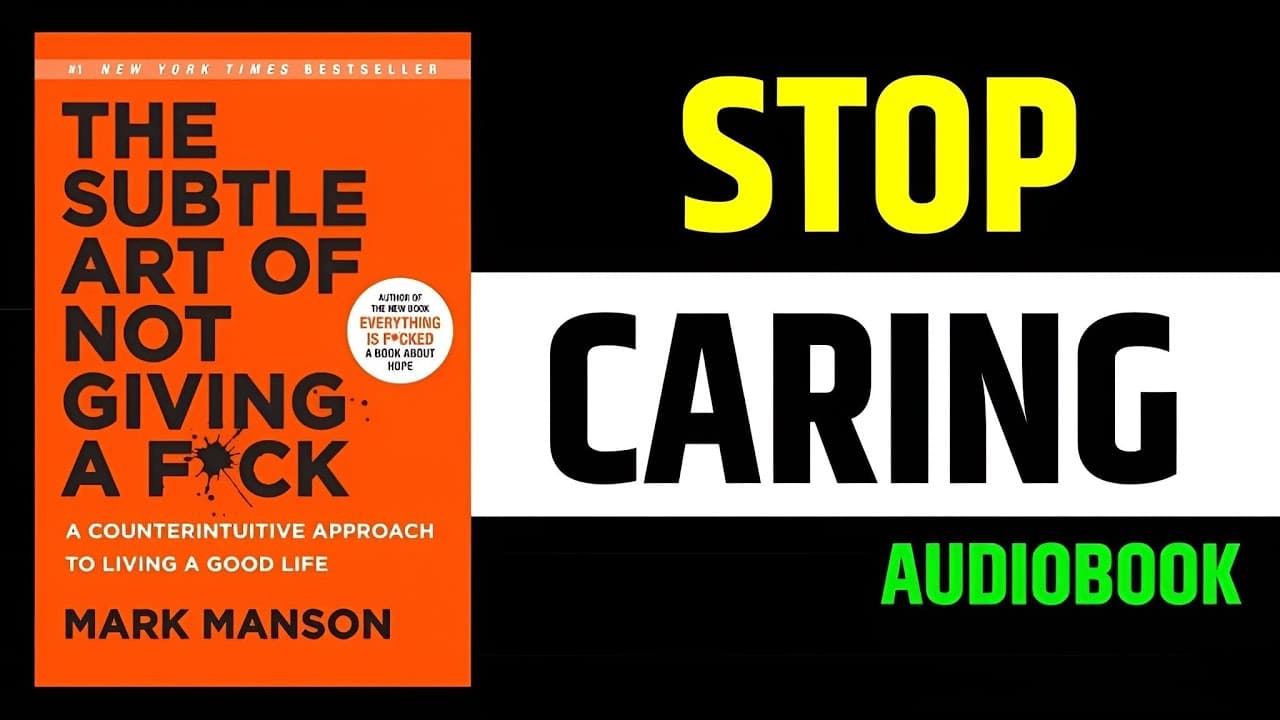
- Related book: The Subtle Art of Not Giving a F*ck
- Export your Kindle highlights to Glasp: How to Download Highlights and Notes from Kindle
- More videos about this book:
Install to Summarize YouTube Videos and Get Transcripts
Explore YouTube Video Summarizer or Get YouTube Transcript Extractor
Questions & Answers
Q: How can I stop caring what other people think?
Stop treating every opinion, comparison, or social media reaction as equally important. Your time, energy, and attention are limited, so decide which values deserve them. Focus on health, relationships, personal growth, peace, and meaningful work. Accept that criticism, rejection, and discomfort may accompany those priorities. Caring less means choosing deliberately, not becoming indifferent to everything.
Q: Why can trying too hard to be happy cause unhappiness?
Trying to force happiness can continually remind you that your present experience feels inadequate. The transcript calls this a feedback loop: sadness becomes shame about sadness, and anxiety becomes anxiety about being anxious. Accepting a negative experience removes that added struggle. Happiness then becomes a side effect of responsibility, meaningful problem-solving, and honest engagement with reality rather than a feeling pursued directly.
Q: What is the feedback loop from hell?
The feedback loop from hell occurs when a difficult emotion triggers judgment about having that emotion. A person feels sad, then feels bad for being sad, or becomes anxious and then worries about that anxiety. This second reaction compounds the original discomfort. Recognizing pain as a normal part of life can interrupt the loop and reduce its power.
Q: How does solving problems contribute to happiness?
Solving meaningful problems creates growth, learning, strength, pride, and purpose. A problem-free life is presented as unrealistic because every achievement introduces different challenges. Avoiding, denying, or blaming others for problems keeps a person stuck. Facing difficulties and working through them makes happiness possible as an outcome of progress, even though new challenges will continue to appear.
Q: What kinds of problems should I choose in life?
Choose problems connected to outcomes and values that genuinely matter to you. Creative work may involve criticism and burnout, wealth may bring stress and responsibility, and love may require conflict, compromise, and vulnerability. The relevant question is not which goal removes difficulty, but which difficulties you are willing to handle because their associated relationships, work, or growth feel meaningful.
Q: What does the backwards law mean for happiness and success?
The backwards law means that pursuing a desired feeling too aggressively can produce its opposite. Chasing happiness can highlight unhappiness, seeking love desperately can make someone appear more desperate, and pursuing success obsessively can strengthen fear of failure. A more constructive approach is to accept present reality, take responsibility, and solve meaningful problems instead of trying to force a particular emotional state.
Q: Why is accepting being average helpful?
Accepting that most people are average at most things reduces the pressure to prove exceptional worth through fame, perfection, appearance, intelligence, or achievement. The belief that ordinary life equals failure encourages insecurity and constant comparison. Peace becomes more available when people value common experiences, including reading, family time, and careful work, rather than demanding a glamorous life as proof of significance.
Q: How does social media comparison affect happiness?
Social media encourages comparison by presenting selected highlights such as travel, possessions, attractive moments, and constant smiles while leaving out boredom, pain, and struggle. Viewers may mistakenly conclude that everyone else lives an extraordinary life. That impression can make an ordinary life feel deficient. Remembering that posted images are incomplete helps weaken comparison and supports appreciation of everyday experiences.
Summary & Key Takeaways
-
Trying to remain positive, perfect, or happy can intensify feelings of inadequacy. The summary presents acceptance as the alternative: acknowledge sadness, anxiety, failure, and personal flaws without creating a second layer of shame. Caring less means conserving limited attention for health, relationships, growth, peace, and other personally meaningful priorities.
-
A satisfying life is not free from problems. Wealth, fame, love, and creative ambitions each replace one set of difficulties with another. Happiness comes from addressing meaningful challenges rather than escaping discomfort. Growth develops through struggle, responsibility, repeated problem-solving, and the willingness to experience pain, failure, conflict, pressure, or uncertainty.
-
The belief that everyone must be extraordinary encourages comparison, entitlement, insecurity, and rejection of criticism. Social media strengthens this pressure by displaying polished highlights while hiding ordinary difficulties. Accepting that most people are average at most things can bring peace and redirect attention toward everyday sources of meaning, including family, reading, and purposeful work.
Read in Other Languages (beta)
Share This Summary 📚
Summarize YouTube Videos and Get Video Transcripts with 1-Click
Try YouTube Summary with ChatGPT & Claude or YouTube Transcript Generator