How to Focus on What Actually Matters in Life
TL;DR
Happiness does not require endlessly acquiring more or waiting until every goal is achieved. Greater satisfaction comes from recognizing diminishing returns, choosing challenges you are willing to face, and directing limited time toward meaningful priorities. By caring less about distractions and external expectations, you can care more about relationships, health, worthwhile work, and the experiences you genuinely value.
Transcript
hey guys I'm back with another book review where I summarized not the main points but important takeaways when it comes to personal development and building businesses this week we're exploring the book the subtle art of not giving up and in case you're wondering no I'm not going to continue this century so if you're 10 years old or you're at a pub... Read More
Key Insights
- More is not always better because the enjoyment gained from each additional amount eventually declines. Like eating slices of pizza after becoming full, pursuing more possessions, money, travel, or experiences can reach a point where stopping creates greater satisfaction than continuing.
- Every desirable outcome carries a cost in time, attention, responsibility, or sacrifice. A nicer car, larger house, successful company, or extensive travel may be appealing, but continued pursuit can displace relationships, community, health, and activities that provide greater meaning.
- Depth can become more rewarding than variety after sufficient exploration. Dating many people or visiting many places may initially be valuable, but endless searching can prevent the lasting connection, familiarity, and community that develop through sustained commitment to a person or place.
- A suitable career is partly defined by the problems a person is willing to tolerate. Chief executives face constant responsibility, complaint teams face angry customers, and drivers may face unpleasant passengers, so no occupation provides benefits without recurring difficulties.
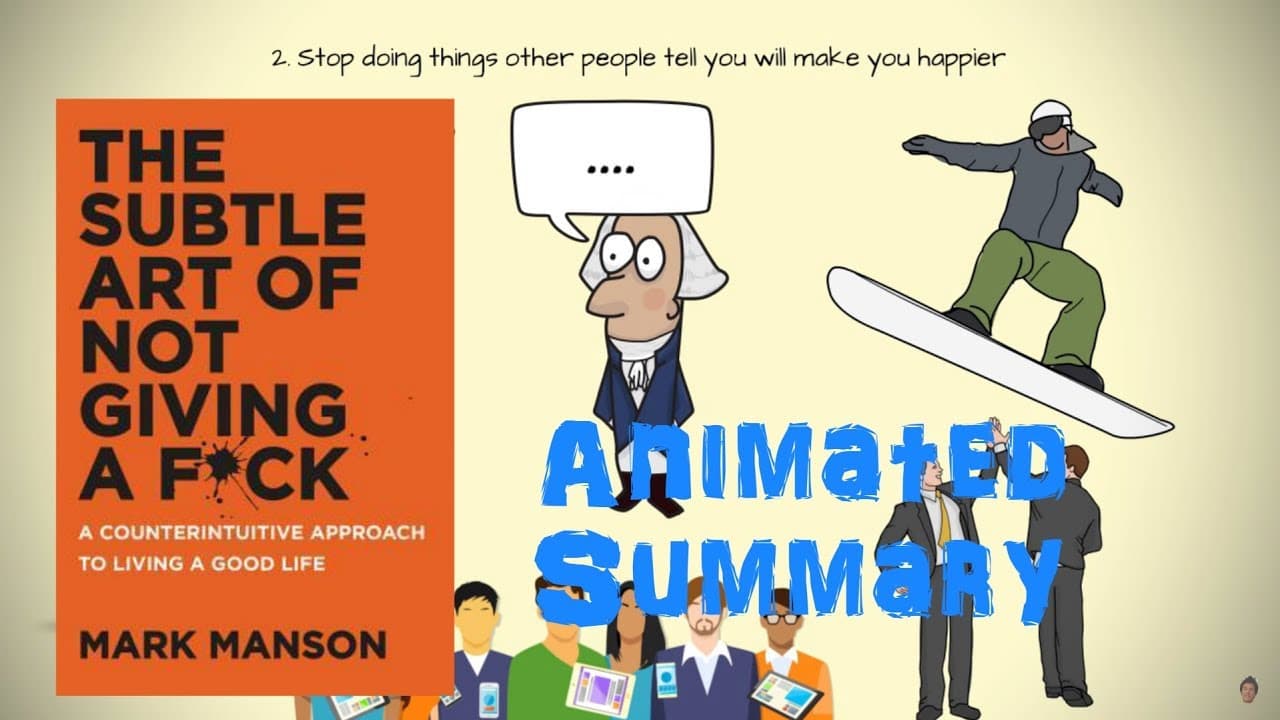
- Happiness is better pursued through personally enjoyable activities than through expectations imposed by other people. The central question is not what someone is supposed to want, but which activities, responsibilities, and unavoidable challenges fit the life that person genuinely values.
- Selective concern improves attention to important goals. Caring less about low-priority details creates more capacity for relationships, health, useful work, and meaningful objectives, while excessive concern about minor imperfections can delay results without materially improving the outcome.
- A clear objective is a practical test for deciding whether a task deserves attention. When the immediate goal was launching a functional website, positioning a logo perfectly mattered less than completing essential work, so postponing that detail supported faster progress.
- Personal development advice is not a set of universal rules because useful ideas can contradict one another. Learning involves understanding each author's perspective, adding that knowledge to one's judgment, and evaluating future problems without forcing every situation into a single rigid answer.
- Related book: The Subtle Art of Not Giving a F*ck
- Export your Kindle highlights to Glasp: How to Download Highlights and Notes from Kindle
- More videos about this book:
Install to Summarize YouTube Videos and Get Transcripts
Explore YouTube Video Summarizer or Get YouTube Transcript Extractor
Questions & Answers
Q: How can I focus on what actually matters in life?
Start by defining the outcome you currently want, then compare each activity with that objective. If a task does not meaningfully support the goal, postpone or abandon it and redirect attention toward higher priorities. The creator used this approach when building a website, choosing functionality over perfect logo placement. This selective concern leaves more time for relationships, health, meaningful work, and other valued parts of life.
Q: Why is having more not always better for happiness?
Having more can produce diminishing returns, meaning each additional amount provides less enjoyment than the amount before it. The transcript illustrates this with pizza: the first slice is pleasurable when someone is hungry, but further slices eventually become unwanted. The same pattern can affect money, possessions, travel, and experiences when continued pursuit consumes time that could create greater happiness elsewhere.
Q: What does the law of diminishing returns mean in everyday life?
The law of diminishing returns means that increasing something eventually produces progressively less enjoyment or benefit. Eating more pizza after becoming full is the clearest example given. In everyday life, endlessly seeking money, travel, possessions, or new relationships can work similarly. Beyond a certain point, investing more time in the same pursuit may be less rewarding than developing other meaningful areas.
Q: How should I choose a career based on its difficulties?
Evaluate the worst recurring part of each career and decide whether you are willing to live with it. A chief executive may carry extensive responsibility and remain reachable constantly, while a customer complaint worker regularly faces dissatisfied people. Since every job contains unpleasant duties, the practical goal is not finding work without problems, but choosing work whose problems you can accept.
Q: Why can commitment be more satisfying than endless exploration?
Commitment allows depth to develop after variety stops providing as much additional enjoyment. Constantly searching for the perfect spouse can prevent the connection that grows over time within one relationship. Trying to visit every city can weaken everyday community and a sense of home. Exploration has value initially, but sustained attention to fewer experiences can eventually provide greater meaning and satisfaction.
Q: How does caring less about minor details improve productivity?
Caring less about minor details protects time and attention for work that directly advances the main objective. While creating a website, the creator spent more than an hour trying to position a logo and could have continued for several more hours. Recognizing that a functional site mattered more allowed him to switch tasks, make useful progress, and later sell the first copy of his book.
Q: Can I be happy before achieving all my goals?
Happiness does not need to be postponed until every objective is complete. Achieving one goal often leads to creating another, so waiting for a final state without further ambitions can become an endless delay. The transcript recommends relaxing excessive expectations, enjoying the present, and recognizing that satisfaction can exist now while a person continues pursuing worthwhile accomplishments and handling chosen challenges.
Q: How should I handle contradictory personal development advice?
Treat conflicting advice as perspective rather than as absolute rules. The purpose of learning is not to discover one fixed answer for every life problem. Instead, understand where each author is coming from, incorporate useful ideas into your broader judgment, and examine future situations without bias. Decisions should be made case by case according to the specific problem and relevant circumstances.
Summary & Key Takeaways
-
More is beneficial only until diminishing returns make additional pursuit less rewarding than other uses of time and energy. Money, travel, possessions, and new experiences can provide pleasure, but constant expansion may sacrifice deeper relationships, community, meaningful activities, and the fuller enjoyment that comes from committing to fewer priorities.
-
Every career and lifestyle includes recurring difficulties, so fulfillment does not come from eliminating problems. A practical choice considers the unpleasant responsibilities attached to a path and asks whether they are tolerable. Instead of following other people's expectations, people should pursue activities they enjoy and select challenges they are willing to handle.
-
Clear goals make it easier to distinguish necessary work from distracting details. The creator applied this principle by postponing a website logo adjustment and prioritizing a functional site, which helped move the project toward producing its first book sale. Personal development advice should also be evaluated flexibly and applied case by case.
Read in Other Languages (beta)
Share This Summary 📚
Summarize YouTube Videos and Get Video Transcripts with 1-Click
Try YouTube Summary with ChatGPT & Claude or YouTube Transcript Generator