How to Choose What Deserves Your Attention
TL;DR
Choose carefully what deserves your limited attention, accept ordinary setbacks as opportunities to grow, and take responsibility for how you respond to circumstances. A meaningful life does not require constant happiness or exceptional status. It requires values worth struggling for, clear boundaries, purposeful commitment, and the willingness to act despite uncertainty, failure, discomfort, and rejection.
Transcript
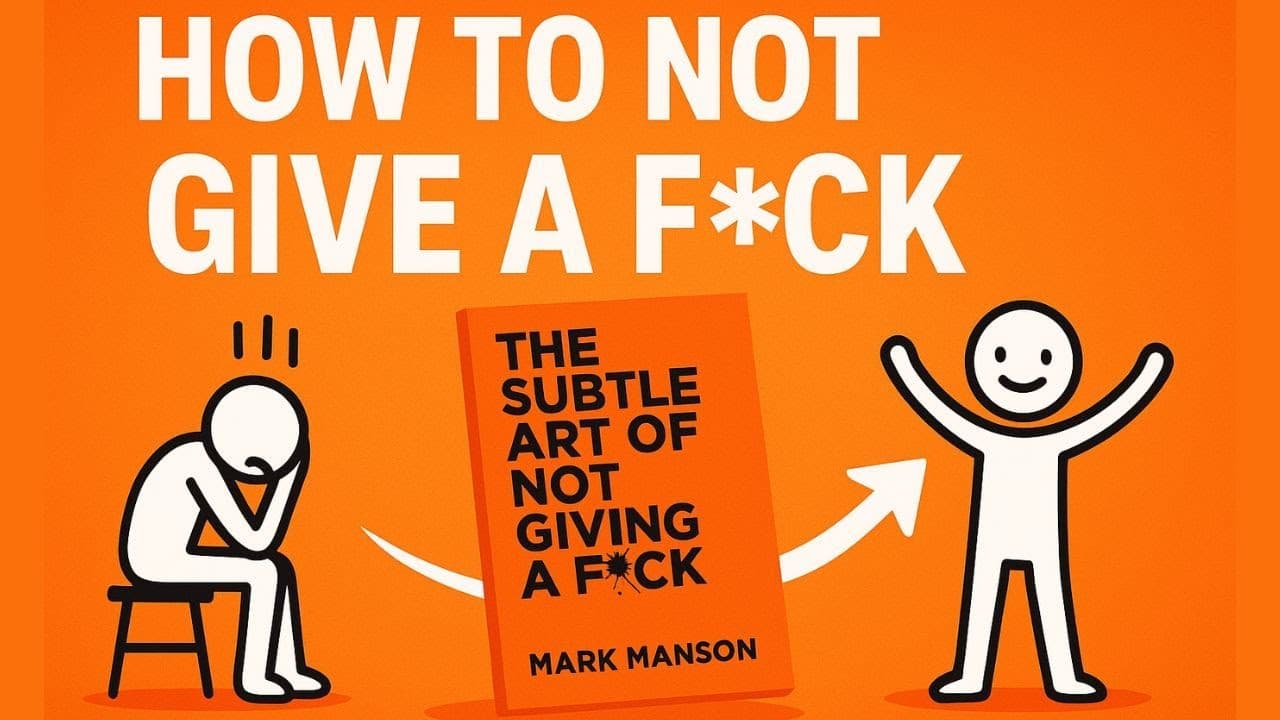
Welcome to our cartoon book summary of the subtle art of Mark Manson. Today we're looking at a guide that changes everything you thought you knew. Are you tired of hearing that you always have to be happy and successful? This book says something different. It tells us that life isn't about avoiding problems. It's about picking the problems that are... Read More
Key Insights
- Attention is a limited resource that must be allocated deliberately. Treating every demand, opinion, fear, or distraction as equally important drains energy, while choosing a small number of meaningful concerns creates greater focus and leaves more capacity for health, relationships, valued work, and personal growth.
- Selective caring is not indifference or emotional distance. It means deciding firmly which problems and commitments deserve concern, then declining to spend equal energy on minor criticism, online comments, entertainment disappointments, or other issues that do not meaningfully affect the life a person wants to build.
- Negative experiences are unavoidable parts of life that can support growth. Ordinary failures, disappointments, traffic delays, and difficult interactions may teach persistence, patience, flexibility, or understanding when they are faced honestly instead of automatically avoided, suppressed, or covered with distracting activities.
- Being ordinary is compatible with a meaningful and satisfying life. Releasing the belief that everyone must be exceptional reduces impossible expectations, makes small successes easier to appreciate, and shifts attention from appearing superior toward effort, resilience, kindness, authenticity, and steady improvement in everyday life.
- Suffering becomes meaningful when it is connected to something worth valuing. Difficulty endured for family, personal values, a cherished project, fitness, or another genuine commitment can produce growth, while pain caused by pursuing unimportant or misaligned goals may lead only to additional pain.
- Responsibility is the power to choose a response, even when an event was not caused by the person affected. Distinguishing responsibility from fault prevents unfair self-blame while replacing helplessness and excuses with the practical question of what can be done under present circumstances.
- Failure is presented as a path forward rather than proof that effort should stop. A setback can reveal another approach, test how strongly a goal matters, and develop persistence, making failure part of the process of learning and improvement rather than an experience that must always be avoided.
- Values and boundaries determine which struggles, commitments, and relationships receive attention. Saying no, rejecting entitlement, questioning unhelpful measures of success, and committing to personally meaningful principles can reduce scattered concern and support relationships in which expectations and limits are clearer.
- Related book: The Subtle Art of Not Giving a F*ck
- Export your Kindle highlights to Glasp: How to Download Highlights and Notes from Kindle
- More videos about this book:
Install to Summarize YouTube Videos and Get Transcripts
Explore YouTube Video Summarizer or Get YouTube Transcript Extractor
Questions & Answers
Q: How can I decide what deserves my attention?
Treat attention, concern, and emotional energy as limited resources. Identify the areas that contribute most directly to your values, growth, health, relationships, and meaningful work. Give fewer resources to minor criticism, social media, entertainment disappointments, and demands that do not matter deeply. The goal is not to stop caring, but to choose deliberately instead of reacting to everything that asks for concern.
Q: What does not caring too much actually mean?
Not caring too much means becoming selective about what receives your worry, time, and focus. It does not mean becoming cold, distant, or unconcerned about other people. The approach asks you to protect limited energy for priorities that matter, remain firm about those priorities, and accept that some opinions, inconveniences, and distractions are not worth the stress they could consume.
Q: Why should people accept negative experiences?
Negative experiences are part of life and can teach lessons that comfort and success cannot provide in the same way. Failure may develop persistence or reveal a better approach, while daily frustrations may strengthen patience and understanding. Acceptance does not mean enjoying pain or dismissing severe suffering. It means facing ordinary setbacks honestly and using them as opportunities to become more flexible and resilient.
Q: Why is accepting that you are ordinary helpful?
Accepting ordinary human limitations can reduce the pressure to be the best, most unique, or most successful person. It allows success to be defined through meaningful effort, growth, resilience, kindness, and simple daily satisfactions rather than only through conspicuous achievements. It can also increase empathy by showing that other people likewise experience personal problems, victories, limitations, and routine days.
Q: How can suffering contribute to a meaningful life?
Suffering can contribute to meaning when it results from pursuing something genuinely important, such as a valued project, a relationship, family, personal principles, or a demanding goal. The pain itself is not automatically good. Its significance depends on why it is being endured. Choosing worthwhile struggles turns unavoidable difficulty into an opportunity for learning, strength, achievement, and clearer understanding of personal priorities.
Q: What is the difference between fault and responsibility?
Fault concerns who caused an event, while responsibility concerns how a person chooses to respond after it happens. An unwanted event may be unfair and outside someone’s control, so it is not necessarily their fault. Even then, they can decide whether to react with anger and helplessness or address the situation calmly. This distinction preserves accountability without claiming that people cause every hardship they face.
Q: How does taking responsibility restore personal control?
Taking responsibility redirects attention from blame and excuses toward available choices. A person cannot always control circumstances, accidents, or other people’s actions, but can decide what attitude to adopt and what practical action to take next. Asking what can be done in the present situation restores agency, supports movement forward, and prevents an unwanted event from automatically determining the entire emotional response.
Q: How do boundaries and saying no improve life?
Boundaries clarify which demands, relationships, and commitments deserve time and energy. Saying no protects limited attention from being consumed by priorities that conflict with personal values or meaningful goals. The summary connects limits with freedom and healthier relationships because clear expectations help people decide what they will accept, what they will commit to, and which pressures they will decline rather than resentfully endure.
Summary & Key Takeaways
-
Attention and emotional energy are limited, so giving equal concern to every demand leads to exhaustion and constant reaction. The central philosophy is selective caring: decide which relationships, goals, values, and problems deserve your focus, then stop spending energy on minor criticism, distractions, and worries that do not support meaningful growth.
-
Negative experiences are unavoidable and can develop patience, resilience, flexibility, and self-understanding. Pain becomes meaningful when it accompanies something genuinely important, such as family, values, health, or a valued goal. The useful question is not how to eliminate every difficulty, but which difficulties are worth accepting and confronting with purpose.
-
Responsibility differs from fault because people do not control everything that happens to them, yet they can still choose their response. Owning that choice restores personal agency. The broader framework also emphasizes uncertainty, failure, action, commitment, boundaries, rejection of entitlement, reconsideration of values, and awareness of death as motivation for living.
-
The summary challenges the pressure to feel exceptional or pursue constant happiness. Accepting ordinary human limitations can reduce stress, encourage empathy, and make everyday achievements more satisfying. Success becomes less about appearing superior to others and more about working hard, recovering from setbacks, acting with kindness, and living consistently with personally meaningful values.
Read in Other Languages (beta)
Share This Summary 📚
Summarize YouTube Videos and Get Video Transcripts with 1-Click
Try YouTube Summary with ChatGPT & Claude or YouTube Transcript Generator