How to Choose Problems That Are Worth Solving
TL;DR
A good life comes from choosing meaningful problems, accepting their unavoidable struggles, and taking responsibility for your response. Define values that are realistic, socially helpful, and controllable, then stop investing attention in comparisons, instant gratification, material status, and other concerns that do not support those values.
Transcript
as a culture we humans are slowly shifting toward an easy mindset we want everything to be easy quick to solve and live in utopian life of no problems we see advertisements all day of a problem-free life that awaits us only if we buy their product social media feed fake Instagram pictures with perfect filters displays an infinite stream of happy pe... Read More
Key Insights
- A problem-free life is an illusion because worthwhile goals require struggle, and every solved problem is eventually replaced by another. Buying a house creates maintenance obligations, while earning a promotion introduces larger projects, a bigger team, and more responsibility.
- The feedback loop from hell is the cycle of feeling bad about an emotion and then condemning yourself for having it. Feeling guilty about guilt or angry about anger can deepen insecurity, reduce effective action, and contribute to numbing or destructive habits.
- The key to a good life is becoming skilled at solving problems that matter to you. Success does not come merely from selecting an attractive goal, but from accepting the ordinary, repetitive, and sometimes unpleasant work required to pursue it.
- Selective concern is a values-based discipline, not indifference toward everything. It means refusing struggles that do not matter while directing attention and effort toward difficulties connected to personally meaningful principles rather than whims, comparisons, or instant gratification.
- Core values are an internal compass that filters life's demands, temptations, and opportunities. A worthwhile value should be grounded in reality, beneficial to the individual and society, and controllable through personal choices, as illustrated by the value of healthy living.
- Pleasure and material success are unreliable primary values because they can encourage toxic habits, anxiety, jealousy, and endless comparison. Material well-being may provide a starting base, but the transcript argues that accumulating more wealth does not automatically produce continued happiness or growth.
- Emotional pain can reveal that a personal value has been violated. Jealousy about a friend's new car, for example, may expose an excessive attachment to material success, creating an opportunity to question whether that value deserves further sacrifice.
- Personal responsibility creates the power to respond even when circumstances are unfair. Blaming others keeps attention fixed on the past, while accepting responsibility for present problems directs energy toward decisions, action, improvement, and eventually the experience of better problems.
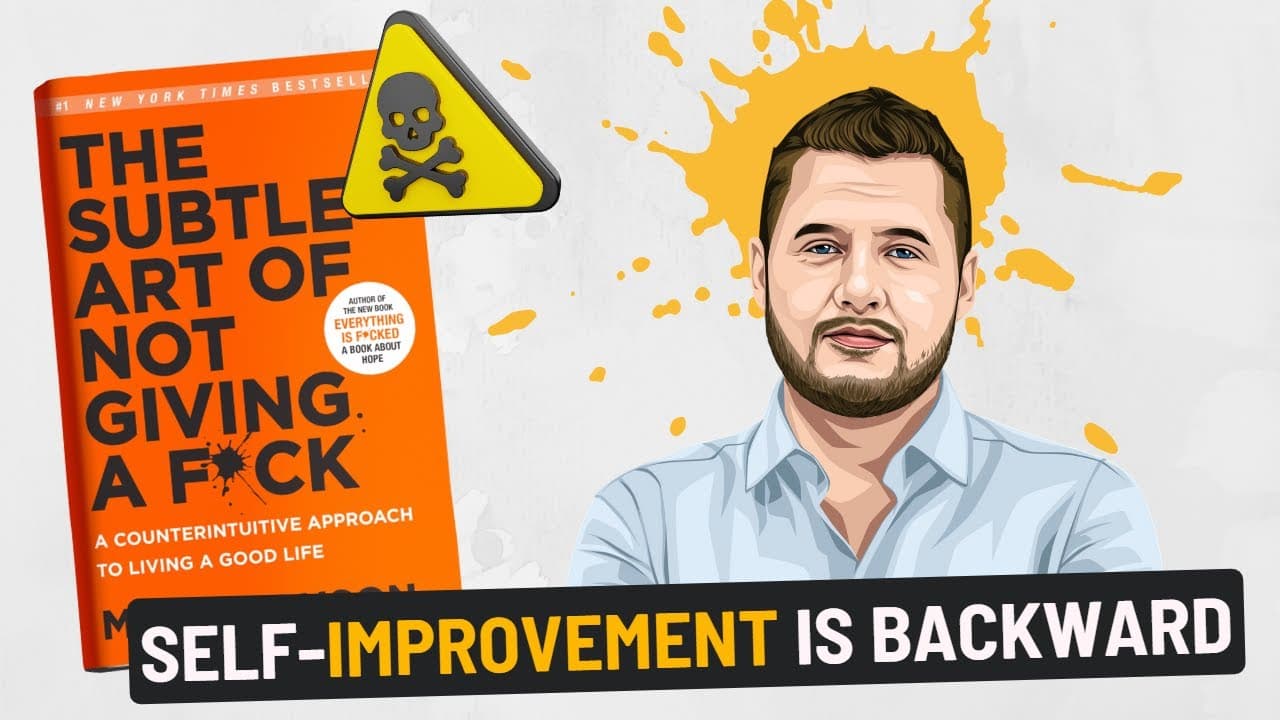
- Related book: The Subtle Art of Not Giving a F*ck
- Export your Kindle highlights to Glasp: How to Download Highlights and Notes from Kindle
- More videos about this book:
Install to Summarize YouTube Videos and Get Transcripts
Explore YouTube Video Summarizer or Get YouTube Transcript Extractor
Questions & Answers
Q: How can I choose problems that are worth solving?
Start by defining what you genuinely want and identifying the struggle that necessarily comes with it. Then test the underlying value against three standards: it should be based in reality, helpful to you and society, and controllable through your choices. Choose difficulties that support those values, and say no to struggles driven mainly by comparison, pleasure, status, or instant gratification.
Q: What is the feedback loop from hell?
The feedback loop from hell occurs when a negative feeling triggers another negative judgment about having that feeling. You may feel bad about feeling bad, become angry that you are angry, or feel guilty about your guilt. This cycle intensifies insecurity and can drain the ability to act, leaving the original problem unresolved and encouraging numbness or destructive habits.
Q: Why is a problem-free life impossible?
Problems do not completely disappear because solving one usually produces a different problem. Buying a house may resolve a housing concern but creates responsibilities involving cleaning, maintenance, painting, and taxes. A promotion may improve finances while adding a larger team, bigger projects, and more responsibility. The practical goal is therefore to exchange existing problems for better, more meaningful ones.
Q: How do core values help with difficult decisions?
Core values function as an internal compass and a filter for demands, requests, temptations, and goals. They help determine which struggles deserve time and which should be rejected. When values are clearly defined, attention can be directed toward meaningful action instead of whims or instant gratification. The most useful values are realistic, helpful, controllable, and personally chosen rather than passively inherited.
Q: What makes a personal value worthwhile?
A worthwhile value meets three standards described in the transcript. It is grounded in reality, meaning it is achievable and genuinely useful. It is helpful to society, and most importantly, it can be influenced through personal action. Healthy living meets these standards because a person can control food and physical activity, while another person's income or car remains outside that control.
Q: Why can material success become a harmful value?
Material success becomes harmful when it is treated as the main benchmark for life. Seeing a friend's new car may create jealousy even when your own car works well, leading you to work extra hours or borrow money merely to compete. The better response is to identify the value causing the pain and decide whether preserving that value is worth the required struggle.
Q: How does comparison affect happiness and self-worth?
Comparison can make genuine achievement feel inadequate when success is measured against someone else's results. Dave Mustin formed a successful band that sold more than 25 million records, yet he still felt inadequate when comparing himself with Metallica. The transcript recommends comparing yourself with who you were yesterday instead of using another person's current position as the standard for your life.
Q: Why is taking responsibility important when life is unfair?
Taking responsibility does not mean that every hardship was fairly caused or personally chosen. It means accepting responsibility for how you respond now. Complaining and blaming keep attention fixed on past causes and can reinforce a permanent victim mentality. Responsibility redirects energy toward decisions and action, creating the possibility of improving present circumstances and moving toward more meaningful problems.
Summary & Key Takeaways
-
Problems never disappear completely, because solving one often creates a new and more demanding problem. A new house requires maintenance, while a promotion brings larger projects and added responsibility. Instead of pursuing a problem-free life, focus on becoming better at solving problems and deliberately exchanging current difficulties for more meaningful ones.
-
Meaningful values provide an internal compass for deciding which goals, demands, and temptations deserve attention. Worthwhile values are grounded in reality, helpful to the individual and society, and controllable through personal action. Health, honesty, creativity, generosity, and minimalism are presented as possible examples, provided the chosen values genuinely belong to the individual.
-
Taking responsibility shifts attention from blame and unfairness toward constructive action. People do not control every event that happens to them, but focusing on their response makes improvement possible. Accepting present difficulties, deciding what matters, and acting accordingly can replace victimhood with purpose, perseverance, and the pursuit of better problems.
Read in Other Languages (beta)
Share This Summary 📚
Summarize YouTube Videos and Get Video Transcripts with 1-Click
Try YouTube Summary with ChatGPT & Claude or YouTube Transcript Generator