How to Choose What Truly Matters in Life
TL;DR
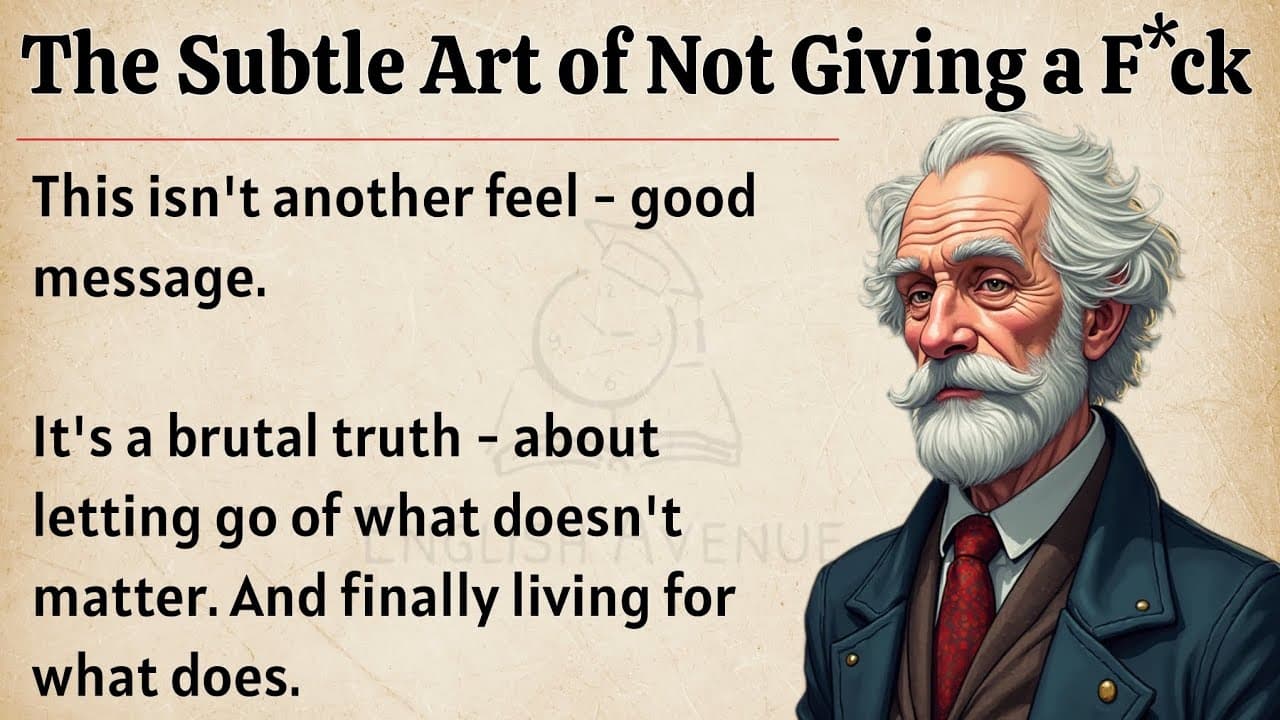
A better life comes from caring deeply about a few meaningful values instead of chasing approval, perfection, or constant happiness. Pain and problems cannot be eliminated, but they can be chosen wisely. Accepting ordinary human limitations, taking responsibility, and pursuing struggles that genuinely matter can turn discomfort into growth, purpose, and a quieter form of happiness.
Transcript
Welcome back to the channel. Today we're talking about one of the most brutally honest, eyeopening, and life-changing books ever written. A book that doesn't try to sugarcoat life, but instead dares to look at it with complete clarity. A book that doesn't tell you to smile more or just be positive, but instead it tells you the truth that you've bee... Read More
Key Insights
- Caring less is a process of selecting priorities, not rejecting everything. The central lesson is to stop distributing attention across countless expectations and instead care deeply about a small number of values, relationships, and goals that genuinely matter.
- Trying too hard to appear perfect can reveal insecurity rather than healthy ambition. Constantly seeking admiration, productivity, wealth, or an ideal image reinforces the belief that the current self is inadequate and can disconnect a person from authentic values.
- Being real requires accepting flaws, pain, and personal limitations. Freedom begins when people stop performing for an audience, abandon the effort to imitate others, and focus on honest relationships and work that reflects what they genuinely care about.
- Happiness is a byproduct of solving meaningful problems. A problem-free future does not exist, because money, relationships, success, obscurity, and fame each bring different difficulties. The practical choice is deciding which difficulties are worth experiencing.
- Meaningful pain can become fuel when it serves a valued purpose. Exercise can be worthwhile for health, writing can be worthwhile for personal expression, and raising a child can make stress meaningful when it is connected to love.
- The quality of life depends on the quality of the problems a person chooses. Chasing money or status without caring about the underlying work turns difficulty into empty suffering, while pursuing a meaningful challenge can make the same effort purposeful.
- Believing that one is uniquely special can create entitlement and weaken resilience. When rejection, competition, or failure appears, a person expecting exceptional treatment may blame the world instead of adapting, accepting weaknesses, and doing the necessary work.
- Humility creates freedom by normalizing struggle. Accepting that pain, failure, and uncertainty are shared human experiences reduces the need for attention and applause, making it easier to take responsibility and build a life around values, growth, and deliberate choices.
- Related book: The Subtle Art of Not Giving a F*ck
- Export your Kindle highlights to Glasp: How to Download Highlights and Notes from Kindle
- More videos about this book:
- More from this channel: English Avenue
Install to Summarize YouTube Videos and Get Transcripts
Explore YouTube Video Summarizer or Get YouTube Transcript Extractor
Questions & Answers
Q: How can I stop caring about what other people think?
Stop organizing your life around appearing impressive, perfect, productive, or happy to everyone. Choose a few people who genuinely know you, practice honesty with them, and direct your attention toward work and relationships that reflect your own values. Accept that flaws and discomfort are unavoidable. Caring less about public approval becomes easier when you care more deeply about meaningful priorities.
Q: What does the advice to care less actually mean?
Caring less does not mean apathy, laziness, or giving up. It means choosing carefully where to place attention and emotional energy. Instead of chasing countless goals or trying to please everyone, identify a small number of values, relationships, and problems that deserve commitment. Letting go of meaningless expectations creates room to care more deeply about what genuinely matters.
Q: Why can trying to be perfect make people unhappy?
Trying to be perfect can repeatedly communicate that the present self is not good enough. The pursuit of flawless appearance, constant productivity, wealth, admiration, or online approval may be insecurity disguised as ambition. It can also make people perform for others instead of living honestly. Accepting imperfections allows effort to serve genuine growth rather than an endless search for validation.
Q: How does solving problems create happiness?
Happiness arises as a byproduct when people work through problems they consider meaningful. Life never becomes completely free of difficulty, because every circumstance brings its own pressures and compromises. The useful question is not how to eliminate pain, but which problems feel worth solving. Purposeful effort can make discomfort rewarding because the struggle supports something personally valuable.
Q: What kind of pain is worth choosing?
Pain is worth choosing when it serves a value or outcome that genuinely matters to the person experiencing it. Physical effort may be worthwhile when health matters, writing may justify difficulty when personal expression matters, and parenting stress may be meaningful when connected to love. Pain pursued only for money, status, or approval can become empty suffering if the underlying work has no personal meaning.
Q: Why does success not eliminate problems?
Success changes problems rather than removing them. More money can introduce greater financial responsibilities and concerns about trust, relationships can involve conflict and compromise, and fame can bring constant judgment. Expecting achievement to end all pain creates disappointment. A more realistic approach is to select goals whose associated responsibilities and difficulties are acceptable because the work itself feels meaningful.
Q: Why can believing you are special prevent growth?
Believing that you deserve exceptional treatment can make ordinary rejection, competition, and failure feel like personal injustice. It may encourage comparison, blame, and the expectation of success without sufficient work. Growth begins when people recognize that struggle and weakness are normal human experiences. Humility makes it easier to adapt, accept responsibility, and improve without demanding applause or effortless rewards.
Q: How can accepting failure lead to greater freedom?
Accepting failure as a normal human experience reduces the need to protect an image of being exceptional. A person can then examine weaknesses honestly, learn from rejection, and continue working without treating every setback as proof of unfairness. This humility shifts attention away from comparison and approval, allowing choices to be guided by personal values, responsibility, and meaningful growth.
Summary & Key Takeaways
-
Caring less does not mean becoming indifferent or abandoning effort. It means refusing to spend limited attention on appearances, popularity, perfection, and goals imposed by others. Genuine freedom begins when people accept their flaws, identify their own values, and concentrate their energy on relationships and pursuits that truly deserve it.
-
Happiness is presented as a byproduct of solving meaningful problems, not a permanent destination produced by wealth, recognition, or comfort. Every possible life contains difficulties, so the important decision is which problems are worth facing. Purposeful struggle can feel rewarding when it serves health, creativity, love, or personally meaningful work.
-
The belief that someone is uniquely special can encourage entitlement, comparison, and resistance to failure. Accepting that rejection, weakness, and pain are normal human experiences creates humility and responsibility. Growth becomes possible when people stop demanding effortless success, face their limitations honestly, and choose struggles aligned with values they genuinely respect.
Read in Other Languages (beta)
Share This Summary 📚
Summarize YouTube Videos and Get Video Transcripts with 1-Click
Try YouTube Summary with ChatGPT & Claude or YouTube Transcript Generator
Explore More Summaries from English Avenue 📚



Summarize YouTube Videos and Get Video Transcripts with 1-Click
Try YouTube Summary with ChatGPT & Claude or YouTube Transcript Generator