What Is The Law Of Human Nature And How It Shapes Behavior
TL;DR
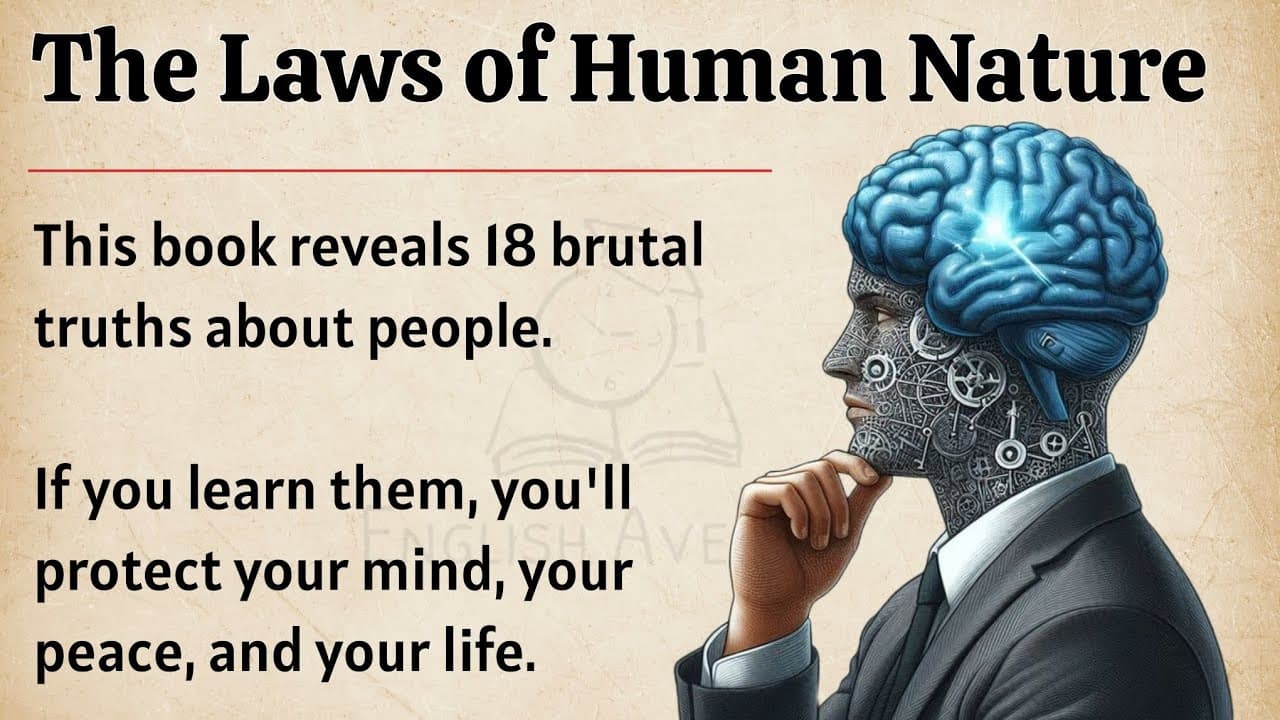
The video explains six core laws of human nature and shows how emotions drive actions rather than logic. It teaches you to recognize masks, observe patterns, and practice empathy to navigate interactions. By slowing responses and studying behavior, you can protect yourself and improve how you influence others.
Transcript
Welcome everyone. Today you are not just going to listen to another book summary. You are about to unlock a door that very few people ever dare to open. The door to how humans really behave. Not how they pretend to be. Not how they appear on Instagram, but how they truly think, feel, react, manipulate, love, hate, lie. and most importantly, how the... Read More
Key Insights
- Law one is that people are governed by emotions not logic, and recognizing this helps you pause before reacting and choose wiser responses.
- The key to law two is that narcissism is universal to some degree, so developing real empathy requires stepping into another person’s perspective rather than simply reacting.
- Law three teaches that people mask their true selves, so observing patterns and consistency is more reliable than taking words at face value.
- Law four explains compulsive behavior as repeating patterns from past traumas, and awareness is the first step to meaningful change.
- Law five shows desire often comes from the chase rather than possession, advising healthy boundaries and mindful pursuing of what is truly nourishing.
- Law six highlights short-sightedness where people focus on the present, risking future consequences and missing long-term implications.
- The laws collectively suggest practical methods: observe, pause, reflect, and choose actions that protect your energy and foster genuine connections.
- The overarching aim is to wake up to human nature and use that insight to become emotionally powerful, mentally strong, and wiser in daily life.
- More videos from this channel:
- More from this channel: English Avenue
Install to Summarize YouTube Videos and Get Transcripts
Explore YouTube Video Summarizer or Get YouTube Transcript Extractor
Questions & Answers
Q: A real search query question about the video (e.g. 'How to...', 'What is...', 'Why does...', 'When should...'). Question 1
How can I apply the law of irrationality to everyday conversations to prevent costly misunderstandings? This approach urges you to pause before reacting, question whether your response is driven by fear or ego, and seek clarity from others. By slowing down, you reduce the chance of misinterpretation and improve communication while maintaining your boundaries.
Q: Question 2
What is the main idea behind the law of narcissism and how can empathy help in complex social interactions? The law notes that everyone is slightly self-absorbed, so genuine empathy requires stepping into another person’s world. By asking what they feel and why they act a certain way, you gain insight and reduce reactive conflict while fostering stronger connections.
Q: Question 3
How does the law of role playing affect trust in relationships and how can you discern authenticity? Masks are common in all relationships, so look for consistency between words and actions and observe how people behave when tired or stressed. Trust builds when you observe patterns over time rather than taking initial kindness at face value.
Q: Question 4
What does the law of compulsive behavior suggest about personal change and how to break recurring mistakes? It argues that repeated patterns stem from past hurts. Change begins with nonjudgmental self-observation, identifying recurring triggers, and choosing new responses that align with healthier long-term outcomes rather than repeating old habits.
Q: Question 5
Why is the law of covetousness important for managing desire and relationships? It explains why people chase what they cannot have, which can distort choices. Healthy boundaries, mindful pacing, and understanding the difference between need and fantasy help you value what is truly nourishing rather than chasing emptiness.
Q: Question 6
How does the law of short-sightedness impact life decisions and how can you plan for the future? People often prioritize immediate gains, compromising long-term goals. The solution is to consider how actions today affect tomorrow, set clear long-term objectives, and align daily choices with those aims to avoid future regrets.
Q: Question 7
What practical steps can someone take to wake up to human nature and improve influence without manipulation? Start with self-awareness, pause before responding, and practice listening to understand rather than respond. Use these insights to build genuine relationships and communicate with integrity while protecting your own energy.
Q: Question 8
Can these laws help with professional relationships and leadership? Yes, by recognizing emotional drivers behind decisions, you can guide teams with empathy, set boundaries, and observe behavior for signs of burnout or misalignment. This leads to more effective collaboration and more resilient leadership.
Summary & Key Takeaways
-
The video introduces six laws of human nature and frames them as practical tools for understanding people, not just theory, with emphasis on emotions over logic and the importance of self-control.
-
It emphasizes empathy over judgment, teaching viewers to pause, observe, and interpret others' actions by looking beyond surface appearances and guarded masks to uncover true motives.
-
The final guidance centers on applying these laws to improve communication, relationships, and personal growth, while avoiding manipulation and fostering genuine understanding in everyday life.
Read in Other Languages (beta)
Share This Summary 📚
Summarize YouTube Videos and Get Video Transcripts with 1-Click
Try YouTube Summary with ChatGPT & Claude or YouTube Transcript Generator
Explore More Summaries from English Avenue 📚


Summarize YouTube Videos and Get Video Transcripts with 1-Click
Try YouTube Summary with ChatGPT & Claude or YouTube Transcript Generator