How to Educate Yourself Daily and Build Freedom
TL;DR
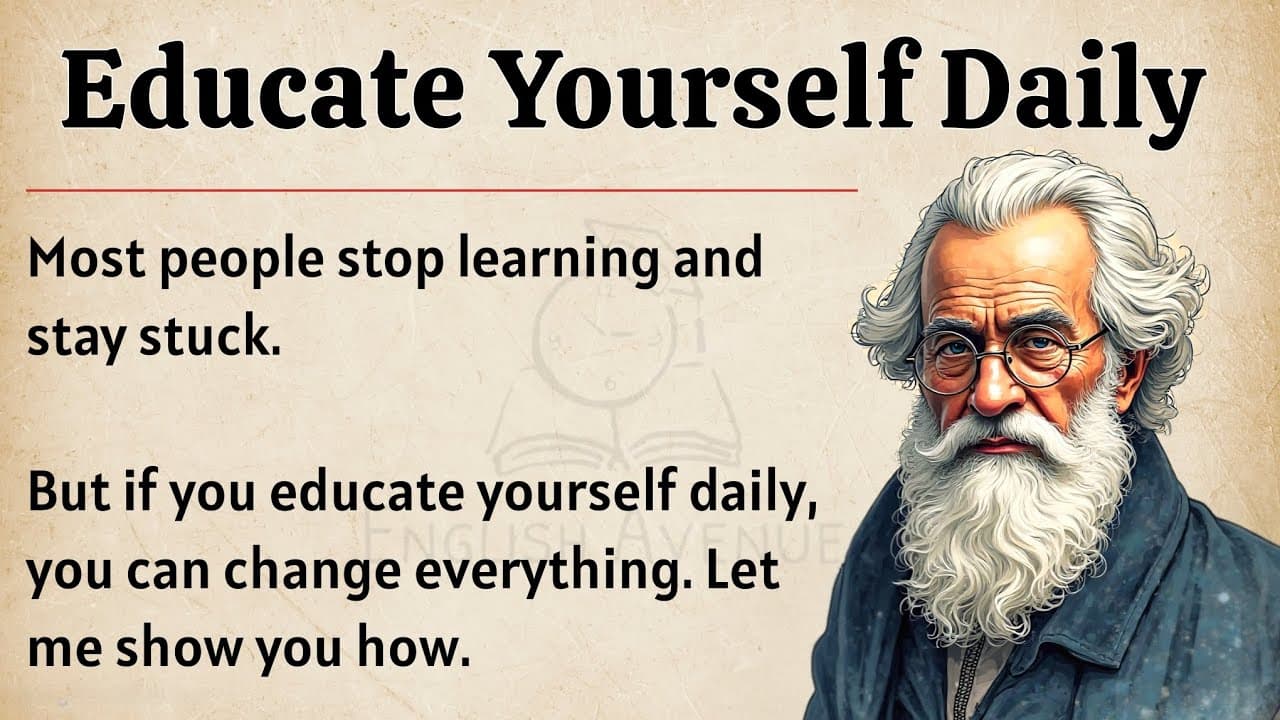
Spend one hour each day studying money, valuable skills, and clear thinking, then turn what you study into practice. Consistent self-education can improve decision-making, confidence, communication, emotional control, and financial planning. The recommended routine combines focused learning with practical application, helping you become more prepared, useful, and independent instead of relying on guesswork or blind hard work.
Transcript
Welcome to this video. Today you're about to learn the one habit that separates the weak from the powerful, the confused from the wise, and the average from the unstoppable. This is not just a motivational video. This is a wake-up call. This is a system, a warning, a strategy, a map. Every day you scroll through life distracted by noise. Every day ... Read More
Key Insights
- Daily self-education is presented as a practical survival habit because formal schooling does not cover every challenge involving money, careers, relationships, emotions, and independent thought. Continued learning helps people replace outdated knowledge and habits as technology, businesses, ideas, and problems change.
- One hour of education each day is described as more powerful than 10 hours of blind hard work. The transcript argues that focused study builds problem-solving ability, confidence, communication, better decisions, and control because knowledge prepares people to respond deliberately instead of merely reacting.
- Confidence is described as a result of preparation and knowledge rather than loud behavior. Learning how to solve problems, manage stress, take action, and maintain focus helps a person feel stronger, while improved vocabulary and clearer ideas make that person more valuable in conversations and opportunities.
- Financial education is the study of how to earn, protect, manage, and grow money. Recommended topics include jobs, skills, businesses, investments, saving, budgeting, assets, debt avoidance, side income, income versus wealth, and long-term planning, with freedom rather than billionaire status presented as the goal.
- Skills are described as a form of currency because people are paid for the value they provide, not simply for their time or personal effort. A demonstrable ability to build, design, edit, solve, or sell gives employers and clients a concrete reason to choose someone.
- A daily skill routine can combine 30 minutes of learning with 30 minutes of practice. The transcript says that following this structure for 90 days can make a learner more valuable by converting information into abilities that solve real problems and attract paid opportunities.
- Marketable skills include copywriting, video editing, sales, public speaking, digital marketing, freelancing, graphic design, web development, AI tools, leadership, and management. These subjects can be studied through YouTube, books, or mentors, then strengthened through regular practice and real application.
- Mindset is described as a mental operating system that shapes how people interpret problems. One person may ask why a difficulty happened to them, while another asks what it can teach them. Educating thought patterns helps reduce emotional reactions and supports clearer, more constructive responses.
Install to Summarize YouTube Videos and Get Transcripts
Explore YouTube Video Summarizer or Get YouTube Transcript Extractor
Questions & Answers
Q: How can I build a daily self-education habit?
Set aside one focused hour every day and divide it between learning and application. The transcript recommends spending 30 minutes studying a useful skill and another 30 minutes practicing it. Choose subjects connected to real needs, such as money, communication, emotional control, career development, or problem-solving. Read, watch, take useful ideas, and apply them consistently instead of postponing the work until tomorrow.
Q: What should I study during one hour of daily learning?
Study areas that increase independence, usefulness, and clear thinking. The transcript emphasizes financial education, practical skills, and mindset education. Financial topics include budgeting, assets, debt, income, wealth, side businesses, and investing. Skill topics include sales, writing, editing, speaking, marketing, freelancing, design, web development, AI tools, leadership, and management. Mindset study should improve focus, emotional control, stress management, and constructive problem-solving.
Q: Why is daily self-education important after school?
Daily self-education matters because school knowledge alone may not prepare someone for taxes, investing, negotiation, emotional control, career building, toxic relationships, or changing technology and businesses. The transcript argues that people who stop learning can remain trapped in old thinking and habits. Continued study provides updated knowledge, supports wiser decisions, and helps people avoid learning every important lesson through pain, debt, rejection, or regret.
Q: How does self-education improve confidence and communication?
Self-education improves confidence by replacing feelings of unpreparedness with knowledge and practical strategies. Studying problem-solving, stress management, action, and focus helps a person respond more calmly when difficulties appear. Regular learning also expands vocabulary, sharpens ideas, and improves expression. According to the transcript, people respect clarity rather than noise, so informed and precise communication can make others more willing to listen, cooperate, and offer opportunities.
Q: What does financial education include?
Financial education includes understanding how money moves and how to earn, keep, and grow it. The transcript identifies jobs, skills, businesses, investments, saving, planning, budgeting, assets, debt avoidance, side income, income versus wealth, and long-term investing as important subjects. The purpose is not limited to becoming extremely rich. It is to gain freedom from fear, dependence, panic, and the need to beg for help.
Q: Which practical skills can make someone more valuable?
The transcript recommends copywriting, video editing, sales, public speaking, digital marketing, freelancing, graphic design, web development, AI tools, leadership, and management. These skills can help someone write persuasive words, create content, find clients, build websites, communicate ideas, market services, or lead teams. Their value comes from solving concrete problems, which gives employers or clients a clear reason to select and pay the person who possesses them.
Q: Why are practical skills more persuasive than asking for an opportunity?
Practical skills provide evidence of what a person can contribute. The transcript compares an applicant who describes hard work and loyalty with another who can show what they can build, design, edit, solve, or sell. The skilled applicant offers a direct solution instead of only asking for a chance. Developing useful abilities therefore makes a person easier to evaluate, more valuable to others, and less dependent on sympathy or promises.
Q: How does mindset education change the response to problems?
Mindset education changes the mental filter used to interpret difficulties. The transcript contrasts asking, "Why is this happening to me?" with asking, "What is this teaching me?" The external problem is the same, but the second response looks for information and constructive action. Studying how to think clearly can reduce emotional reactions, challenge copied assumptions, and help a person make decisions based on lessons and strategies rather than frustration alone.
Summary & Key Takeaways
-
Daily self-education is presented as a source of freedom, confidence, clarity, and control. School can provide a degree, but continued independent study prepares people for changing technology, businesses, ideas, and problems. Without current knowledge, people may repeat old habits, make uninformed decisions, and learn difficult lessons through debt, rejection, or regret.
-
Financial education means understanding how to earn, keep, and grow money through work, skills, business, saving, budgeting, planning, and investing. The transcript recommends studying assets, income, wealth, debt avoidance, side income, and long-term investing. Its central message is that financial knowledge supports freedom from fear, dependence, panic, and begging.
-
Skill and mindset education make a person more useful and better prepared to solve problems. The suggested routine is 30 minutes of learning followed by 30 minutes of practice. Useful subjects include sales, writing, editing, speaking, marketing, freelancing, design, web development, AI tools, leadership, emotional control, focus, and clear thinking.
Read in Other Languages (beta)
Share This Summary 📚
Summarize YouTube Videos and Get Video Transcripts with 1-Click
Try YouTube Summary with ChatGPT & Claude or YouTube Transcript Generator
Explore More Summaries from English Avenue 📚
Summarize YouTube Videos and Get Video Transcripts with 1-Click
Try YouTube Summary with ChatGPT & Claude or YouTube Transcript Generator