How to Talk to Anyone: Build Confidence and Connection
TL;DR
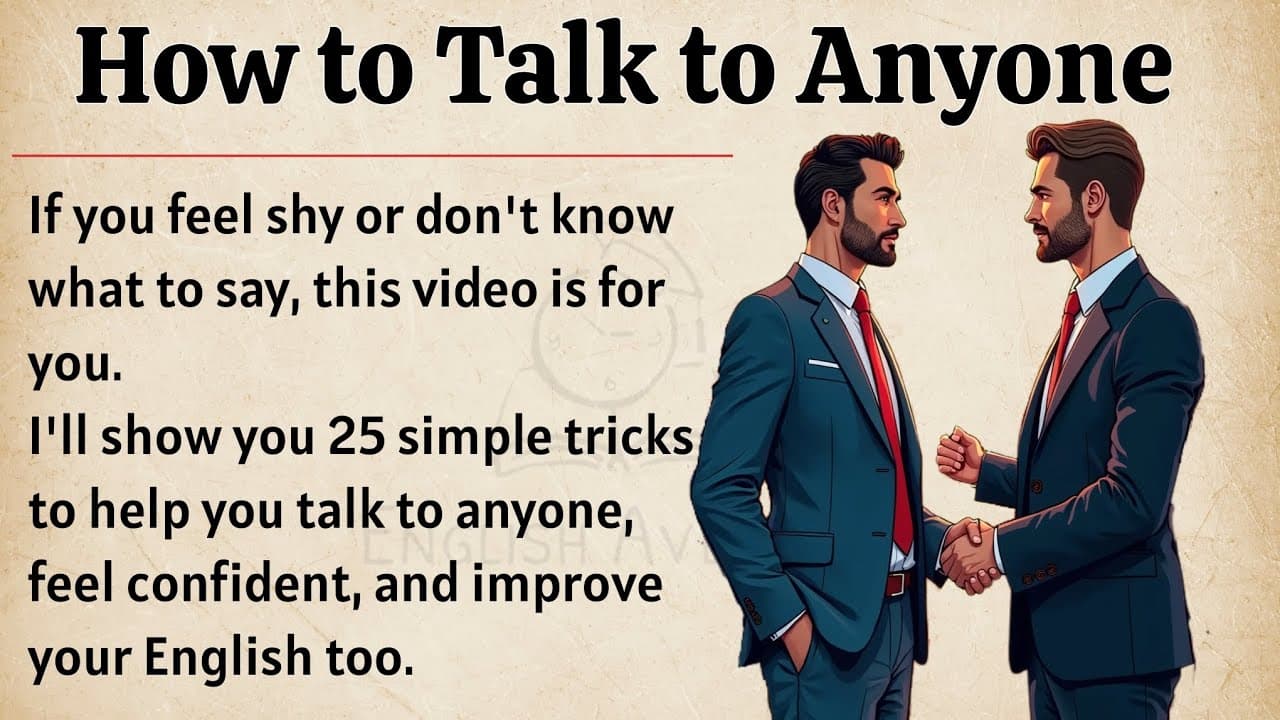
The video presents practical conversation techniques that boost presence, confidence, and influence. It covers strategies like the flooding smile, sticky eyes, full body pivot, keeping still, echoing emotion, using names, purposeful pauses, open-ended questions, and mirroring energy to create quick, meaningful connections.
Transcript
welcome to this video today you are not just going to hear a book summary you are going to begin a transformation a deep one because this is more than a list of tips this is about unlocking the most powerful skill in the world the ability to talk to anyone but before we begin let's ask something important have you ever walked into a room and felt i... Read More
Key Insights
- The flooding smile is a slow, genuine smile that activates trust by signaling happiness to see the other person.
- Sticky eyes keep the listener visually engaged, making them feel seen, respected, and important through focused eye contact.
- The big baby pivot involves turning the entire body toward the speaker, signaling full presence and value in the interaction.
- Limit the fidgeting by maintaining stillness, which communicates confidence and control to others.
- Echo their emotion by reflecting how the other person feels, not just their words, creating a safe, emotionally powerful connection.
- Using a name early in conversation reinforces recognition and respect, and should be delivered with warm tone and deliberate pauses.
- A deliberate pause before speaking creates a calm, controlled presence and makes responses land with greater impact.
- Open-ended questions invite deeper sharing and signal genuine curiosity, leading to more meaningful conversations.
- More videos from this channel:
- More from this channel: English Avenue
Install to Summarize YouTube Videos and Get Transcripts
Explore YouTube Video Summarizer or Get YouTube Transcript Extractor
Questions & Answers
Q: What is the flooding smile and how does it help in conversations?
The flooding smile is a slowly built smile after making eye contact in the moment you meet someone. It signals warmth and genuine happiness to see them, which helps the other person feel welcomed and important. This deliberate timing creates trust and sets a positive tone for the interaction.
Q: How can sticky eyes improve communication at a party or meeting?
Sticky eyes means maintaining eye contact a little longer than usual while listening. It makes the other person feel seen, respected, and central to the conversation. This focused attention reduces distractions around you and increases the perception that you are genuinely interested in what they say.
Q: What does the big baby pivot involve and why is it effective?
The big baby pivot requires turning your entire body toward the person when they approach, not just your head. This full-body orientation conveys that you value the speaker and are fully present, which helps others feel important and respected during the exchange.
Q: Why is limiting fidgeting important in social interactions?
Limiting fidgeting projects calm, confidence, and control. By standing still with relaxed hands and steady posture, you signal that you own the space, which makes others more likely to trust and engage with you rather than feel unsettled by your movements.
Q: What does it mean to echo someone's emotion, not just their words?
Echoing emotion means mirroring how the other person feels, such as acknowledging exhaustion or stress, rather than only repeating their statements. This deepens emotional connection, makes the other person feel understood, and demonstrates empathy beyond simple agreement.
Q: How should you use a person’s name during conversation for maximum impact?
Use the name early in the conversation with a warm tone and spaced pauses to let the name sit. Saying the name signals recognition and care, helping the other person feel seen as an individual and increasing the likelihood of engagement and positive rapport.
Q: What role do pauses play before speaking in conversations?
Pauses create a moment of calm that makes your subsequent words feel more deliberate and confident. This waiting period invites others to lean in, enhances perceived intelligence, and prevents impulsive remarks that could undermine your influence in the discussion.
Q: Why are open-ended questions essential for building connections?
Open-ended questions invite longer responses and surface personal stories, allowing for deeper conversation beyond yes or no answers. They demonstrate genuine curiosity and create a safe space for sharing, which can lead to stronger bonds and more meaningful interactions.
Summary & Key Takeaways
-
The video outlines a system of social techniques aimed at transforming your presence in conversations, with emphasis on nonverbal cues and listening skills to convey confidence and warmth.
-
Key methods are explained with concrete examples, showing how small adjustments in body language and phrasing can alter how others perceive and respond to you.
-
Practical tips are tailored for beginners and learners to practice while improving English listening and speaking abilities.
Read in Other Languages (beta)
Share This Summary 📚
Summarize YouTube Videos and Get Video Transcripts with 1-Click
Try YouTube Summary with ChatGPT & Claude or YouTube Transcript Generator
Explore More Summaries from English Avenue 📚



Summarize YouTube Videos and Get Video Transcripts with 1-Click
Try YouTube Summary with ChatGPT & Claude or YouTube Transcript Generator