How to build lasting confidence and English fluency?
TL;DR
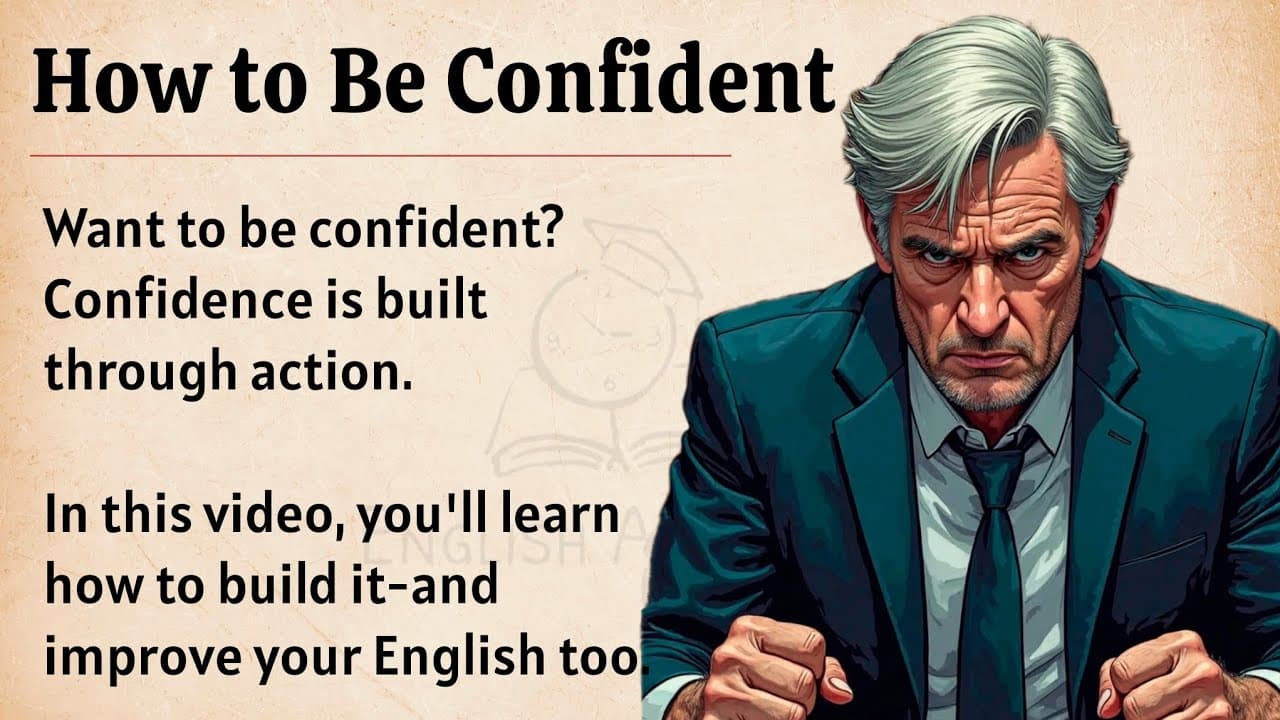
Confidence is earned through consistent action and small daily goals, not waiting for perfection. The video guides practical steps like setting 3 to 5 small goals, building skills, embracing discomfort, improving posture, and limiting social media to boost both confidence and English ability.
Transcript
welcome so you clicked this video because you want to be confident but before we begin I have a serious question for you and I want you to answer it not for me for yourself why should you be confident no really ask yourself why what difference does it make in your life if you become confident or not let me tell you something not everyone becomes co... Read More
Key Insights
- Confidence is earned through action and consistency, not waiting for motivation or luck.
- Small, achievable goals repeated daily create momentum and reinforce self respect, which is the foundation of true confidence.
- Discomfort acts as a catalyst for growth; facing fear daily expands willingness and resilience over time.
- Posture and body language are powerful signals that influence how others perceive you and how you perceive yourself, reinforcing confidence.
- Limiting social media reduces negative comparisons and frees time for skill building and personal growth.
- Perfection is a myth; starting messy and learning along the way builds competence and confidence faster.
- External changes, like how you walk into a room or speak, can shift internal beliefs about self worth and belonging.
- Consistency in practicing English and confidence-building actions creates measurable progress and habit formation.
- More videos from this channel:
- More from this channel: English Avenue
Install to Summarize YouTube Videos and Get Transcripts
Explore YouTube Video Summarizer or Get YouTube Transcript Extractor
Questions & Answers
Q: How can I start building confidence today with small steps?
Begin with 3 to 5 small daily goals that are easy to complete, such as waking up at a fixed time, reading a page of a book, writing a few lines in English, exercising briefly, and talking to one new person. Completing these small tasks repeatedly creates momentum, enhances self trust, and gradually increases confidence as you see consistent results.
Q: Why is posture important for confidence and how can I improve it?
Posture shapes how you feel and how others respond to you. Stand or sit with your back straight, chest lifted, head up, and breathe slowly. This physical stance signals confidence to your brain and to people around you. Practice it regularly, even when nervous, to make it your default and to reinforce a confident self-image.
Q: What role does social media play in confidence, and how should I use it?
Social media can undermine confidence by exposing curated highlights that invite comparison. Limit usage to about 30 minutes a day and follow accounts that teach or inspire you. Use platforms to learn new skills or practice language, rather than to silently compare yourself to others.
Q: How does perfectionism affect confidence and what should I do instead?
Perfectionism stalls action and weakens confidence because progress requires starting and learning from mistakes. Embrace imperfect beginnings, start with small steps, and iterate. By acting despite fear or uncertainty you build resilience, competence, and a sense of capability that strengthens confidence over time.
Q: What is the relationship between skill development and confidence?
Confidence grows as you gain relevant skills. Each new ability, whether speaking English, storytelling, or cooking, expands what you can do, which in turn reinforces self efficacy. Focus on one skill at a time, practice consistently, and incrementally raise the challenge level to keep progressing.
Q: How can I practice English while also boosting confidence?
Treat language practice as a daily skill-building activity. Start with one sentence daily, record yourself, listen for improvements, and gradually extend to longer conversations. Linking language growth with confidence development helps you speak more naturally and fearlessly in real situations.
Q: What should I do when I feel scared to face a crowd or speak up?
Acknowledge the fear but act anyway. Use a stepwise approach: begin with small speaking tasks, rehearse key phrases, and gradually increase exposure to larger audiences. Each completed attempt builds courage, reduces anxiety, and reinforces the belief that you can handle challenging situations.
Q: How can I apply the lesson to real life beyond talking to strangers?
Translate the daily steps into everyday actions: set goals, follow through, manage time, maintain discipline, and monitor progress. Applying discipline across routines like learning, fitness, and personal interactions creates a consistent growth pattern that sustains confidence across all areas of life.
Summary & Key Takeaways
-
Set daily goals and complete them to build momentum and self trust, which strengthens confidence over time through repeated action.
-
Develop competence by acquiring new skills, such as speaking, storytelling, cooking, or money management, which increases confidence as your capabilities grow.
-
Walk into rooms with posture and presence, practice discomfort, and limit distractions to let internal belief match outward behavior and improve overall confidence.
Read in Other Languages (beta)
Share This Summary 📚
Summarize YouTube Videos and Get Video Transcripts with 1-Click
Try YouTube Summary with ChatGPT & Claude or YouTube Transcript Generator
Explore More Summaries from English Avenue 📚




Summarize YouTube Videos and Get Video Transcripts with 1-Click
Try YouTube Summary with ChatGPT & Claude or YouTube Transcript Generator