How to Remember How You Studied for Exams
TL;DR
Memory is improved by moving information from initial attention to long term storage. Start by learning with the mindset of teaching, then explain out loud, identify gaps, and teach someone else to reinforce retention. Use emotional connection, regular review, and organized notes to keep knowledge accessible during exams and daily life.
Transcript
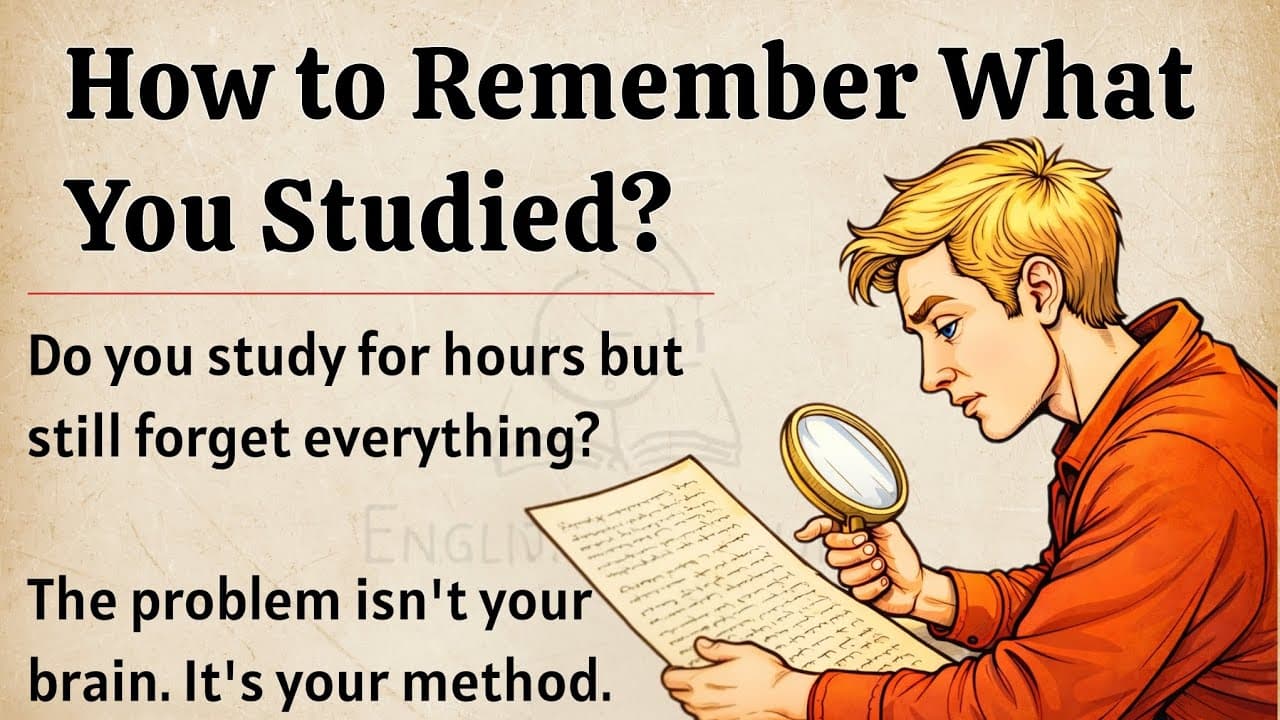
Welcome everyone. Today we are going to talk about something that can change the way you study forever. We are not talking about learning faster. We are not talking about studying harder. We are talking about something even more important than that. How to remember what you study. Because if you study for 6 hours and forget everything during the ex... Read More
Key Insights
- Memory has three stages: sensory, short term, and long term, with attention as the gate to memory.
- Short term memory holds five to nine items for about 15 to 30 seconds and relies on repetition and focus to transfer data to long term memory.
- The Fineman technique centers on learning as if you will teach it, speaking out loud, identifying gaps, and teaching others to fix understanding.
- Effective memory relies on emotional connection to the material to improve recall during exams and real life.
- Output is crucial in learning; speaking or teaching solidifies knowledge better than passive reading.
- Teaching others is a core step in learning because it reinforces and reveals gaps in understanding.
- Sleep and rest support memory consolidation, helping long term memory become more stable.
- Organizing notes and regularly reviewing content are practical methods to sustain long term memory and improve fluency in related skills.
Install to Summarize YouTube Videos and Get Transcripts
Explore YouTube Video Summarizer or Get YouTube Transcript Extractor
Questions & Answers
Q: What is the first step to move information into memory according to the video?
The first step is attention, the moment information enters sensory memory, paying attention determines whether it gets processed further or is forgotten. Without attention, the memory trace disappears within 1 to 5 seconds, so focusing during study is essential for any long term retention.
Q: How many items can short term memory hold and for how long does it typically retain them?
Short term memory can hold five to nine pieces of information at once and lasts for about 15 to 30 seconds. If more information is added beyond this limit, the brain starts dropping items, so strategies to manage load are important for durable recall.
Q: What is the Fineman technique and why is it effective?
The Fineman technique is a method where you learn with the mindset of teaching, then explain the material aloud as if teaching someone who knows nothing about it. This helps reveal gaps, strengthens understanding, increases confidence, and makes memory deeper because teaching requires mastery and articulation.
Q: What should you do after learning to reinforce memory according to the method described?
After learning, you should close the book and explain the material out loud, as if to a student. This output step helps identify missing pieces, solidifies knowledge, and reduces exam fear by confirming what you actually understand versus what you think you know.
Q: Why is emotion important in memory, and how can you leverage it for studying?
Emotion creates a stronger memory trace; when content is connected to meaning or personal interest, it is more likely to be remembered. You should try to connect topics to emotions, real world relevance, or memorable examples to improve recall and make studying more engaging.
Q: What role does teaching others play in the learning process described in the video?
Teaching others is not just a final step but how real learning begins. Explaining concepts to someone else forces you to reformulate knowledge clearly, reveals gaps, and strengthens memory because you must organize and convey understanding coherently.
Q: How does the video suggest handling gaps that appear while explaining aloud?
When gaps appear during explanation, you should go back to your notes to fill those gaps, then repeat the process. This find and fix method turns reading into active output and is described as the most powerful learning tool because it directly improves understanding and memory.
Q: What daily practices are recommended to maintain long term memory and fluency?
Regular review, organization of notes, emotional engagement with content, and ensuring proper sleep are recommended. These practices help move information from short term to long term memory, support recall during exams, and improve overall fluency in related subjects like language learning.
Summary & Key Takeaways
-
The video explains memory as a process with sensory, short term, and long term stages, emphasizing attention as the first filter and repetition as a bridge to long term memory.
-
It introduces the Fineman technique, guiding learners to teach what they study, explain it aloud, find gaps, and teach others to deepen understanding and retention.
-
The content emphasizes emotions, sleep, and organized notes as critical factors that move information into long term memory and make study lasting and efficient.
Read in Other Languages (beta)
Share This Summary 📚
Summarize YouTube Videos and Get Video Transcripts with 1-Click
Try YouTube Summary with ChatGPT & Claude or YouTube Transcript Generator
Explore More Summaries from English Avenue 📚





Summarize YouTube Videos and Get Video Transcripts with 1-Click
Try YouTube Summary with ChatGPT & Claude or YouTube Transcript Generator