How to Care Less and Focus on What Matters
TL;DR
A more fulfilling life comes from choosing values, relationships, and struggles that deserve your limited attention. Happiness does not require eliminating problems or maintaining constant positivity. It grows through accepting limitations, taking responsibility for your responses, enduring worthwhile difficulties, and remaining humble enough to revise beliefs when new information appears.
Transcript
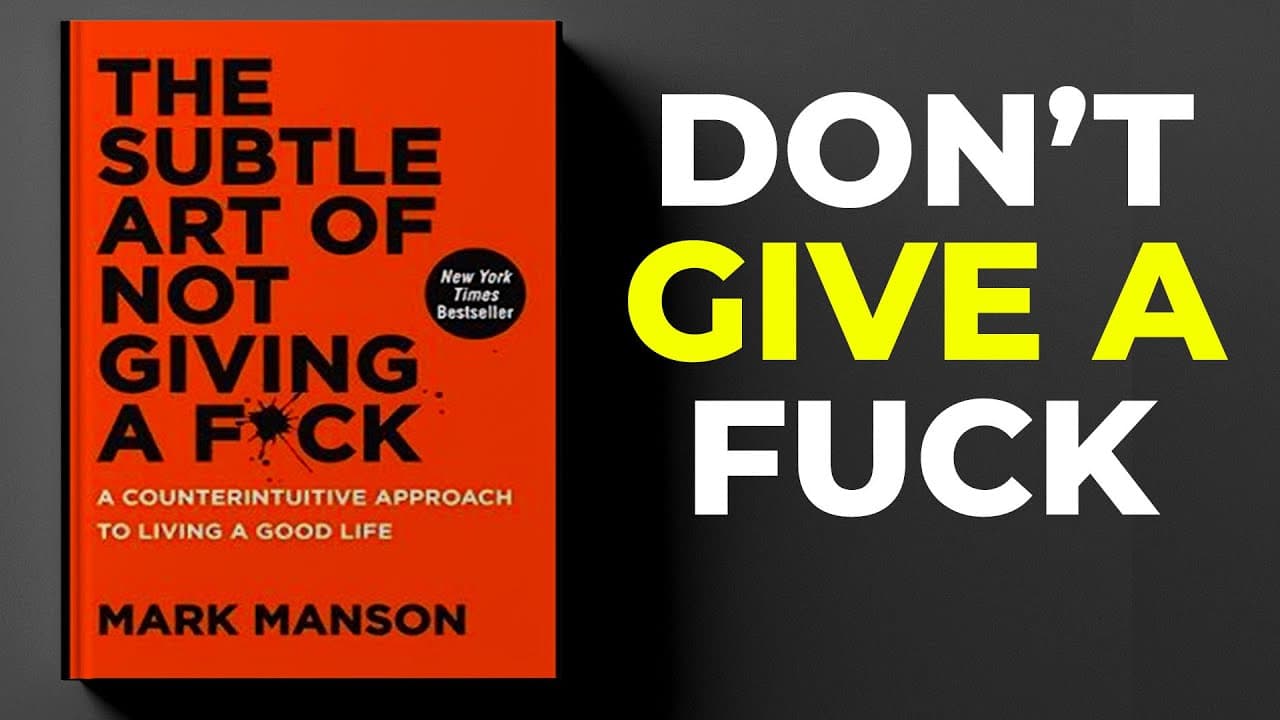
Not giving a [ __ ] doesn't mean being indifferent. It means being comfortable with being different. That's the heart of this book. And it comes from Mark Manson, a blogger turned author who noticed that modern self-help often sells us the idea that we must always be extraordinary, always happy, always winning. But in reality, this endless chase fo... Read More
Key Insights
- Attention is limited, so giving energy to every criticism, comparison, or trivial concern reduces the capacity available for meaningful values, relationships, and struggles. Caring less means selecting priorities carefully, not becoming indifferent to people or consequences.
- The desperate pursuit of happiness can increase dissatisfaction because it continually highlights what appears to be missing. Meaning comes from solving worthwhile problems and making progress, rather than expecting perfection or a future in which every difficulty has disappeared.
- Happiness is created through meaningful struggle, not through permanent comfort. Problems continue as life changes, but their quality can improve when people choose challenges that teach them, strengthen relationships, or connect their actions to personally important values.
- Accepting ordinariness is liberating because it removes the exhausting demand to prove exceptional worth. Being average does not make a life meaningless, since meaning can still arise through deliberate choices, stronger character, personal growth, and small but significant contributions.
- Suffering is unavoidable, but people can decide which forms of pain deserve their effort. Discipline, vulnerability, rejection, sacrifice, and heartbreak may accompany worthwhile goals, so fulfillment depends partly on choosing difficulties that align with valued pursuits.
- Responsibility is different from fault because an unwanted event can require action even when someone else caused it. Responding constructively to accidents, relationship problems, career setbacks, or personal limitations gives people agency over what happens next.
- Every action and inaction is a choice, including remaining in an unsatisfying job or avoiding a difficult conversation. Recognizing these tradeoffs replaces claims of helplessness with ownership and makes it possible to choose better values, struggles, and responses.
- Uncertainty is a condition for growth because beliefs, assumptions, and memories are imperfect. Genuine confidence means tolerating the possibility of being wrong, testing ideas, receiving feedback, and revising opinions when new information provides a better understanding.
- Related book: The Subtle Art of Not Giving a F*ck
- Export your Kindle highlights to Glasp: How to Download Highlights and Notes from Kindle
- More videos about this book:
- More from this channel: Growth Mind Audiobooks
- More videos with Mark Manson:
Install to Summarize YouTube Videos and Get Transcripts
Explore YouTube Video Summarizer or Get YouTube Transcript Extractor
Questions & Answers
Q: How can I stop caring about meaningless things?
Start by recognizing that time, energy, and attention are limited, which makes caring about everything impossible. Identify the few values, relationships, and struggles that give your life meaning, then reduce attention to comparisons, social approval, flashy possessions, and other concerns that keep you restless. Caring less is not indifference. It is the deliberate choice to invest yourself in priorities that deserve your effort.
Q: Why can trying too hard to be happy make me unhappy?
Desperately chasing happiness can emphasize the belief that your present life is inadequate. Constant comparison, perfectionism, and endless goal seeking create pressure to feel extraordinary and successful at all times. Because problems never disappear completely, this pursuit becomes frustrating. More durable satisfaction comes from accepting reality, solving meaningful problems, and valuing progress instead of demanding permanent positivity, comfort, or perfection.
Q: What kinds of problems lead to lasting happiness?
Problems can support lasting happiness when they arise from values and commitments that matter to you. Raising children may involve stress and exhaustion, yet those difficulties can bring deep joy. Mastering a craft requires discipline and practice, while close relationships require vulnerability. By contrast, struggles centered on social media approval or the next flashy purchase can create restlessness without offering comparable meaning or growth.
Q: Why is accepting that I am ordinary helpful?
Accepting ordinariness removes the constant pressure to prove that you are exceptional. It allows you to stop comparing yourself endlessly, acknowledge flaws and limitations, and concentrate on actual improvement. Being average is not the same as being meaningless. A meaningful life can be built through responsible choices, character, relationships, growth, and small but significant forms of impact, without demanding special treatment from life.
Q: How should I choose which struggles are worth enduring?
Choose struggles by asking whether their pain supports values and outcomes you genuinely care about. Discipline may be worthwhile when mastering a craft matters to you. Vulnerability may be worthwhile when you want a deep relationship, and rejection may be worth facing when pursuing an important goal. Since every worthwhile pursuit carries problems, the central question is which forms of difficulty you are willing to accept.
Q: What is the difference between responsibility and fault?
Fault concerns who caused a problem, while responsibility concerns who must respond to it. If another person crashes into your car, the accident may not be your fault, but handling insurance, arranging repairs, and moving forward remain your responsibility. The same distinction applies to relationships, careers, and personal development. Owning the response restores agency even when the original circumstances were outside your control.
Q: How does taking ownership of choices improve life?
Taking ownership reveals that actions and inactions involve tradeoffs. Staying in a hated job may mean choosing a secure paycheck over uncertain change, while avoiding a difficult conversation may mean choosing immediate comfort over eventual resolution. Recognizing these choices restores power because it shifts attention from waiting for other people or circumstances to change toward selecting better responses, values, and struggles yourself.
Q: Why is being willing to be wrong important for growth?
Being willing to be wrong makes it possible to revise imperfect beliefs, assumptions, and memories when better information appears. Clinging to certainty can prevent learning, while admitting that an earlier view was mistaken shows development rather than weakness. Real confidence comes from testing ideas, challenging assumptions, accepting feedback, and remaining emotionally steady when correction is necessary, instead of defending every opinion at all costs.
Summary & Key Takeaways
-
Time, energy, and attention are limited, so caring about everything is impossible and counterproductive. Obsessing over trivial concerns leaves less room for meaningful values, relationships, and goals. Satisfaction begins when people release the pressure to appear extraordinary, accept reality, and deliberately select the problems and commitments worthy of their effort.
-
Happiness is not a permanent state without problems. Every solved difficulty is followed by another, and fulfillment depends on improving the quality of the struggles one accepts. Parenting, disciplined practice, vulnerable relationships, and ambitious pursuits can be painful, but their challenges may create meaning when they align with deeply held values.
-
Responsibility is distinct from fault because people do not control everything that happens, yet they retain control over their responses. Taking ownership restores agency, while blaming circumstances can reinforce powerlessness. Growth also requires uncertainty, humility, feedback, and a willingness to update imperfect beliefs instead of defending every opinion as unquestionably correct.
Read in Other Languages (beta)
Share This Summary 📚
Summarize YouTube Videos and Get Video Transcripts with 1-Click
Try YouTube Summary with ChatGPT & Claude or YouTube Transcript Generator
Explore More Summaries from Growth Mind Audiobooks 📚
Summarize YouTube Videos and Get Video Transcripts with 1-Click
Try YouTube Summary with ChatGPT & Claude or YouTube Transcript Generator