How Do Fast and Slow Thinking Shape Decisions?
TL;DR
Better decisions require noticing when fast, intuitive thinking is relying on emotion, stereotypes, or misleading shortcuts, then deliberately engaging slower reasoning. System 1 is efficient and essential, but biases such as anchoring, availability, representativeness, and substitution can distort judgments about money, risk, trust, and probability. System 2 can check these errors when accuracy matters.
Transcript
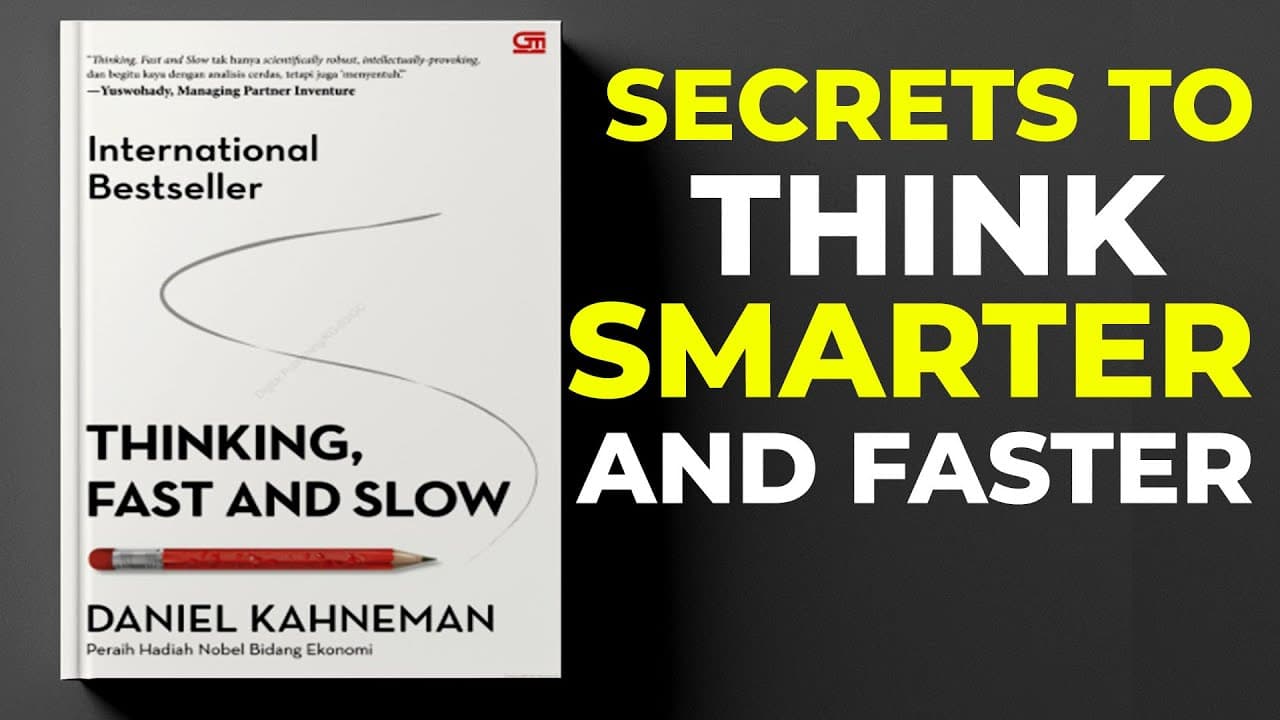
Thinking fast and slow by Daniel Conaman. Audio book summary. Introduction. Have you ever wondered why sometimes you make snap decisions in seconds and other times you wrestle for hours over a simple choice? Why do you instantly recognize a friend's face in a crowd, but struggle when asked to multiply 47 by 83? This paradox of human thinking is wha... Read More
Key Insights
- System 1 is the mind's fast, automatic, intuitive, and emotional mode of thought. It recognizes familiar faces, completes common phrases, and triggers immediate reactions with little conscious effort, making it efficient and essential for navigating ordinary situations and responding quickly to possible danger.
- System 2 is the mind's slow, deliberate, logical, and effortful mode of thought. It becomes active during complex calculations, careful budgeting, skill development, and comparisons such as evaluating mortgage rates, but its demand for attention and energy means people often avoid using it.
- The tension between the two systems is that System 1 continuously generates impressions while System 2 often accepts them. A well-dressed person may immediately seem competent, or a warmly smiling person may seem trustworthy, even when no supporting evidence has been examined.
- The bat-and-ball problem demonstrates how intuition can produce a quick but incorrect answer. When the pair costs $1.10 and the bat costs $1 more than the ball, the tempting answer is 10 cents, but deliberate calculation shows that the ball costs 5 cents.
- Heuristics are mental shortcuts that make rapid judgment possible without extensive analysis. They prevent people from becoming paralyzed by simple decisions, but they also create systematic biases that can influence spending, investing, negotiation, voting, trust, and perceptions of the world.
- The anchoring effect occurs when an initial number influences a later estimate, even if that starting number is irrelevant. A shirt reduced from $150 to $75 can appear inexpensive because the original price establishes a reference point, not because $75 is objectively cheap.
- The availability heuristic makes people estimate likelihood according to how easily examples come to mind. Dramatic and heavily reported events can therefore feel more common than less memorable dangers, causing people to exaggerate vivid risks while overlooking threats that receive less attention.
- The representativeness heuristic favors a plausible story or stereotype over statistical logic. In the Linda example, many people choose the more detailed description even though two combined conditions cannot be more probable than either condition alone, revealing how narrative fit can overpower probability.
- Related book: Thinking, Fast and Slow
- Export your Kindle highlights to Glasp: How to Download Highlights and Notes from Kindle
Install to Summarize YouTube Videos and Get Transcripts
Explore YouTube Video Summarizer or Get YouTube Transcript Extractor
Questions & Answers
Q: What are System 1 and System 2 in human thinking?
System 1 is fast, automatic, intuitive, emotional, and continuously active. It supports immediate reactions, face recognition, familiar phrase completion, and other judgments requiring little conscious effort. System 2 is slow, deliberate, logical, and effortful. It handles complex calculations, careful comparisons, budgeting, and planning, but because it requires focus and energy, people often rely on System 1 instead.
Q: How can slow thinking improve important decisions?
Slow thinking improves important decisions by examining the impressions and answers generated automatically by System 1. When a choice involves money, risk, trust, probability, or complex comparisons, System 2 can pause, calculate, review evidence, and question initial assumptions. This deliberate effort does not eliminate every error, but it can correct intuitive conclusions that merely feel convincing.
Q: Why does the mind rely on heuristics?
The mind relies on heuristics because evaluating every decision through detailed analysis would require too much time and effort. These rules of thumb let System 1 form judgments quickly and keep everyday life manageable. Their usefulness comes with a cost, however, because the same shortcuts can produce predictable errors when a situation requires statistics, careful evidence, or precise comparison.
Q: What is the anchoring effect in decision-making?
The anchoring effect is the tendency for an initial number to shape a later estimate or judgment, even when that number is irrelevant. The transcript illustrates this with a shirt marked down from $150 to $75. The reduced price feels attractive partly because the mind compares it with the original figure, which becomes an anchor for perceived value.
Q: How does the availability heuristic distort risk?
The availability heuristic distorts risk by making memorable or easily recalled events seem more likely. Dramatic incidents receive attention and remain accessible in memory, so people may overestimate their frequency. The transcript contrasts shark attacks with deaths from falling airplane parts and also notes that news about a plane crash can make flying feel less safe than driving.
Q: What is the representativeness heuristic?
The representativeness heuristic is the tendency to judge probability according to how well a description matches a familiar story or stereotype. In the Linda example, many people prefer the description combining bank employment with feminist activism because it seems representative of her profile. Mathematical logic shows that two combined conditions cannot be more probable than one condition alone.
Q: What is substitution in cognitive decision-making?
Substitution occurs when System 1 replaces a difficult question with an easier one without making the switch obvious. When asked about overall life satisfaction, a person may effectively answer how happy they feel at that moment. The resulting response can feel confident and relevant, even though it addresses a simpler question rather than the original, more complex judgment.
Q: How can people recognize and reduce cognitive bias?
People can reduce cognitive bias by noticing situations in which intuition may be using anchors, vivid memories, stereotypes, or an easier substituted question. When accuracy matters, they should pause and deliberately engage System 2 to calculate, compare evidence, examine probability, and challenge first impressions. The central practice is recognizing when an automatic answer needs careful verification.
Summary & Key Takeaways
-
Human thought operates through two contrasting modes. System 1 produces rapid, automatic, intuitive, and emotional responses, such as recognizing a face or reacting to danger. System 2 handles deliberate calculation, planning, and comparison. Although slower reasoning can improve accuracy, it requires energy and often allows intuitive judgments to stand without careful examination.
-
System 1 reaches decisions quickly by using heuristics, which are practical rules of thumb that prevent constant mental overload. These shortcuts also create predictable errors. Anchoring makes an initial number influence later estimates, while availability causes memorable examples to distort perceived likelihood. Representativeness favors plausible stereotypes over mathematical probability.
-
Substitution lets the mind replace a difficult question with an easier one, often without conscious awareness. These mechanisms explain why people can feel rational and confident while making systematic mistakes in shopping, investing, negotiation, voting, and risk assessment. Better judgment begins with pausing when consequences are important and checking intuition through deliberate reasoning.
Read in Other Languages (beta)
Share This Summary 📚
Summarize YouTube Videos and Get Video Transcripts with 1-Click
Try YouTube Summary with ChatGPT & Claude or YouTube Transcript Generator
Explore More Summaries from Growth Mind Audiobooks 📚

Summarize YouTube Videos and Get Video Transcripts with 1-Click
Try YouTube Summary with ChatGPT & Claude or YouTube Transcript Generator