How to Care About What Truly Matters in Life
TL;DR
A meaningful life comes from caring selectively about values and problems worth the struggle, not from chasing constant happiness, approval, or perfection. Accepting pain, failure, personal limits, and ordinary human status reduces unnecessary pressure and makes room for honest growth grounded in self-respect.
Transcript
Let's be honest for a second. How many times have you heard phrases like just stay positive, you can be anything you want or never give up on your dreams? Probably more times than you can count. It's all around us. This relentless wave of feel-good advice that promises if you just think happy thoughts, everything in your life will fall into place. ... Read More
Key Insights
- Selective caring is the central practice of the book: people have limited time, energy, and concern, so they should direct those resources toward values, relationships, and struggles that genuinely matter instead of spending them on approval, comparison, or perfection.
- The phrase "don't try" is presented as a call for honesty, not surrender. Trying to become an artificial ideal can continually reinforce the belief that one is inadequate, while accepting an authentic voice and existing flaws can create a healthier foundation for meaningful effort.
- Self-improvement is healthiest when it grows from self-respect. Pursuing change because of self-hatred treats the current self as unacceptable, whereas honest acceptance allows a person to improve without making worth dependent on becoming impressive, extraordinary, or universally admired.
- Happiness is not a permanent destination without difficulty. Every choice, ambition, and way of life produces problems, so fulfillment depends less on eliminating struggle than on choosing challenges that are meaningful enough to justify the effort they require.
- Meaningful problems are problems aligned with personal values. When people understand what they deeply care about, they can distinguish worthwhile hardship from unnecessary suffering and view certain obstacles as part of a purposeful journey rather than as evidence that life has gone wrong.
- Pain and failure are unavoidable parts of life. Attempting to escape every uncomfortable feeling does not solve underlying problems, while acknowledging difficult experiences and working through them can support emotional clarity, learning, purpose, and personal growth.
- Being average is a normal human condition, not a personal failure. Accepting that reality can reduce the pressure to prove exceptional status in every area and free people to build worthwhile lives without depending on constant recognition or special treatment.
- Authenticity is more valuable than performing a socially approved identity. The account of Charles Bukowski emphasizes owning one's flaws, voice, and messy reality instead of imitating polished ideals, because honest expression can connect more powerfully than relentless attempts to appear perfect.
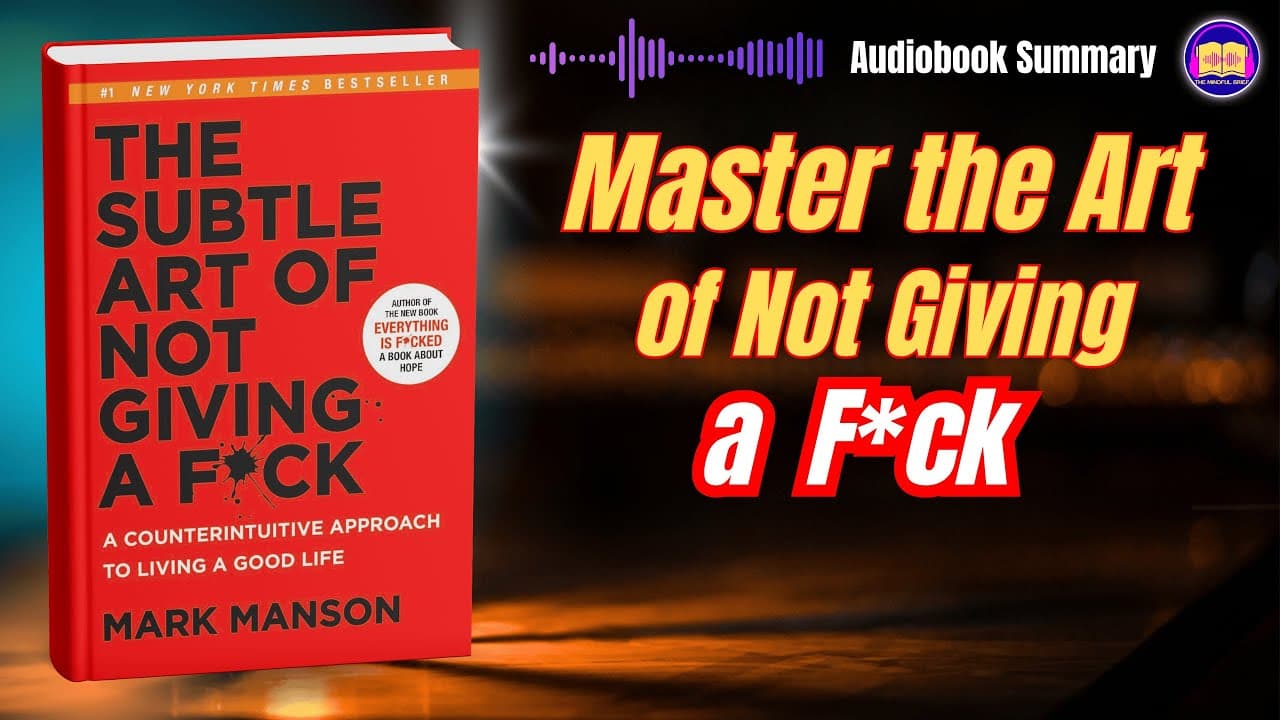
- Related book: The Subtle Art of Not Giving a F*ck
- 📥 Export your Kindle highlights to Glasp: How to Download Highlights and Notes from Kindle
- More videos about this book:
- 🎙️ More videos with Mark Manson:
Install to Summarize YouTube Videos and Get Transcripts
Explore YouTube Video Summarizer or Get YouTube Transcript Extractor
Questions & Answers
Q: How can I stop caring about things that do not matter?
Start by recognizing that your attention, time, and emotional energy are limited. Identify the values, relationships, and problems that are genuinely important to you, then judge worries according to those priorities. Concerns about impressing others, appearing perfect, or matching society's definition of success can be released when they do not serve your chosen values or a meaningful life.
Q: What does the subtle art of not caring actually mean?
It does not mean becoming indifferent, cynical, or emotionally detached from everything. It means caring more deliberately. The goal is to stop spending energy on comparison, perfection, approval, and expectations that do not reflect your values, then devote that energy to people, purposes, and challenges that deserve your commitment and are worth the discomfort they may bring.
Q: Why can chasing happiness make people less happy?
Chasing happiness as a permanent destination assumes that a good life should be free from pain and problems. The transcript argues that this expectation is unrealistic because every path creates difficulties. Constantly trying to eliminate discomfort can produce frustration, while choosing worthwhile problems and solving them provides a more grounded form of satisfaction, growth, purpose, and meaning.
Q: How do I choose which problems are worth solving?
Clarify what you value deeply enough to struggle for. Every career, relationship, goal, and personal change comes with obstacles, so the useful question is not how to avoid problems entirely, but which problems justify your time and effort. Worthwhile problems align with your values and contribute to the person you want to become, even when they remain difficult.
Q: What does "don't try" mean in Mark Manson's philosophy?
"Don't try" is not presented as advice to abandon effort or growth. It means stopping the exhausting attempt to become a false ideal for approval or status. The Charles Bukowski story illustrates that owning one's real voice, flaws, and circumstances can be more powerful than trying to appear polished. Honest effort begins with authenticity rather than self-rejection.
Q: Why is accepting that I am not special helpful?
Accepting that you are not special removes the unrealistic pressure to be extraordinary in every part of life. It does not mean that you lack worth or cannot accomplish meaningful things. It means the world does not revolve around you, and a valuable life does not require constant proof of exceptional status, universal admiration, or special treatment.
Q: How should self-improvement be approached without self-hatred?
Self-improvement should begin with self-respect and an honest acceptance of who you are now. When growth is driven by self-hatred, every goal can reinforce the message that you are inadequate until you change. Growth grounded in self-respect allows you to acknowledge flaws and pursue improvement without making your basic worth dependent on achievement, perfection, or approval.
Q: What role do pain and failure play in a meaningful life?
Pain and failure are unavoidable realities rather than signs that life has gone wrong. The transcript presents them as foundations for learning, growth, and meaning when they arise from worthwhile pursuits. Facing emotional pain, acknowledging flaws, and working through difficult experiences can be more constructive than wishing discomfort away or organizing life around avoiding every possible struggle.
Summary & Key Takeaways
-
Mark Manson's central philosophy is that people have limited attention, energy, and concern, so they must choose carefully where to invest them. Freedom does not come from caring about nothing. It comes from releasing worries about approval, perfection, comparison, and artificial definitions of success while committing to personally meaningful values.
-
The pursuit of uninterrupted happiness creates frustration because every life contains problems, discomfort, failure, and pain. Lasting satisfaction comes from identifying challenges worth facing and learning to solve them. Struggles aligned with personal values can support purpose and growth, while attempts to avoid all discomfort make meaningful progress impossible.
-
Accepting that most people are average in most areas can relieve the exhausting demand to appear exceptional. Growth remains worthwhile, but its motive matters. Improvement driven by self-hatred reinforces feelings of inadequacy, whereas improvement rooted in self-respect begins with honest acceptance of one's flaws, circumstances, and authentic identity.
Read in Other Languages (beta)
Share This Summary 📚
Summarize YouTube Videos and Get Video Transcripts with 1-Click
Try YouTube Summary with ChatGPT & Claude or YouTube Transcript Generator