What Is Scarcity Brain and How to Rewire Habits
TL;DR
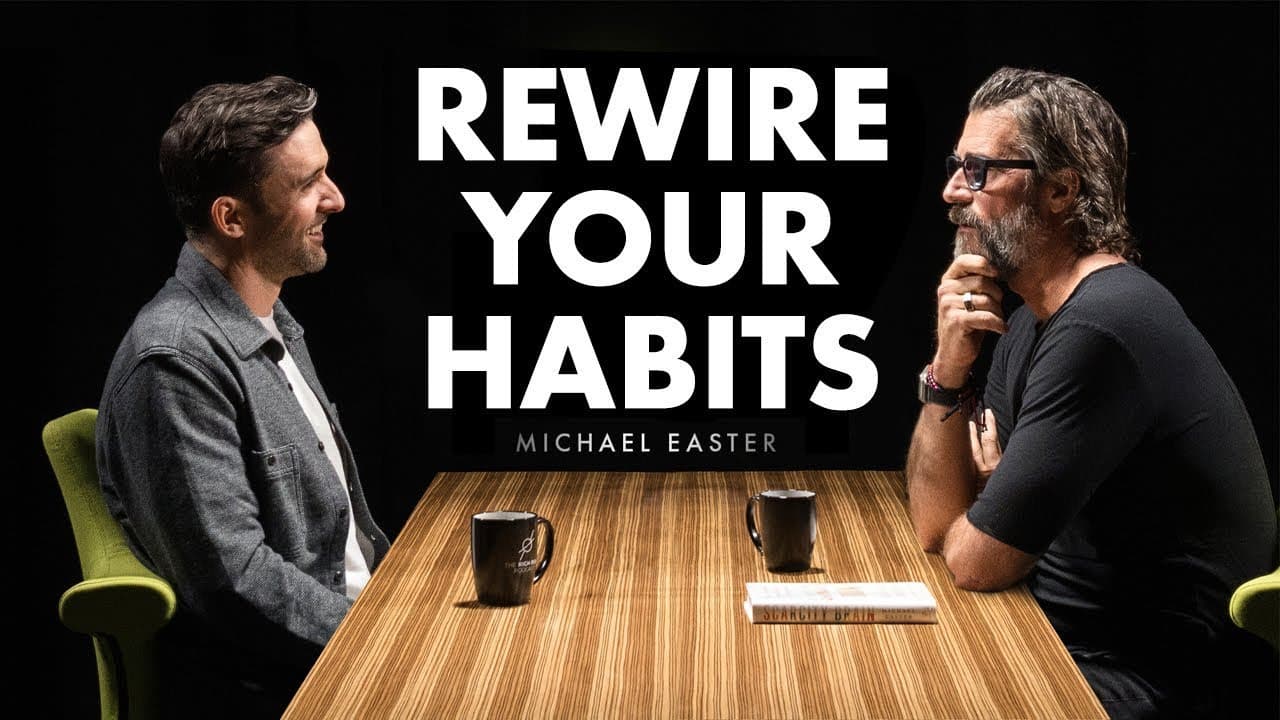
Scarcity Brain explains why our brains chase easy rewards and how the modern world pushes comfort. Rewiring habits involves embracing short term discomfort, building routines, and using structure to counteract constant media and abundance. The conversation emphasizes recovery, discipline, and choosing long term well being over instant gratification.
Transcript
we still have that DNA that sort of pushes us to do the next easiest most comfortable thing companies know what schedule of rewards is really going to capture people's attention every app that I spend too much time on it's what makes it work I sat down with Michael Easter a professor an investigative journalist a behavior change expert and the auth... Read More
Key Insights
- Scarcity brain exists because our ancestors needed to prioritize the next easy option for survival.
- The modern environment amplifies ease and abundance, making sustainable healthy choices harder.
- Discomfort can be a catalyst for growth, pushing people toward long term benefits over short term reliefs.
- Habit change requires deliberate structure, not just willpower, to counter constant external cues.
- Recovery experiences, including acknowledging problems and seeking support, enable lasting changes.
- Exercise and movement are not instinctive solutions but culturally constructed practices that support health.
- Limiting constant media exposure helps reclaim cognitive control and reduce compulsive behaviors.
- Choosing meaningful constraints and purposeful routines creates space for durable behavioral shifts.
- More videos from this channel:
- More from this channel: Rich Roll
Install to Summarize YouTube Videos and Get Transcripts
Explore YouTube Video Summarizer or Get YouTube Transcript Extractor
Questions & Answers
Q: What is Scarcity Brain and how does it influence daily choices?
Scarcity Brain describes how humans are wired to pursue the next easiest or most comforting option because that was a survival advantage in the past. In daily life this manifests as seeking rapid rewards, over consuming food, scrolling for stimuli, and defaulting to familiar, comforting routines. Understanding this helps individuals design environments that reduce friction toward healthier choices and build sustainable habits.
Q: How can someone begin rewiring their habits according to the discussion?
Rewiring habits starts with recognizing the pattern of seeking comfort and then introducing structured, repeatable actions that are slightly uncomfortable but beneficial. This includes setting clear goals, establishing predictable routines, and adding small, manageable challenges. Over time, the brain relearns to value discipline and delayed gratification, turning long term benefits into the new default.
Q: What role does recovery play in changing behavior and why is it important?
Recovery provides a framework for acknowledging problems, seeking support, and rebuilding health in a sustainable way. It involves honest self appraisal, accountability to others, and ongoing practice. This process reduces shame and builds resilience, enabling people to sustain changes that improve overall well being rather than chasing fleeting relief.
Q: Why is discomfort considered a catalyst for growth in this context?
Discomfort signals the brain that growth is possible and necessary. By choosing controlled, short term hardship, individuals expand their capacity for endurance, self regulation, and productivity. The pattern of facing small, purposeful challenges creates momentum that translates into resilience, better decision making, and stronger long term outcomes.
Q: How does the environment shape our ability to practice healthy habits?
The environment can either enable or derail healthy behavior. Abundant food options, constant media, and convenient routines push people toward easy wins rather than meaningful long term gains. Designing environments with fewer temptations, structured schedules, and supportive communities helps align daily actions with larger life goals.
Q: What is the connection between recovery stories and habit change in the podcast?
Recovery stories illustrate practical pathways from brokenness to repair, demonstrating that lasting change comes from humility, support, and sustained practice. These narratives reinforce that discomfort and discipline are part of progress, validating the effort required to rewire habits and maintain improvements over time.
Q: What practical steps can someone take to reduce media overload and regain focus?
Practical steps include setting strict time limits for devices, creating device free zones or times, prioritizing meaningful activities, and curating feeds to minimize noise. By reclaiming cognitive space, individuals can focus on deliberate, purposeful actions that align with long term goals instead of reacting to every notification.
Q: How does the idea of 'the next easiest thing' influence eating and movement habits?
The impulse to do the next easiest thing influences both food and activity choices by prioritizing convenience over nourishment or effort. Recognizing this pattern helps people design systems that require small, sustainable effort to choose healthier foods, regular movement, and structured routines, gradually making these actions the default rather than exceptions.
Summary & Key Takeaways
-
Scarcity Brain argues that human evolution wired us to seek the next easy reward, a tendency amplified by the modern environment.
-
The discussion stresses that real change comes from embracing short term discomfort, deliberate routines, and limiting overstimulation from media and devices.
-
The guests highlight recovery as a practical framework, showing how discipline and small, consistent actions can transform long term well being.
Read in Other Languages (beta)
Share This Summary 📚
Summarize YouTube Videos and Get Video Transcripts with 1-Click
Try YouTube Summary with ChatGPT & Claude or YouTube Transcript Generator
Explore More Summaries from Rich Roll 📚




Summarize YouTube Videos and Get Video Transcripts with 1-Click
Try YouTube Summary with ChatGPT & Claude or YouTube Transcript Generator