How Does Social Media Affect Human Well-Being?
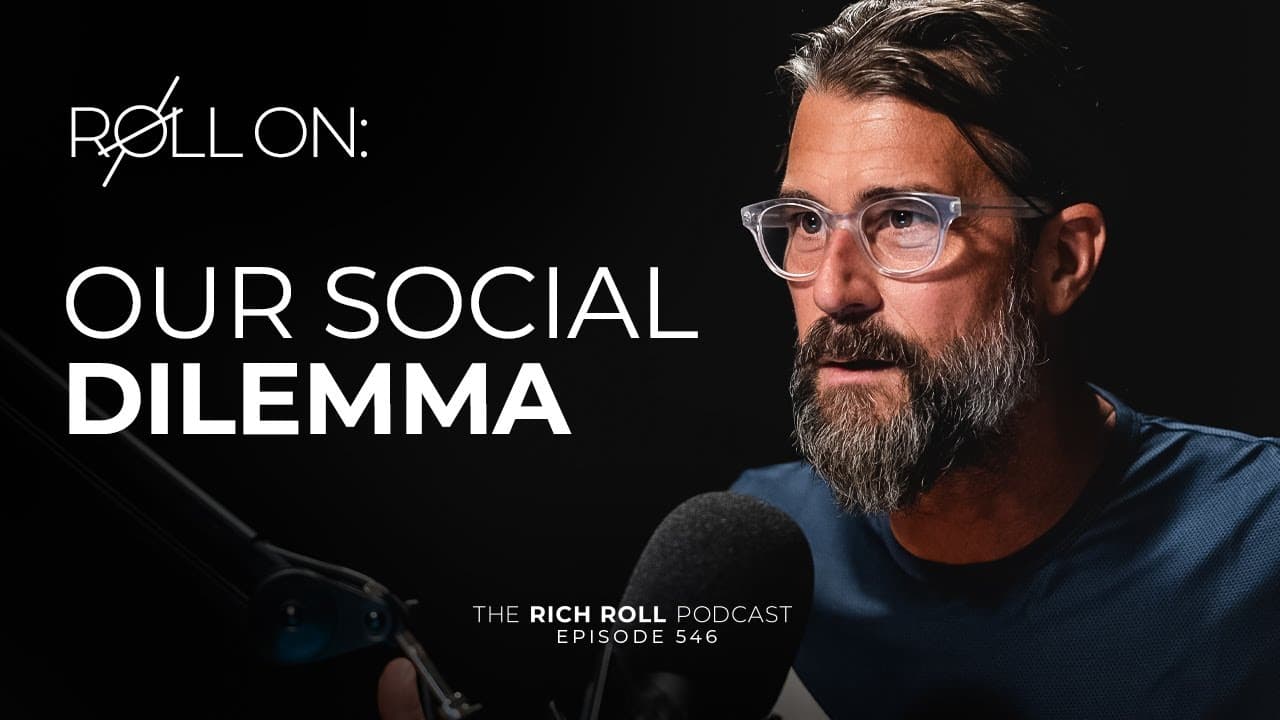
TL;DR
Social media can have dangerous effects on people, making its human impact and relationship to mental health important subjects for scrutiny. The discussion also connects personal values with practical choices, including climate-conscious living, career purpose, creativity, remote professional relationships, and reducing single-use plastic, while recognizing that major life changes can quietly reorder priorities.
Transcript
hey everybody welcome to the podcast another hotly hotly anticipated edition of roll on slash roll call we're still in a no man's land we are going to call this i guess it's roll on it's wrong but roll roll call is good yes it's been a minute since we've been here i think it's been a month one month since i sat down with you a lot has happened duri... Read More
Key Insights
- Social media is presented as having a dangerous human impact, making its effects an important subject for deeper examination. The episode places the Netflix documentary The Social Dilemma at the center of a broader conversation about technology, behavior, and personal well-being.
- The pandemic’s effects on teenage mental health are identified as a major concern alongside social media. By pairing these subjects, the discussion highlights the need to consider how current social conditions and digital environments relate to the experiences of younger people.
- Parenthood can realign priorities without producing an immediate dramatic emotional revelation. Skolnick says becoming a father reduced his anxiety about interviews, editors, and journalism deadlines because he now has something more important in his life.
- Early parenthood requires adaptation after professional support ends. Skolnick recalls that hospital doctors and nurses provided care for two days, after which he and his wife returned home and had to determine their own routines, including how to soothe and settle their newborn.
- A child’s name can preserve connections to place, family, and admired people. Zuma was associated with abundance in Chumash and with the family’s recreation near Point Dume, while James honored Skolnick’s uncle and Kalu honored a Burmese health-system leader and freedom fighter.
- Climate consciousness involves balancing environmental values with realistic needs. The episode approaches this tension through a listener question and a 30-day single-use plastic challenge, treating sustainability as a practical issue requiring reflection on ordinary choices rather than an abstract concern.
- Career purpose requires evaluating whether current work expresses what matters most or whether change is warranted. The episode addresses this through a listener’s search-oriented question, linking professional direction with the broader theme of priorities shifting as personal circumstances evolve.
- Remote professional relationships require deliberate navigation in the age of Zoom. The episode treats virtual interaction as a meaningful workplace issue, alongside broader questions about purpose, creativity, environmental conduct, mental health, and maintaining human connection under changing conditions.
Install to Summarize YouTube Videos and Get Transcripts
Explore YouTube Video Summarizer or Get YouTube Transcript Extractor
Questions & Answers
Q: How does social media affect human well-being?
Social media is treated as having a dangerous human impact that deserves careful examination. The episode uses the Netflix documentary The Social Dilemma as the central story for discussing this concern. It also places social media beside the pandemic’s mental health effects on teenagers, indicating that technology, mental well-being, and current social conditions are interconnected subjects within the conversation.
Q: Why is teenage mental health discussed alongside social media?
Teenage mental health is included because the episode examines the pandemic’s effects on teens while also considering the dangerous human impact of social media. The supplied material does not assign a specific cause or provide numerical findings. Instead, it identifies both issues as significant parts of a wider discussion about how contemporary conditions may affect people, particularly younger individuals.
Q: How can becoming a parent change professional priorities?
Becoming a parent can reduce the relative importance of professional anxieties by introducing a more significant personal responsibility. After his son’s birth, Adam Skolnick noticed that worries about securing every interview or waiting for an editor’s response had largely disappeared. He interpreted this as a subtle reassignment of priorities, with his child becoming more important than the pressures surrounding journalism.
Q: What challenges arise during the first days of parenthood?
The first days can require parents to improvise after leaving the support of hospital staff. Skolnick says his wife labored for 38 hours and that UCLA Santa Monica’s doctors and nurses were excellent. After two days, the family returned home and had to determine what to do independently, including adjusting sleeping arrangements when their baby was soothed only by resting on a parent’s chest.
Q: How can you balance climate consciousness with realistic needs?
The episode frames climate consciousness as a practical balancing question rather than providing a rigid formula in the supplied material. Its inclusion alongside a 30-day single-use plastic challenge suggests examining everyday consumption while acknowledging realistic needs. The grounded takeaway is to treat environmental responsibility as an ongoing assessment of personal choices, limitations, and feasible reductions in avoidable single-use plastic.
Q: How do you know whether to pursue a career change?
The episode presents career change as a question about whether a person is living their purpose. Skolnick’s experience offers one relevant example: fatherhood changed how he valued deadlines, interviews, and editorial responses. The supplied material does not give a step-by-step test, but it supports examining whether current professional concerns still align with the responsibilities and priorities that now matter most.
Q: How should professionals navigate relationships through Zoom?
Professional relationships in the age of Zoom are identified as a listener concern requiring deliberate navigation. The supplied transcript and description do not provide a detailed protocol or specific rules. What can be stated from the source is that remote professional interaction is treated as a meaningful relationship issue, not merely a technical matter, within a broader conversation about changing priorities and human connection.
Q: Why is giving yourself permission to be creative important?
Creativity appears through Ethan Hawke’s TED Talk, titled Give Yourself Permission To Be Creative, as one of the episode’s teachable subjects. The supplied material does not present the talk’s complete argument or detailed recommendations. Its framing supports a limited conclusion: creative activity may require personal permission, making internal willingness an important part of approaching and expressing creativity.
Summary & Key Takeaways
-
Rich Roll and journalist Adam Skolnick frame the episode around a major story, teachable moments, personal updates, and listener questions. The central subjects include the dangerous human impact of social media, the pandemic’s mental health effects on teenagers, creativity, environmental responsibility, endurance challenges, record-setting surfing, career purpose, and professional relationships conducted through Zoom.
-
Skolnick describes becoming a father when his wife gave birth to their son, Zuma, on August 29 after 38 hours of labor. Rather than experiencing an immediate dramatic transformation, he notices subtler changes, especially less anxiety about journalism and deadlines because fatherhood has given him something more important around which to organize his priorities.
-
The conversation balances social concerns with practical questions about everyday life. It considers how people can remain climate-conscious while meeting realistic needs, assess whether they are living their purpose or need a career change, and navigate professional relationships remotely. Other subjects include a single-use plastic challenge, swimrun, creative permission, and athletic achievements.
Read in Other Languages (beta)
Share This Summary 📚
Summarize YouTube Videos and Get Video Transcripts with 1-Click
Try YouTube Summary with ChatGPT & Claude or YouTube Transcript Generator
Explore More Summaries from Rich Roll 📚

Summarize YouTube Videos and Get Video Transcripts with 1-Click
Try YouTube Summary with ChatGPT & Claude or YouTube Transcript Generator