How to boost focus with brain science for performance
TL;DR
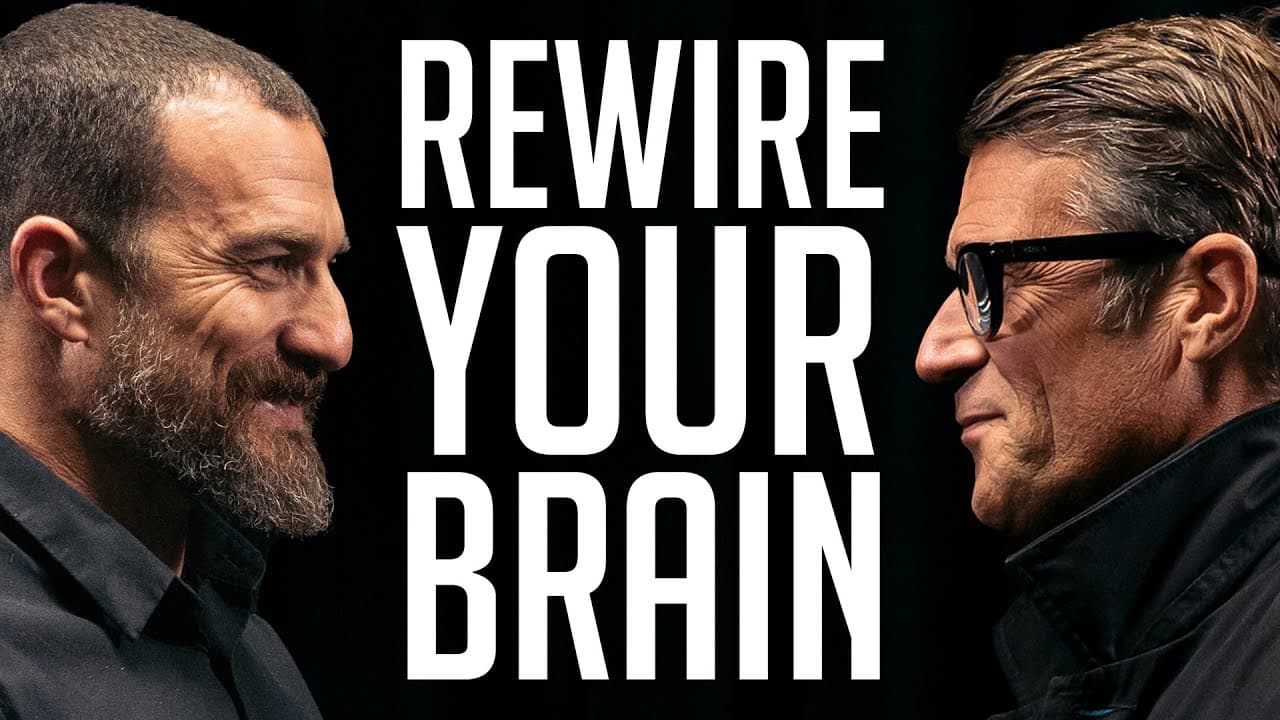
Focus can be sharpened by shaping your environment and rest, plus applying brain mechanisms Huberman discusses. Visual attention narrows the aperture when you are excited or motivated, making external distractions harder to ignore. To optimize performance, use light, temperature, breath, and sleep as practical levers while building rest and stimulating routines.
Transcript
Mental focus follows visual focus. We have an aperture or a window on our focus. When you are excited about something or you really want to attend to something, it literally brings about a narrowing of the aperture of your visual window, so that you attend to this particular location in space. (upbeat music) And yet, if you think about the way our ... Read More
Key Insights
- Focus is governed by an aperture of attention that tightens when excited or motivated.
- The environment, devices, and body states compete for attention, making focus harder in modern settings.
- ADHD diagnoses are discussed with reference to current prevalence estimates and their relevance to focus.
- Huberman emphasizes using behavioral tools first to alter focus before relying on other interventions.
- Preparation for episodes involves consulting colleagues, textbooks, and PubMed to build a robust mechanism.
- Rest and sleep quality strongly influence how clearly one can structure and deliver complex information.
- Light, temperature, breath, and sleep are practical levers to regulate biology and optimize performance states.
- Teaching and communicating science effectively requires balancing rigorous mechanism with daily relevance and potential speculation.
- More videos from this channel:
- More from this channel: Rich Roll
Install to Summarize YouTube Videos and Get Transcripts
Explore YouTube Video Summarizer or Get YouTube Transcript Extractor
Questions & Answers
Q: A real search query question about the video (e.g. 'How to...', 'What is...', 'Why does...', 'When should...'). Question 1
What practical steps can someone take to improve focus based on Huberman's discussion? The answer integrates behavioral tools and environmental design, emphasizing rest and sleep as foundational, followed by strategies that modulate light exposure, temperature, and breathing patterns. It also highlights the importance of social and educational measures that reduce cognitive load and support sustained attention in daily life.
Q: Question 2
Why does Huberman describe focus as an aperture that narrows under motivation, and how does this relate to real world tasks? The explanation links neurobiological mechanisms of attention with practical implications: when you are excited about a goal, your visual field becomes more focused on a specific location in space, which can improve target engagement but reduce peripheral awareness. This informs task design and distraction management.
Q: Question 3
How can the concepts of light and sleep be used to enhance cognitive performance according to the discussion? The answer describes how light exposure and sleep patterns regulate biological states that influence focus and learning, and how aligning daily routines with natural light cycles can support wakefulness and recovery. It also notes the role of balanced sleep in maintaining cognitive flexibility.
Q: Question 4
What is the role of preparation in communicating science as described by Huberman and Rich Roll? The process includes consulting Stanford colleagues, reading textbooks for core concepts, reviewing PubMed papers, and then clearly presenting mechanism while noting speculation when appropriate. This disciplined approach ensures accuracy, credibility, and accessibility for a broad audience.
Q: Question 5
How is ADHD discussed in the podcast segment, and what caveats are mentioned? The conversation acknowledges clinically diagnosed prevalence around ten to eleven percent and discusses how societal factors and technology may influence attention, while advocating a neuroscience-based approach that emphasizes behavioral tools and environmental adjustments as first-line strategies.
Q: Question 6
What practical tools does Huberman suggest for maintaining focus during challenging tasks? The discussion points to environmental control, rest, and deliberate breathing as core tools, along with using light and temperature as external regulators. The emphasis is on starting with behavioral tools before considering pharmacological or clinical interventions.
Q: Question 7
How does the host describe the impact of Huberman's work on diverse audiences? The podcast is portrayed as a bridge between hardcore mechanism and everyday relevance, enabling clinicians, educators, athletes, and coaches to apply neuroscience in practical ways, thereby expanding the reach and utility of scientific knowledge.
Q: Question 8
What does the dialogue reveal about the process of turning lab science into accessible media? The conversation shows a cycle of literature review, expert consultation, careful scripting, and iterative rehearsal, underscoring that communicating complex biology involves clarity, caution about speculation, and a commitment to educational value without oversimplification.
Summary & Key Takeaways
-
Huberman explains that visual focus narrows the aperture of attention when motivation or excitement increases, which helps target a specific location in space but raises the risk of distraction otherwise. The environment and biology interact, making focus a function of both external cues and internal states. The practical take is to tune daily habits to support attention.
-
ADHD and focus are discussed with reference to clinically diagnosed prevalence and the broader societal factors that influence attention. The host notes that some individuals experience differing attention demands and emphasizes a neuroscience-based approach to manage focus through behavioral tools and environmental design.
-
A research-informed approach is outlined for preparing and delivering scientific content, including collaboration with colleagues, textbooks, PubMed reviews, and careful communication of speculation where appropriate. The process is portrayed as a disciplined, iterative cycle that links laboratory work to practical understanding and public dissemination.
Read in Other Languages (beta)
Share This Summary 📚
Summarize YouTube Videos and Get Video Transcripts with 1-Click
Try YouTube Summary with ChatGPT & Claude or YouTube Transcript Generator
Explore More Summaries from Rich Roll 📚



Summarize YouTube Videos and Get Video Transcripts with 1-Click
Try YouTube Summary with ChatGPT & Claude or YouTube Transcript Generator