What is slow productivity and how to fix burnout
TL;DR
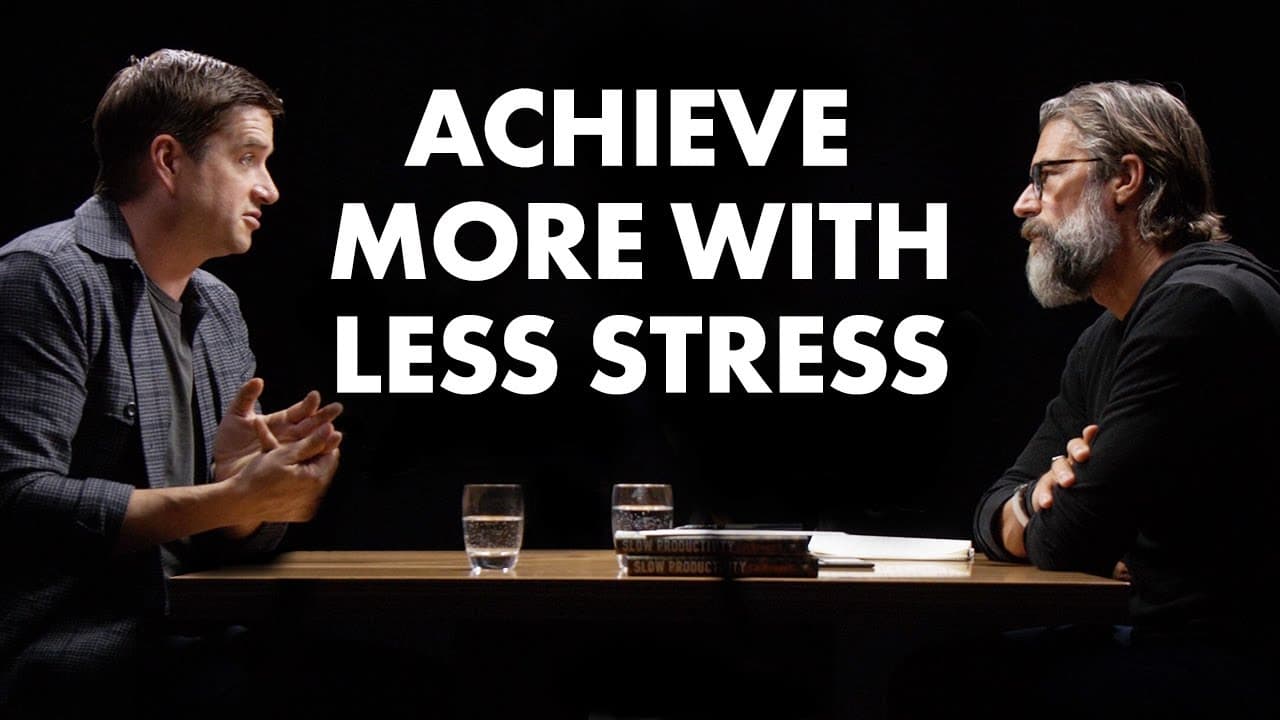
Slow productivity aims to reduce burnout by redefining usefulness and focusing on durable, meaningful work. Newport emphasizes pursuing high quality work over constant visibility, using deep work and careful pacing, while avoiding social media traps that erode attention. The approach favors long term results over quick, flashy metrics and requires clear personal boundaries.
Transcript
you're doing work wrong the pseudo productivity approach is killing you inside if you're a knowledge worker this is why you're feeling the way you're feeling why is it that we can work all day and still feel so unproductive my guest today is Cal Newport a modern-day Legend who has gone on to author a series of best-selling books on work productivit... Read More
Key Insights
- Slow productivity redefines productivity as meaningful, durable work rather than busy, visible activity.
- The key to sustainable output is long term focus over short term hype and quick wins.
- Cal Newport argues that social media and constant checking undermine attention and are costly to deep work.
- Deep work is a mental state where distraction is minimized to produce high-value results
- Book-based influence grows through slow, steady readership rather than transient bestseller spikes.
- Avoiding a fast, grind culture protects autonomy and personal time, supporting higher quality work.
- Sustainable success comes from deliberate pacing and not chasing every promotional opportunity.
- Ambition can align with restraint by choosing when and how to share work to maximize impact over time.
- More videos from this channel:
- More from this channel: Rich Roll
Install to Summarize YouTube Videos and Get Transcripts
Explore YouTube Video Summarizer or Get YouTube Transcript Extractor
Questions & Answers
Q: What is slow productivity and why is it important
Slow productivity is a way of thinking about work that prioritizes lasting, high quality results over constant activity or chasing trends. It is important because it aims to reduce burnout by avoiding the pressure to be endlessly visible, focusing instead on deep, meaningful output that endures beyond short term hype.
Q: How does slow productivity relate to burnout
Slow productivity addresses burnout by redefining what counts as productive effort and by reducing the need to be on every platform or to produce rapid, flashy results. It emphasizes sustainable pacing, boundaries, and attention to important tasks, which together lessen the mental load and energy drain that typically lead to burnout.
Q: What role does deep work play in this approach
Deep work is central to slow productivity because it concentrates effort on cognitively demanding tasks with minimal distraction. This allows for higher quality outputs in less time, supporting a sustainable pace and reducing the long hours and scattered attention that contribute to fatigue and burnout.
Q: Why avoid social media in Cal Newport’s view
Avoiding social media is recommended because constant checking and platform driven feedback can fragment attention and erode focus. By not engaging with these channels, one preserves cognitive bandwidth, reducing the urge for superficial engagement and allowing more time for meaningful, high impact work.
Q: How are books recommended to be promoted under slow productivity
Promotion is framed as a slow burn rather than immediate, sensational success. The idea is to write books that people will tell others about over time, leveraging gradual accumulation rather than short lived bestseller spikes, thereby sustaining influence and sales over the long term.
Q: What distinguishes slow productivity from a fast, grind culture
The distinction lies in pace and intent. Slow productivity favors deliberate pacing, autonomy, and meaningful progress over long term value, whereas a grind culture emphasizes relentless work, constant hustle, and rapid promotion, often at the cost of attention, autonomy, and well being.
Q: How can a writer maintain autonomy while promoting work
A writer can maintain autonomy by choosing when and how to promote, avoiding intrusive tactics, and prioritizing time for writing. This balance preserves control over one’s schedule and creative process, enabling sustained output without surrendering personal boundaries or quality to social media pressures.
Q: What is the practical takeaway for knowledge workers
Knowledge workers should redefine productivity to emphasize durable results, protect attention, and practice slow, deliberate work. Implementing clear boundaries, prioritizing deep work, and choosing selective promotional efforts can reduce burnout while maintaining meaningful, lasting impact.
Summary & Key Takeaways
-
Slow productivity centers on redefining productivity to reduce burnout and emphasize lasting, high quality work.
-
The discussion contrasts slow, meaningful work with the pull of constant visibility and social media driven metrics.
-
The core strategy involves deep work, deliberate pacing, and selective promotion to sustain impact over time.
Read in Other Languages (beta)
Share This Summary 📚
Summarize YouTube Videos and Get Video Transcripts with 1-Click
Try YouTube Summary with ChatGPT & Claude or YouTube Transcript Generator
Explore More Summaries from Rich Roll 📚


Summarize YouTube Videos and Get Video Transcripts with 1-Click
Try YouTube Summary with ChatGPT & Claude or YouTube Transcript Generator