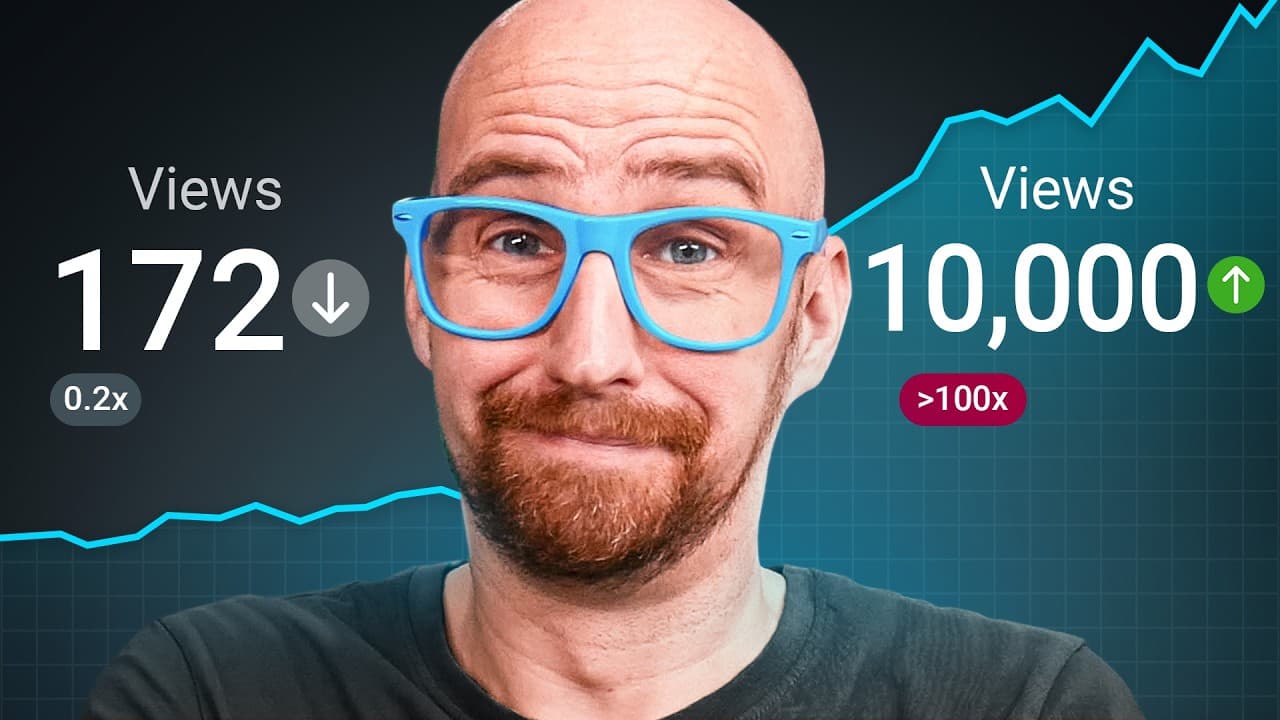
How to Reach 10,000 Views Using YouTube Search
TL;DR
Target exact questions people enter into YouTube Search, then place those phrases naturally in the title, opening description, chapters, and first 30 seconds of the video. This gives YouTube clearer context when a new channel lacks behavioral data, while a complementary thumbnail gives searchers a distinct reason to click instead of merely repeating the title.
Transcript
Being a small YouTube channel looking to hit your first 10,000 views can feel like a traumatic experience every time you check your analytics. So, it might be time to try a different strategy. One that specifically helps new creators just like you. And this strategy is proven to work because there are tons of small channels doing it right now getti... Read More
Key Insights
- YouTube discovery is primarily pulled by viewers, because the system considers what an individual has already watched and identifies a suitable next video rather than broadcasting each upload to a predetermined audience.
- Search is a useful discovery channel for fresh videos and channels because YouTube has little behavioral data about them and may rely more heavily on available metadata, particularly the title and description.
- Effective search titles are close to the words viewers type when trying to solve a problem or make a decision. Keyword tools can reveal those queries and their search volume, reducing the need to guess at clever phrasing.
- The opening description is an elevator pitch that should summarize the video in roughly two sentences and include the exact target phrase. These lines can appear beneath the video in search results before a viewer clicks.
- YouTube chapters can help one video surface for several narrow questions, topics, games, or keywords covered within a longer piece. Chapters require timestamps in the description, with the first timestamp beginning at 0:00.
- Specific chapter names provide clearer search context than generic labels such as "game number one" or "the beginning." Each timestamp should name the precise subject that a viewer might enter into YouTube Search.
- The thumbnail's role is to create a reason to click after the video has appeared in search, while the title and description communicate its subject. A thumbnail can add useful context, contrast, or a specific claim instead of repeating the title.
- YouTube reads the transcript and analyzes the video's content, so creators should naturally say the main search phrase and two or three closely related terms near the beginning. This reinforces the promise established by the title and description.
- More videos from this channel:
- More from this channel: vidIQ
Install to Summarize YouTube Videos and Get Transcripts
Explore YouTube Video Summarizer or Get YouTube Transcript Extractor
Questions & Answers
Q: How can a small channel get views from YouTube Search?
A small channel can target exact questions that viewers already enter into YouTube Search. Use the selected phrase in a direct title, include it within a concise summary at the beginning of the description, and say it naturally during the opening. Add specific chapters for related subtopics and use a thumbnail that gives searchers an additional reason to click.
Q: Why is YouTube Search useful for a new channel?
YouTube Search is useful for a new channel because the platform has little viewer behavior or channel history available for its recommendation system. When behavioral data is absent, YouTube may rely more on metadata such as titles and descriptions. Search therefore gives fresh videos a way to be discovered by people who are actively requesting a relevant answer.
Q: How should I choose a title for YouTube SEO?
Choose a title by identifying the exact phrase people use when trying to answer a question, solve a problem, compare options, or make a decision. Google Trends can show relative interest when filtered for YouTube searches, while the described keyword tool supplies volume and related queries. Use the relevant query directly instead of relying on ambiguous wordplay or unrelated emotional language.
Q: What should the first lines of a YouTube description contain?
The first lines should provide a clear, roughly two-sentence summary of the video's content and naturally include the exact phrase or keywords viewers are searching for. They should function as an elevator pitch rather than a dumping ground for links, hashtags, and unrelated tags. This matters because those opening lines can appear below the video directly within search results.
Q: How do YouTube chapters improve search visibility?
YouTube chapters can surface specific sections of a longer video for narrow questions or topics that viewers search for. This allows one upload to rank for several subjects covered inside it instead of only its main phrase. Add timestamps to the description, begin the first one at 0:00, and label each section with a specific searchable term.
Q: What is the difference between a search title and thumbnail?
The title and description tell YouTube and potential viewers what the video covers by containing the relevant search phrase. The thumbnail has a different job: it explains why someone should choose that result instead of the surrounding options. It should add context, contrast, or a compelling specific claim rather than merely repeating the same words found in the title.
Q: Why should keywords be spoken in the first 30 seconds?
YouTube reads the transcript and analyzes the content of the video, not only its title and description. Saying the main phrase within the first 30 seconds helps confirm that the video delivers the subject promised by its metadata. Naturally adding two or three closely related terms can also improve relevance for additional searches connected to the main query.
Q: Can reviews and opinion videos use YouTube SEO?
Reviews, comparisons, roundups, opinion pieces, and other formats can use search-led discovery by starting with a question rather than a broad topic. For example, a broad category such as Minecraft can become a specific question about the world border or the best mods. Reviews can use a query pattern such as whether a product, tool, subscription, or course is worth it.
Summary & Key Takeaways
-
YouTube discovery largely pulls videos in response to individual viewer behavior instead of simply pushing every upload to an audience. New channels lack the behavioral history that supports recommendations, so YouTube may rely more heavily on metadata. Search can therefore provide an effective starting point for fresh videos and channels with no established audience.
-
Search-focused creators use keyword research to identify the exact phrases viewers enter when solving problems or making decisions. Effective titles reflect those queries directly, while the opening description summarizes the content using the target phrase. This approach replaces clever but ambiguous wording with clear language aligned to demonstrated viewer intent.
-
YouTube also reads transcripts and can surface specific chapters in search, making the spoken introduction and timestamp labels valuable discovery signals. Creators should state the main phrase and related terms naturally within the first 30 seconds, add descriptive chapters beginning at 0:00, and design thumbnails that supply a separate reason to click.
Read in Other Languages (beta)
Share This Summary 📚
Summarize YouTube Videos and Get Video Transcripts with 1-Click
Try YouTube Summary with ChatGPT & Claude or YouTube Transcript Generator
Explore More Summaries from vidIQ 📚
Summarize YouTube Videos and Get Video Transcripts with 1-Click
Try YouTube Summary with ChatGPT & Claude or YouTube Transcript Generator