How YouTube Remixing Changes Creator Rights
TL;DR
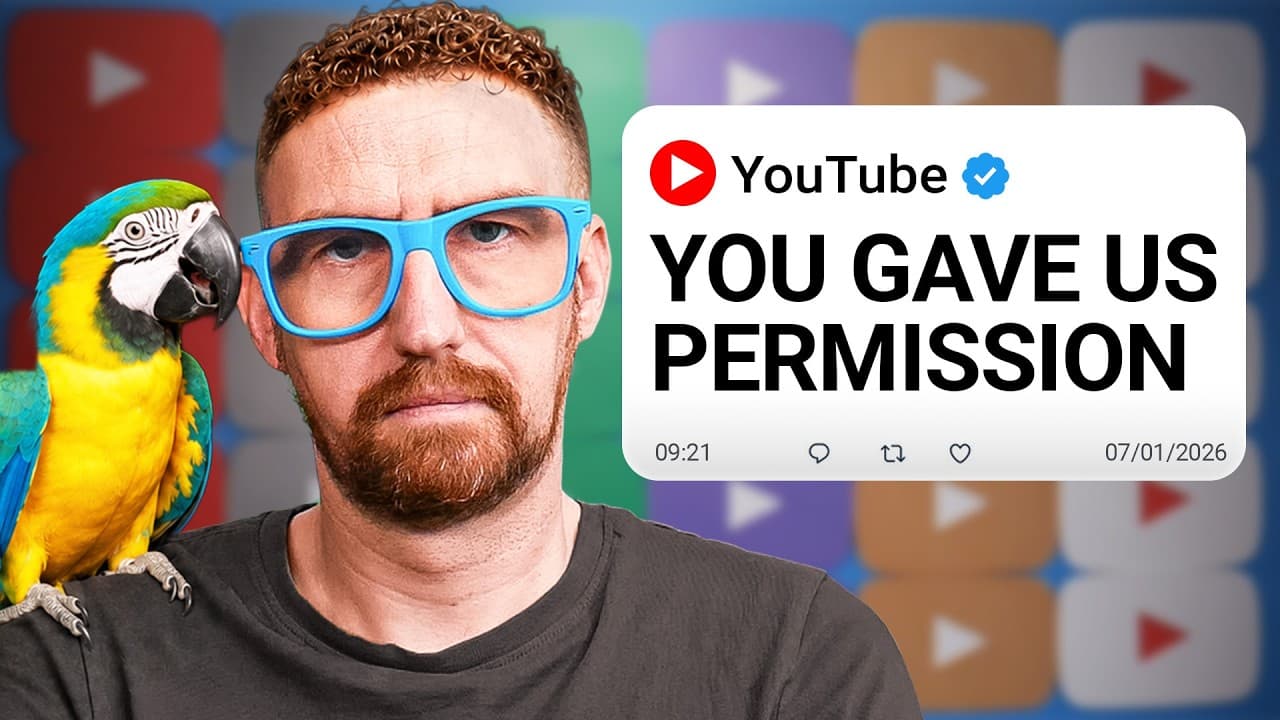
You can limit AI-based visual cloning of your likeness by opening a Short’s video details in YouTube Studio and disabling video remixing or allowing audio remixing only. Uploading content does not transfer ownership, but YouTube’s terms grant the platform and its users broad licenses, while fully AI-generated material may not qualify for copyright protection under the guidance discussed.
Transcript
[laughter] I am really crushing this content creator life today. So, this is an AI generated version of me that YouTube can legally make and they can do the same thing to you because you've already said yes. But before you rage quit this entire endeavor, I do have some good news. Yeah, you can pretty much shut all of this down if you know where to ... Read More
Key Insights
- Uploading a video does not eliminate the creator’s ownership, but it grants YouTube a broad license to monetize, copy, distribute, and support certain derivative uses of the content under the platform’s terms of service.
- YouTube’s user license allows other people to access and use uploaded content only through features enabled by the service, which is why the existing terms can cover newer tools that transform a creator’s Short with AI.
- Copyright arises automatically when an original creation is written down, recorded, or otherwise made tangible, and it gives the owner rights involving publication, distribution, copying, and the creation of derivative works.
- Fully AI-generated material cannot be copyrighted under the US Copyright Office guidance described in the discussion because a clever prompt alone does not establish authorship, although the standard for substantial human involvement remains unclear.
- Human-created elements of an AI-assisted work can retain protection even when AI-generated portions do not. The example given is a song with a human-written melody and parts but AI-generated lyrics, where only the human contributions may be copyrighted.
- A person’s AI-replicated face or voice raises likeness and trademark issues rather than ordinary copyright issues, according to the lawyer, although formally protecting a commercial likeness or voice can cost hundreds or thousands of dollars.
- Video remixing can be disabled from a Short’s video details in YouTube Studio, and selecting audio remixing only can currently prevent YouTube users from visually cloning the creator through the feature discussed.
- Social platforms protect themselves first when copyright disputes arise, and the Digital Millennium Copyright Act shields platforms when they remove flagged material quickly. The lawyer says a federal copyright case averages nearly two years and about $150,000 to prosecute.
- More videos from this channel:
- More from this channel: vidIQ
Install to Summarize YouTube Videos and Get Transcripts
Explore YouTube Video Summarizer or Get YouTube Transcript Extractor
Questions & Answers
Q: How can creators stop AI video remixes of their YouTube Shorts?
Creators can open the video details for a Short in YouTube Studio and turn off video remixing. The discussion also recommends setting the video to audio remixing only, which prevents visual remixing and reduces the risk of other YouTube users generating cloned versions of the creator’s likeness. This solution applies to YouTube’s current feature and may not affect activity on other platforms.
Q: Do creators lose copyright when uploading videos to YouTube?
Creators still own the original videos they produce, but uploading grants YouTube a broad license to use that content. The terms described permit the platform to monetize, copy, distribute, and in some circumstances create or enable derivative works. Other users also receive a worldwide, non-exclusive, royalty-free license to use the content through features that YouTube makes available on its service.
Q: Why can YouTube place ads on videos from unmonetized channels?
YouTube’s terms grant the platform the right to monetize content on the service and state that the agreement does not automatically entitle the creator to payments. According to the discussion, this permits ads to appear before a channel has been monetized and potentially after it has been demonetized. Creators accept this provision when they agree to the platform’s terms of service.
Q: Can fully AI-generated content receive copyright protection?
Fully AI-generated material cannot be copyrighted under the US Copyright Office guidance presented in the discussion because a prompt by itself does not make the user the author. Protection may become more complicated when a person contributes original material or substantially refines the output. The exact meaning of substantial human involvement remains unclear, so the discussion does not present a universal threshold.
Q: Which parts of an AI-assisted work can be copyrighted?
The human-created portions of an AI-assisted work may remain eligible for copyright even when the AI-generated elements are not. The lawyer gives the example of a song whose melody and instrumental parts were created by a person while its lyrics were generated by AI. The melody and parts could remain protected, but the AI-generated lyrics would not receive the same protection under the guidance discussed.
Q: Can copyright law stop someone from cloning a creator’s face or voice?
The lawyer says AI use of a person’s face, image, or voice is not primarily a copyright issue and may instead involve trademark protection. A creator could seek a trademark for a distinctive likeness or voice used in commerce, but the process can cost hundreds or thousands of dollars. YouTube’s remix controls provide a built-in, more immediate option within the platform.
Q: How does YouTube handle copied videos and copyright complaints?
When another creator downloads and reuploads protected material, the original creator may see the match in YouTube’s Content ID tools and decide whether to act, including requesting removal or issuing a copyright strike. Platforms generally focus on limiting their own legal exposure by removing flagged material quickly, and they are not necessarily required to advocate for an individual creator during the dispute.
Q: Why are court cases a poor option for many YouTube copyright disputes?
Court proceedings can demand far more time and money than many creators can justify. The lawyer states that a copyright case takes nearly two years on average to pass through federal court and costs about $150,000 to prosecute. Platform copyright complaints and strikes do not require that investment, but they also reflect the platform’s need to protect itself while laws surrounding AI remain unsettled.
Summary & Key Takeaways
-
Creators retain ownership of original videos uploaded to YouTube, but they grant the platform extensive rights to monetize, copy, distribute, and sometimes enable derivative uses. The terms also give other users a royalty-free license to use content through YouTube features, including the newly discussed AI remixing capability for Shorts.
-
Copyright automatically protects original work once it is recorded or otherwise placed in a tangible form, according to the lawyer interviewed. Fully AI-generated material cannot be copyrighted under the guidance discussed, but human-created portions of mixed works may remain protected. The meaning of substantial human involvement is still unclear and fact-dependent.
-
Creators can disable video remixing in a Short’s details or select audio remixing only to reduce AI cloning through YouTube’s current tools. Platforms primarily protect themselves through takedown systems and legal safeguards. Court action is usually impractical because the lawyer estimates an average copyright case takes nearly two years and costs about $150,000.
Read in Other Languages (beta)
Share This Summary 📚
Summarize YouTube Videos and Get Video Transcripts with 1-Click
Try YouTube Summary with ChatGPT & Claude or YouTube Transcript Generator
Explore More Summaries from vidIQ 📚
Summarize YouTube Videos and Get Video Transcripts with 1-Click
Try YouTube Summary with ChatGPT & Claude or YouTube Transcript Generator