Will YouTube Only Monetize Original Content After July 15th?
TL;DR
YouTube's policy update on July 15th does not mean only original content will be monetized. The key change is the renaming of 'repetitious content' to 'inauthentic content' to better define spam-like content. Channels using AI tools for storytelling can still earn revenue as long as they adhere to existing monetization guidelines, which remain intact.
Transcript
Read and summarize the transcript of this video on Glasp Reader (beta).
Key Insights
- YouTube's upcoming monetization policy update is causing confusion among creators, particularly regarding AI-generated content.
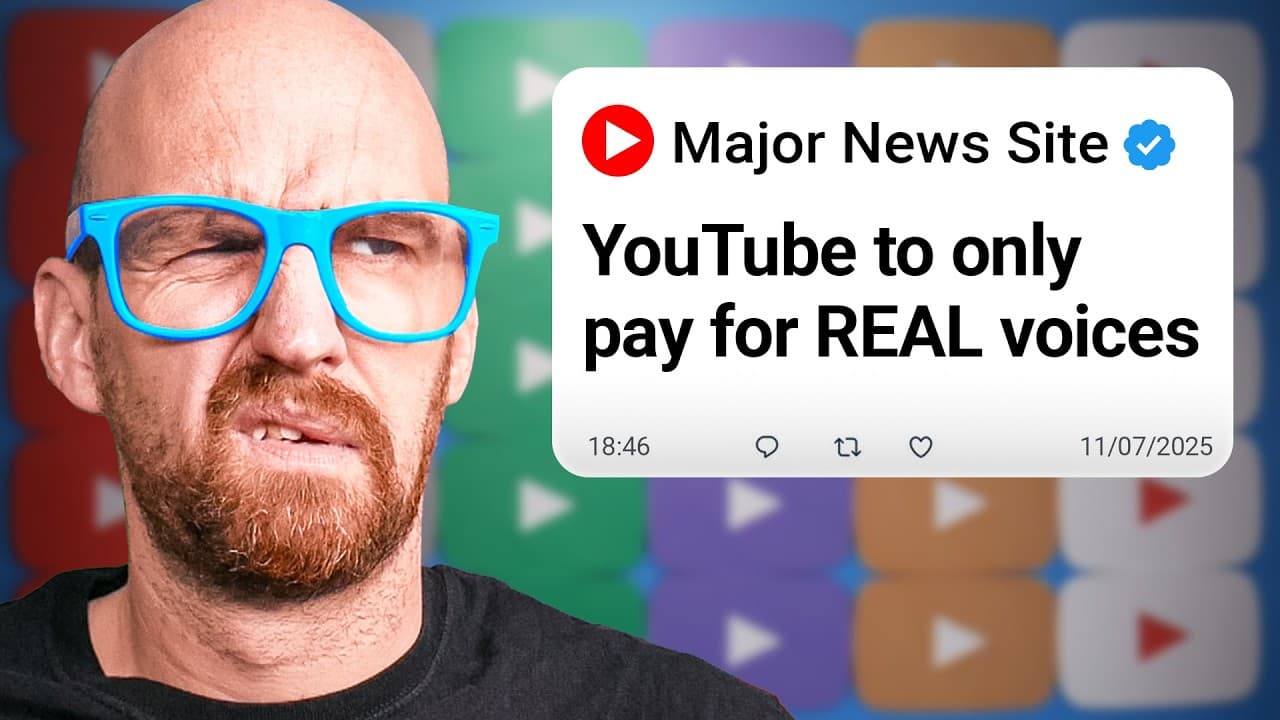
- A viral Instagram post falsely claims YouTube will only pay for real voices and original content, alarming many creators.
- The policy update mainly involves renaming 'repetitious content' to 'inauthentic content' to clarify its definition.
- Inauthentic content refers to mass-produced or repetitive content often considered spam by viewers.
- YouTube's policy on reused content remains unchanged; modifications or commentary are necessary for monetization.
- AI tools are welcome on YouTube, and channels using them can still monetize if they follow existing policies.
- YouTube aims to prevent spam content while still encouraging the use of AI for enhancing storytelling.
- The update is not a new change but a rewording to better communicate existing policies, preventing misinformation.
Install to Summarize YouTube Videos and Get Transcripts
Explore YouTube Video Summarizer or Get YouTube Transcript Extractor
Questions & Answers
Q: What is causing confusion among YouTube creators regarding the policy update?
The confusion stems from a viral Instagram post claiming that YouTube will only pay for real voices and original content starting July 15th. This misinformation has led creators to worry about the monetization status of AI-generated content, prompting YouTube to clarify the actual changes in their policy.
Q: How does YouTube define 'inauthentic content' in the updated policy?
Inauthentic content is defined as mass-produced or repetitive content that viewers often consider spam. This includes channels that upload narrative stories with superficial differences or slideshows with the same narration. The update aims to clarify this definition to prevent spam-like content while maintaining monetization eligibility.
Q: Does the policy update affect YouTube's stance on reused content?
No, the policy update does not change YouTube's stance on reused content. Creators can still monetize clips, compilations, and reaction content if they add significant original commentary, modifications, or educational or entertainment value to the original video, adhering to the existing guidelines.
Q: What is YouTube's position on AI-generated content in relation to monetization?
YouTube welcomes the use of AI tools to enhance storytelling and allows channels that use AI to remain eligible for monetization. However, creators must follow YouTube's monetization policies and disclose when content is altered or synthetic. The update does not target AI content specifically but aims to prevent spam.
Q: What changes are being made to the terminology in YouTube's policy update?
The main change in terminology involves renaming 'repetitious content' to 'inauthentic content.' This change is intended to better communicate the existing policy that targets mass-produced or repetitive content often deemed spam by viewers. The update is a rewording to clarify rather than introduce new rules.
Q: What is the purpose of YouTube's policy update regarding content monetization?
The purpose of the policy update is to clarify existing guidelines on content monetization, particularly concerning inauthentic content. By renaming 'repetitious content' to 'inauthentic content,' YouTube aims to prevent spam-like content while supporting the use of AI tools for enhancing storytelling, ensuring content remains original and authentic.
Q: How has YouTube addressed the misinformation about the policy update?
YouTube has addressed the misinformation by clarifying that the policy update is not a new change but a rewording of existing guidelines. The update aims to prevent spam content and support AI tools, reassuring creators that AI-generated content remains eligible for monetization if it follows the guidelines.
Q: What examples did YouTube provide for content that may be considered inauthentic?
YouTube provided examples such as channels uploading narrative stories with only superficial differences or slideshows with the same narration. These types of content are often considered spam by viewers and fall under the definition of inauthentic content, which is ineligible for monetization under the updated policy.
Summary & Key Takeaways
-
YouTube is updating its monetization policies, causing confusion among creators about AI-generated content. A viral Instagram post incorrectly states that only real voices will be monetized. YouTube clarifies that the policy update involves renaming 'repetitious content' to 'inauthentic content' to better define spam-like content.
-
The update does not change YouTube's stance on reused content, which can still be monetized with added commentary or modifications. AI tools are encouraged, and channels using them remain eligible for monetization if they adhere to existing guidelines. The update aims to clarify rather than change policies.
-
YouTube's policy update is a response to the rise of AI-generated content, ensuring content remains original and authentic. The update is not a new policy but a rewording to prevent misinformation. YouTube continues to support AI tools for enhancing content, provided they follow monetization rules.
Read in Other Languages (beta)
Share This Summary 📚
Summarize YouTube Videos and Get Video Transcripts with 1-Click
Try YouTube Summary with ChatGPT & Claude or YouTube Transcript Generator
Explore More Summaries from vidIQ 📚
Summarize YouTube Videos and Get Video Transcripts with 1-Click
Try YouTube Summary with ChatGPT & Claude or YouTube Transcript Generator