How to Find a Repeatable Viral YouTube Format
TL;DR
A repeatable format can outperform expensive, high-effort production when it gives viewers a clear premise, immediate stakes, and a familiar subject. Joey Kinsley escaped roughly 5,000-view stagnation by combining simple fast-food challenges, self-aware commentary, economic relatability, and recognizable restaurant brands, then repeating the proven structure instead of abandoning it after one viral success.
Transcript
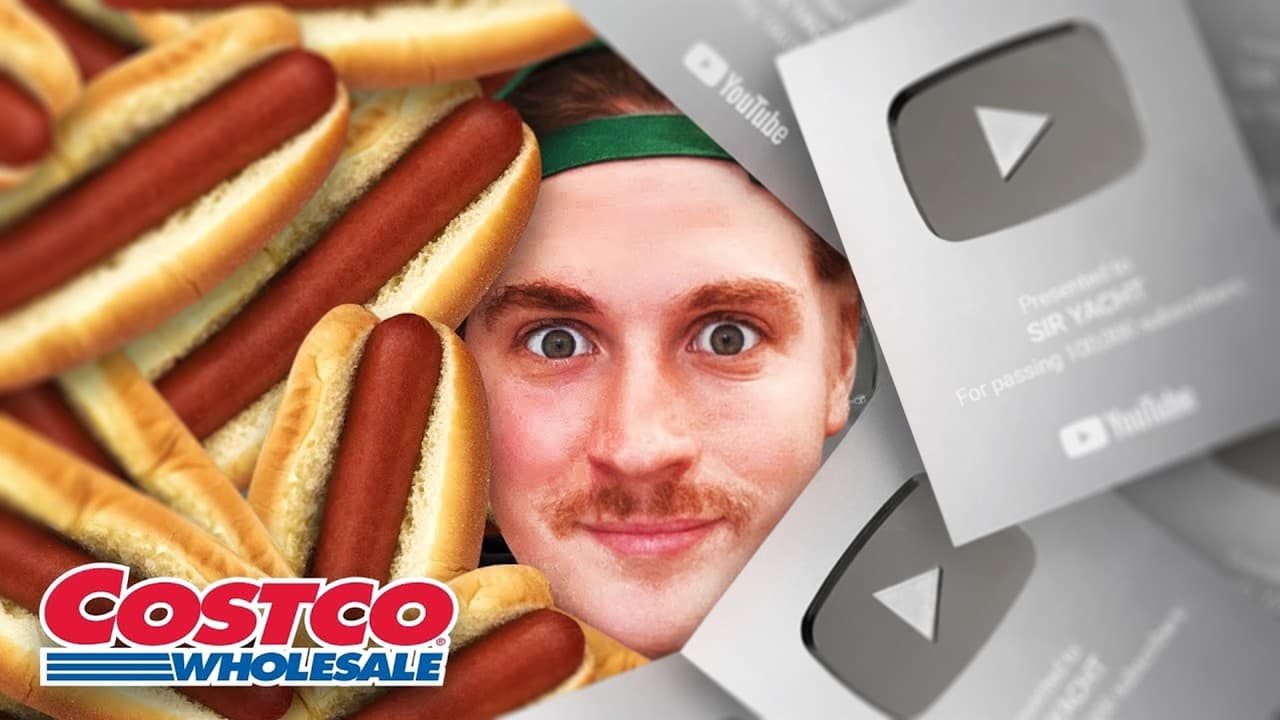
This is the story of how a Costco hot dog, yes, Costco hot dog, turned this man, Joey Kinsley, or better known as Sirat, into a star. And by star, I mean full-time YouTuber, getting over a 100,000 subscribers in months. So, how do you go from biking across the state for 5,000 views to getting millions for eating a hot dog? Here's how he broke the a... Read More
Key Insights
- Audience clarity is essential because Joey's early mixture of travel videos, haunted locations, endurance challenges, and unrelated ideas gave YouTube no consistent identity or viewer group to associate with his channel, despite the effort invested in individual productions.
- The Costco challenge worked by reframing a familiar fast-food meal as an experiment in fiscal survival during a period when inflation, grocery prices, and the cost of common foods were prominent concerns in the source's account of 2024.
- A strong opening establishes the challenge, constraints, mystery, and promised payoff immediately. Joey explained that he would eat only the Costco hot dog meal for seven days, exclude other food and drinks, and later reveal his spending and whether he became tired of it.
- Joey's commentary is the central entertainment mechanism because his stream-of-consciousness narration, self-deprecating jokes, and awareness of the experiment's absurdity transform repetitive meals and ordinary moments into a story that feels like spending time with a funny friend.
- The production format is intentionally simple: visit the restaurant, eat the selected food, discuss the experience later, and repeat. Much of the storytelling happens outside public locations, reducing filming friction while allowing Joey's personality rather than cinematic footage to carry the episode.
- One viral upload is most useful as proof of concept when the creator identifies why it worked and develops related follow-ups. Joey retained the simple premise, chaotic commentary, natural curiosity, and economic angle across subsequent restaurant challenges instead of immediately pursuing a larger or unrelated spectacle.
- Recognizable restaurant brands create built-in audience familiarity because viewers already know places such as Costco, Chili's, Red Lobster, In-N-Out, and IKEA. That familiarity supplies opinions, nostalgia, and cultural associations before the audience even starts watching the challenge.
- High production effort does not guarantee audience interest because Joey's demanding travel projects underperformed compared with a low-barrier Costco experiment. The case suggests that a clear, repeatable idea with immediate curiosity can matter more than logistical difficulty, extensive travel, or cinematic footage.
Install to Summarize YouTube Videos and Get Transcripts
Explore YouTube Video Summarizer or Get YouTube Transcript Extractor
Questions & Answers
Q: How did Joey Kinsley grow past 100,000 subscribers?
Joey Kinsley grew past 100,000 subscribers after shifting from loosely connected travel and challenge uploads to a repeatable fast-food experiment format. His Costco video presented a simple seven-day restriction, connected the premise to food costs, and relied on humorous commentary. After it succeeded, he repeated the underlying structure with familiar restaurant brands rather than treating the breakout upload as an isolated event.
Q: Why did Joey Kinsley's early travel videos struggle?
Joey's early videos struggled because the channel did not communicate a stable identity or serve one obvious audience. Uploads moved among a haunted prison, biking across a state, a teddy bear concept, and other travel material. The transcript argues that this inconsistency gave YouTube no repeatable format to identify, while the travel niche also demanded stronger visual, personality, budget, or storytelling differentiation than his videos provided.
Q: Why did the Costco hot dog challenge become popular?
The Costco challenge combined several immediately understandable elements: a $1.50 meal, a seven-day restriction, a promise to calculate the total cost, and uncertainty about the physical consequences. Joey also framed the experiment as sarcastic fiscal survival while people were concerned about inflation and grocery prices. Spreadsheets, 29 hot dogs, $43.50 in spending, and an unexpected 4.2-pound weight loss created further discussion.
Q: How should a YouTube challenge video open?
A challenge video should quickly state the premise, rules, constraints, unanswered question, and eventual payoff. Joey's opening told viewers that he would eat only the Costco hot dog meal for one week, consume no other food or drinks, and avoid free samples. He also promised to reveal how much he spent and whether he became sick of the meal, giving viewers clear reasons to continue watching.
Q: What made Joey Kinsley's commentary effective?
Joey's commentary worked because it treated the challenge's absurdity as the main source of entertainment. He described digestive discomfort, joked about needing Tums and Pepto-Bismol, warned viewers not to copy him, and repeatedly mocked his own decisions. Instead of delivering a polished food review, he offered self-aware, unfiltered narration that turned routine meals and retrospective observations into jokes, conflict, and personality-driven storytelling.
Q: What repeatable format did Joey Kinsley discover?
Joey discovered a format built from a simple restaurant challenge, chaotic personal commentary, natural curiosity, and a relatable economic angle. The practical production loop was equally straightforward: visit a familiar restaurant, eat the food under a clear restriction, talk about the experience afterward, and repeat. This reduced the need for constant public filming or cinematic footage while preserving a recognizable structure across multiple uploads.
Q: Why do familiar restaurant brands help YouTube videos?
Familiar restaurant brands give a video an existing pool of recognition, opinions, nostalgia, and cultural associations. The transcript contrasts obscure towns from Joey's travel uploads with widely known places such as Chili's, Costco, IKEA, Red Lobster, and In-N-Out. Viewers do not need background information to understand those subjects, so the title and premise can produce curiosity before the challenge itself begins.
Q: What should creators do after one video goes viral?
Creators should examine the successful video's underlying structure and make related follow-ups that preserve the reasons viewers responded. Joey treated the Costco upload as proof of concept, then reused its simple survival premise, comedic narration, low-friction production, familiar brands, and economic relatability. His later examples included Skyline Chili with 1.4 million views, Red Lobster with 1.9 million, and In-N-Out with 2.5 million.
Summary & Key Takeaways
-
Joey Kinsley's early uploads mixed travel, challenges, unusual locations, and unrelated concepts without establishing a consistent audience or recognizable identity. Although he invested substantial effort, including biking across a state and visiting 50 capitals in 30 days, the videos commonly remained around 5,000 views because viewers and YouTube lacked a repeatable format to recognize.
-
The $1.50 Costco hot dog experiment supplied a clearer proposition: eat only the combo for seven days, track the spending, and report the physical and emotional consequences. Its connection to inflation and food costs turned an eating challenge into sarcastic fiscal survival, while spreadsheets, weight results, and digestive problems created additional questions and discussion.
-
After the Costco video's success, Joey treated it as proof of concept and repeated its underlying structure with Skyline Chili, Red Lobster, In-N-Out, Chili's, and other familiar brands. The scalable formula combined a simple challenge, immediate rules, recognizable restaurants, low-friction filming, retrospective narration, curiosity, economic relatability, and personality-driven humor.
Read in Other Languages (beta)
Share This Summary 📚
Summarize YouTube Videos and Get Video Transcripts with 1-Click
Try YouTube Summary with ChatGPT & Claude or YouTube Transcript Generator
Explore More Summaries from vidIQ 📚



Summarize YouTube Videos and Get Video Transcripts with 1-Click
Try YouTube Summary with ChatGPT & Claude or YouTube Transcript Generator