How to Optimize Facebook Ads for 2026 Success

TL;DR
Optimize Facebook ads for 2026 with a three-part M3 structure: test creatives in a core prospecting CBO, graduate winners into a scaling campaign, then add retargeting and retention. Group 2 to 12 new creatives into dated ad sets, and use swim lanes and exclusions to control spending across new, engaged, and existing audiences. Read on for the campaign setup, testing process, and budget-allocation logic.
Transcript
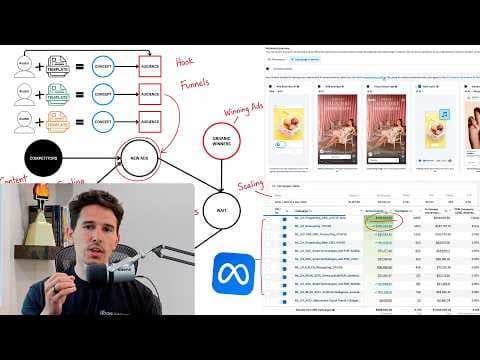
Today, I'm giving you the exact threepart framework that I would follow if I was running Facebook ads in 2026. I'll be taking what I've learned in driving over a billion dollars in revenue over the last 11 years for dozens of seven, eight, and even 9 figure brands, and I'll be condensing everything down into a single plan that you can copy and past... Read More
Key Insights
- A prospecting CBO campaign is essential for testing and scaling Facebook ads effectively.
- New customer acquisition should be a primary focus to drive long-term growth and profitability.
- The 'swim lane' strategy helps allocate budgets across new, engaged, and existing audiences.
- Creative testing is crucial; implement a creative flywheel to refresh ads and boost performance.
- Incremental attribution is key to analyzing creative effectiveness and guiding future ad strategies.
- Advanced breakdowns, such as day of week and demographic analysis, optimize ad spend efficiency.
- Cost caps can stabilize cost per acquisition by varying spend based on performance signals.
- Adset spending limits enable consistent creative testing without disrupting existing campaign structures.
Install to Summarize YouTube Videos and Get Transcripts
Explore YouTube Video Summarizer or Get YouTube Transcript Extractor
Questions & Answers
Q: How should you structure Facebook ads for 2026 success?
Start with a core prospecting CBO campaign for testing and part of the scaling process. Graduate winning ads into a dedicated scaling campaign, then introduce retargeting and retention campaigns as customer acquisition gains momentum.
Q: What is the M3 structure for Facebook ads?
The M3 structure begins with a prospecting CBO where creatives are tested and winners are identified. Winning ads graduate into a scaling campaign, while retargeting and retention campaigns cover engaged audiences and existing customers.
Q: How does a prospecting CBO campaign work?
A prospecting CBO is the main campaign and the foundation of the ad account. It continually hosts new creative packs so ads compete against one another, providing a testing environment and supporting account scaling.
Q: How many creatives should go into each Facebook ad set?
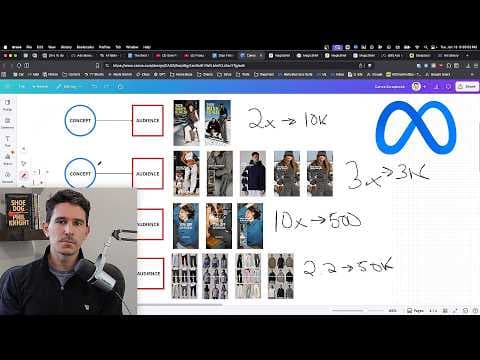
Each new broad pack can contain anywhere from 2 creatives to 10 or even 12 creatives in one ad set. The speaker recommends dating each pack so its launch timing is clear as additional packs are introduced.
Q: When should an ad move into the scaling campaign?
An ad should graduate after it becomes a winner in the prospecting CBO. The scaling campaign then dedicates budget to the specific ads known to work better than the others.
Q: What are swim lanes in this Facebook ads strategy?
Swim lanes separate audiences into new audiences, engaged audiences, and existing customers. Unlike a traditional top-, middle-, and bottom-of-funnel model, this setup focuses on knowing where the advertising budget is being spent.
Q: Why are exclusions important when allocating a Facebook ads budget?
Without proper swim lanes and exclusions, Facebook may overspend on engaged audiences and existing customers because they tend to produce higher returns. The transcript illustrates this with a $10,000 budget that the platform could otherwise distribute wherever it wants.
Q: Why does the strategy prioritize new customer acquisition and retention?
The goal is to acquire as many new customers as possible and then encourage them to purchase repeatedly. Retention is described as the business’s cash cow, while new-customer acquisition continually supplies future engaged and existing customers.
Summary & Key Takeaways
-
The foundation of a successful Facebook ad strategy in 2026 is the prospecting CBO campaign, which allows for effective testing and scaling. Prioritizing new customer acquisition is crucial for long-term growth, as it feeds into engaged and existing customer segments.
-
A 'swim lane' approach ensures budget allocation is optimized across new, engaged, and existing audiences, preventing overspending on less profitable segments. Creative testing is ongoing, with a creative flywheel refreshing ads regularly to maintain performance.
-
Utilizing advanced breakdowns and cost caps helps refine spending strategies, ensuring optimal return on ad spend. Adset spending limits facilitate efficient creative testing, allowing for continuous innovation without disrupting core campaign structures.
Read in Other Languages (beta)
Share This Summary 📚
Summarize YouTube Videos and Get Video Transcripts with 1-Click
Try YouTube Summary with ChatGPT & Claude or YouTube Transcript Generator
Explore More Summaries from Sam Piliero 📚



Summarize YouTube Videos and Get Video Transcripts with 1-Click
Try YouTube Summary with ChatGPT & Claude or YouTube Transcript Generator