How should affluence shape our moral duties today
TL;DR
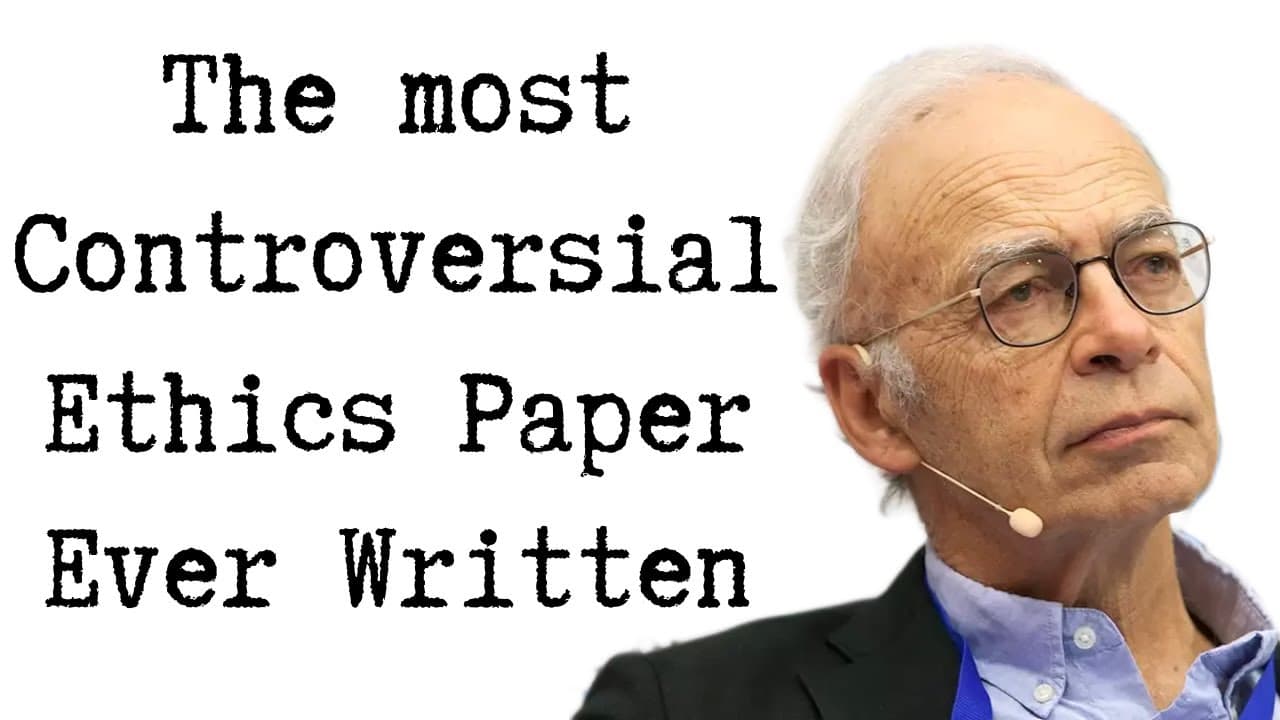
Affluence imposes a moral obligation to prevent terrible suffering when it is in our power to do so without sacrificing anything of moral significance. The video outlines Singer’s claim that giving to famine relief is not optional but obligatory for the wealthy, and explains the distinction between supererogatory and obligatory actions with practical examples.
Transcript
It's a very radical conclusion. And the problem is it's very hard to see what's wrong with the argument. The argument seems like a good one. And it has seemed that way to everyone who read this paper since 1972. Today we're talking about an absolutely revolutionary paper published by a philosopher named Peter Singer in 1972. The name of the paper i... Read More
Key Insights
- Giving to famine relief is claimed to be morally required when it prevents suffering at little or no moral cost to the giver.
- The distinction between obligatory and supererogatory acts is central to Singer's thesis, with the latter being optional rather than required.
- Singer argues that ordinary charitable acts, if affordable, should be treated as duties rather than choices.
- The paper uses practical examples like coffee and donuts to illuminate the obligation concept in everyday life.
- Affluence creates unique moral pressure because resources can save lives at low personal cost.
- The core premise is that neglecting to help when one can prevent harm constitutes a moral failure.
- The argument links global suffering to personal financial decisions in wealthy societies.
- The video emphasizes a radical shift from viewing charity as praise worthy to viewing it as a moral obligation.
- More videos from this channel:
- More from this channel: Jeffrey Kaplan
Install to Summarize YouTube Videos and Get Transcripts
Explore YouTube Video Summarizer or Get YouTube Transcript Extractor
Questions & Answers
Q: What is the central claim about charity in Singer's argument?
The central claim is that if it is in our power to prevent something very bad from happening without sacrificing anything of moral significance, then we must morally do it. Hunger, disease, and suffering are considered very bad, and affluence gives individuals the means to prevent such harms without losing essential values. Thus, giving to famine relief should be obligatory rather than optional.
Q: Why does the speaker contrast obligatory acts with supererogatory acts?
The contrast shows that what many people treat as charitable extras ought to be treated as duties. An act like buying coffee for others might be supererogatory if not required, but Singer argues that when such generosity prevents suffering without moral cost, it becomes obligatory. This reframes everyday choices as moral obligations rather than mere niceties.
Q: What examples are used to illustrate obligatory versus supererogatory acts?
Examples include bringing coffee and donuts to a meeting as potentially supererogatory when not required, versus donating to famine relief when one can do so without moral sacrifice becoming an obligation. The supermarket charity donation is another illustration where the extra payment could be seen as a small, morally significant obligation if it prevents harm.
Q: What premises underlie Singer’s argument about moral duty and prevention of harm?
One premise is that if it is in our power to prevent something very bad from happening without sacrificing anything of moral significance, we must do so. Another is that hunger and disease constitute very bad things. Together they lead to the conclusion that affluent individuals have a moral duty to donate to famine relief, reframing charity as an obligation rather than a choice.
Q: How does the video describe the societal impact of Singer’s 1972 paper?
The video notes that Singer’s argument was radical and controversial, challenging the prevailing view that giving is optional. It also highlights that the paper suggested a reworking of personal life and societal norms to align with a stricter moral standard, a standard that would require substantial changes in how people allocate their resources.
Q: What role does efficiency play in the argument for giving?
Efficiency matters because the argument emphasizes that funds donated to organizations like Oxfam or UNICEF can save lives with a high percentage reaching those in need. The idea is that the moral value of preventing suffering increases when resources are used effectively, making donations a duty rather than a mere preference.
Q: How does the argument address the personal cost of giving?
The argument claims that if giving does not sacrifice anything of moral significance, then it is obligatory. When people can redirect money spent on luxuries toward famine relief without compromising essential goods or values, the act of giving becomes a moral duty rather than a voluntary extra.
Q: What does the speaker identify as the scope of the moral obligation?
The scope is global and universal for those with affluence, extending beyond local concerns. The obligation arises from the ability to prevent suffering on a large scale without moral cost, implying that everyday consumptions and spending decisions carry ethical weight and should be calibrated to minimize harm wherever possible.
Summary & Key Takeaways
-
The video argues that charity to famine relief is morally obligatory for the affluent, not supererogatory, if it prevents suffering without significant personal cost.
-
It introduces a key distinction between supererogatory acts and obligatory duties, using examples like buying coffee and bringing donuts to illustrate the concept.
-
It presents Singer's argument structure step by step, starting from a general moral premise to specific implications for everyday spending and charitable giving.
Read in Other Languages (beta)
Share This Summary 📚
Summarize YouTube Videos and Get Video Transcripts with 1-Click
Try YouTube Summary with ChatGPT & Claude or YouTube Transcript Generator
Explore More Summaries from Jeffrey Kaplan 📚
Summarize YouTube Videos and Get Video Transcripts with 1-Click
Try YouTube Summary with ChatGPT & Claude or YouTube Transcript Generator