What is Frege's sense and reference in language?
TL;DR
Frege argues that linguistic terms have two layers of meaning, sense and reference. This two level framework explains why identity statements can be informative without being about the linguistic meaning alone, as shown by examples like Morning Star and Evening Star. The view also generalizes from names to sentences and addresses how empirical knowledge can arise from linguistic content.
Transcript
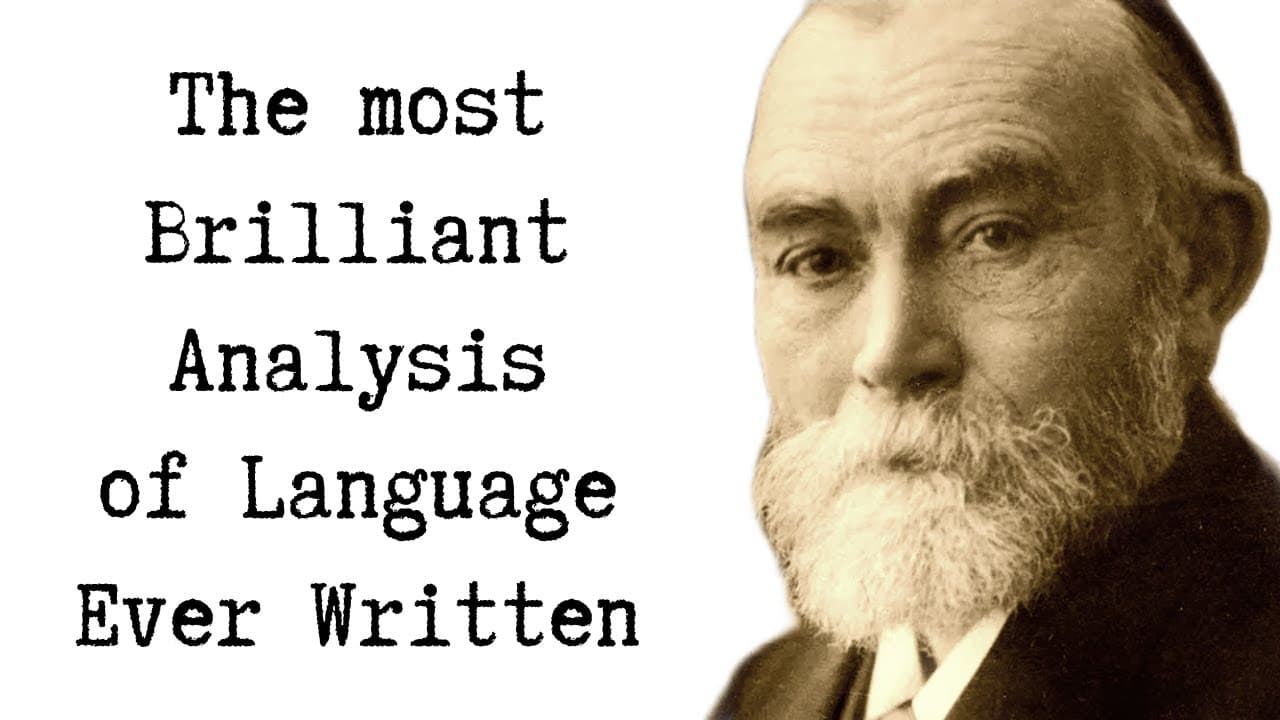
this guy dolab Fraga published this paper Uber Zin un on sense and reference in 1892 and it is the most important paper in the history of the philosophy of language it is very complicated but I'm going to explain it now frager realizes that linguistic terms words have to have two levels of meaning they each have to have a sense and a reference I'm ... Read More
Key Insights
- Sense and reference are distinct layers for names and terms.
- Identity statements can be informative even when referents are the same.
- Mill’s theory fails to capture cognitive value in informative sentences.
- Frage’s reply introduces a middle layer called the sense.
- The morning star and evening star illustrate empirical information about the world.
- The sense is a mode of presentation connected to the referent.
- A full sentence has a sense and a truth value as its reference.
- Definite descriptions are treated within the same sense-reference framework.
- More videos from this channel:
- More from this channel: Jeffrey Kaplan
Install to Summarize YouTube Videos and Get Transcripts
Explore YouTube Video Summarizer or Get YouTube Transcript Extractor
Questions & Answers
Q: A real search query question about the video (e.g. 'How to...', 'What is...', 'Why does...', 'When should...'). Question 1
Frege introduces sense and reference as two distinct aspects of linguistic meaning, where the sense is the mode of presentation and the reference is the object named. This distinction explains why some identity statements reveal new information about the world rather than merely restating linguistic facts. The morning star versus evening star example shows that even two terms can refer to the same object yet carry different cognitive value.
Q: Question 2
The morning star and evening star example demonstrates that two terms can denote the same object while providing new empirical information when connected by an identity statement. This shows that truth conditions of sentences are not determined solely by reference, but by a sense that carries informational content about how the object is presented or known.
Q: Question 3
Mill’s theory, which equates the meaning of a name with its object, fails to account for informative identity statements because it collapses distinct uses of names into a single referent. Frege’s critique highlights that two names can share a referent yet have different cognitive effects due to their different senses.
Q: Question 4
Frage’s old theory attempted to translate identity statements into linguistic equivalents, but it cannot explain cases where informative content arises from the world rather than language alone. Frege resolves this by introducing a sense that mediates between the sign and its referent, allowing empirical information to be conveyed.
Q: Question 5
The concept of sense as mode of presentation helps explain how definite descriptions fit into the same framework. A sentence about a description can have truth conditions determined by how the object is presented, not merely by the object’s denotation, aligning description content with empirical knowledge.
Q: Question 6
The train example shows how a person can know the linguistic meaning of a name while learning something about the world when presented with new information about who the name refers to. This illuminates the cognitive value of informative statements that arise from sense rather than mere reference.
Q: Question 7
In Frege’s view, the sense of a sentence equals the proposition or thought expressed. The reference of a sentence is its truth value, connecting linguistic content to a semantic object that can be true or false independently of the individuals involved in utterances.
Q: Question 8
Defining sense and reference allows for a general theory of language where terms carry both a way of presenting objects and the objects themselves. This model explains how linguistic meaning interacts with empirical knowledge, and it extends to comprehensive aspects of language beyond proper names to include full sentences and descriptions.
Summary & Key Takeaways
-
The video introduces Frege's distinction between sense and reference, and explains why a sentence can be informative despite sharing referents. It uses the Jay-Z and Shaw Carter example to motivate cognitive value in identity statements and the Morning Star versus Evening Star to illustrate empirical information.
-
It situates Frege against Mill's theory by showing that language can convey more than mere reference, through a sense that presents objects in a particular way. The middle layer, the sense, allows for empirical knowledge about the world, not just linguistic meaning.
-
It concludes that the sense of a term is a mode of presentation linked to reference, and that the sense of a sentence is its thought or proposition, with the truth value being its reference, thus extending the analysis to full language and definite descriptions.
Read in Other Languages (beta)
Share This Summary 📚
Summarize YouTube Videos and Get Video Transcripts with 1-Click
Try YouTube Summary with ChatGPT & Claude or YouTube Transcript Generator
Explore More Summaries from Jeffrey Kaplan 📚



Summarize YouTube Videos and Get Video Transcripts with 1-Click
Try YouTube Summary with ChatGPT & Claude or YouTube Transcript Generator