What Is Descartes Method of Doubt in Meditation I?
TL;DR
Descartes proposes wiping out all beliefs that are not absolutely certain to rebuild true knowledge. He outlines a plan to doubt beliefs by examining basic principles and grouping beliefs to test them as a whole. The method of doubt aims to discard probable beliefs and reveal what can be known with certainty.
Transcript
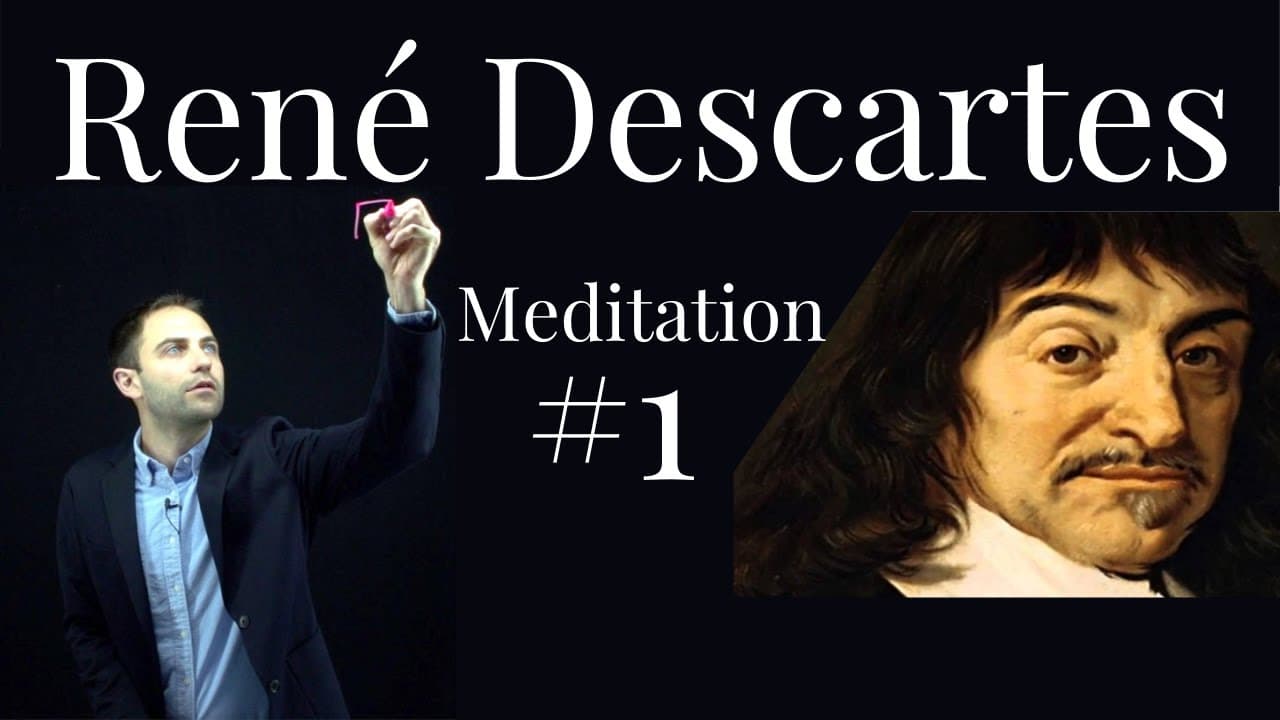
Definitely you have hands. Just have some these six papers or chapters written by Renee Deart in Latin originally in 1641. These are maybe the most famous, most influential work of philosophy from the 17th and 18th centuries in Europe. Okay. So, let me say something about the author Renee Decart. He was a French mathematician and philosopher. His n... Read More
Key Insights
- Descartes distinguishes between beliefs that are probably true and those that are certain.
- The plan is to wipe away all beliefs that are not completely certain and indubitable.
- The method of doubt requires identifying basic principles underlying many beliefs.
- Beliefs believed due to trusted authorities can be doubted if the basic principle is questionable.
- Doubting a basic principle can invalidate many beliefs tied to it.
- The process seeks to build a new system of beliefs only from certain knowledge.
- The method is applied to a wide range of beliefs rather than itemizing every claim.
- Dream skepticism and malicious demon skepticism are among the concerns raised in the meditation.
Install to Summarize YouTube Videos and Get Transcripts
Explore YouTube Video Summarizer or Get YouTube Transcript Extractor
Questions & Answers
Q: A real search query question about the video (e.g. 'How to...', 'What is...', 'Why does...'). Question 1
What is the method of doubt and how does it function in Meditation I of Descartes? The method of doubt is a strategy to doubting not every single belief, but by questioning the basic principles on which they rest. The goal is to identify at least one reason for doubt in a group of beliefs and then discard that entire group to clear space for certain knowledge.
Q: Question 2
Why does Descartes want to wipe away all beliefs that are not completely certain? He argues that beliefs based on probable truth can be unreliable because they may be false, and starting from a clean slate helps ensure that the rebuilt system is grounded in certainty. This approach aims to prevent error from unduly contaminating knowledge claims.
Q: Question 3
What is meant by basic principles in Descartes method of doubt? Basic principles are foundational assumptions on which many beliefs depend, such as trust in reliable information from authorities. If a basic principle can be doubted, then all beliefs built on it can be thrown out, allowing a more secure reconstruction of knowledge.
Q: Question 4
How does Descartes propose to identify groups of beliefs to doubt? He suggests considering big groups of beliefs rather than testing each claim individually. By undermining the foundations of a whole group, the entire set of beliefs can be discarded, saving time and focusing effort on the core principles that support multiple beliefs.
Q: Question 5
What is the significance of the two sentences quoted from Meditation I? The sentences articulate the method: hold back assent to opinions not completely certain and indubitable as you do from those clearly false, and seek doubts that can undermine any belief in order to wipe them away. They frame the rational process of doubt and rebuilding.
Q: Question 6
How does the example of grandmother telling truths illustrate the method of doubt? If the grandmother is unreliable, then many beliefs acquired from her statements may rest on an uncertain principle. By doubting the reliability principle, you undermine those beliefs linked to it, demonstrating how a single foundational doubt can collapse many claims.
Q: Question 7
What roles do dream skepticism and malicious demon skepticism play in Meditation I? They are cited as potential sources of doubt about sensory experience and external reality, illustrating that even everyday beliefs about the world could be questioned. This supports the broader aim of identifying beliefs that survive the doubt procedure.
Q: Question 8
What is the practical outcome after applying the method of doubt in Meditation I? The immediate outcome is a removal of many beliefs, creating a clean slate. The subsequent meditations promise to rebuild a system of beliefs that are guaranteed to be true, starting from the certainties that remain after the doubt process.
Summary & Key Takeaways
-
Descartes introduces the project of doubt, separating beliefs into probable and certain categories.
-
He explains the plan to wipe away all beliefs by doubting the basic principles they rest on.
-
The method of doubt uses broad groups of beliefs to avoid testing each individually, aiming for a foundational reconstruction.
Read in Other Languages (beta)
Share This Summary 📚
Summarize YouTube Videos and Get Video Transcripts with 1-Click
Try YouTube Summary with ChatGPT & Claude or YouTube Transcript Generator
Explore More Summaries from Jeffrey Kaplan 📚

Summarize YouTube Videos and Get Video Transcripts with 1-Click
Try YouTube Summary with ChatGPT & Claude or YouTube Transcript Generator