How to Avoid YouTube Monetization Violations
TL;DR
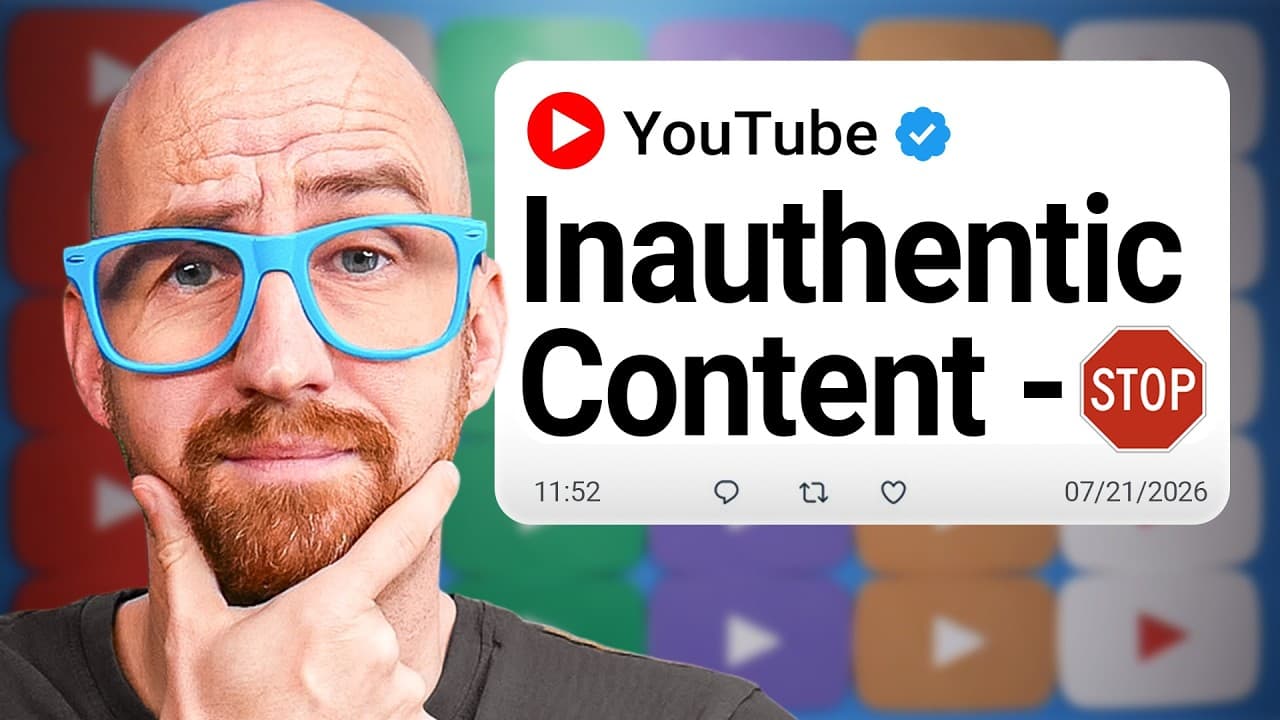
YouTube has replaced the catch-all label "inauthentic content" with three clearer monetization categories: generic and repetitive content, AI personas addressing sensitive topics, and unsatisfying or off-putting content. Creators should add original voice, experience, narrative, or educational value, while avoiding templated repetition, misleading expert personas, fabricated events, and emotionally manipulative material that drives viewers away.
Transcript
Good news when it comes to demonetization, you're never going to have to worry about inauthentic content ever again. Unsatisfying or off-putting content? Inauthentic content is being replaced with three brand new categories that should do a better job of explaining what's happened to your channel. So, in this video, we're going to show you what tho... Read More
Key Insights
- YouTube's former "inauthentic content" label is being replaced by three more specific categories: generic and repetitive content, AI personas discussing sensitive topics, and unsatisfying or off-putting content. YouTube says the policy application remains the same even though its language has changed.
- Generic and repetitive content is material created from templates with too little variation between videos. Channels that repeatedly reproduce the same format without meaningful creativity may be rejected from the YouTube Partner Program or removed from it, including channels following tutorials promising easy revenue.
- Original contribution is the key defense against repetitive-content concerns. Creators should add their own style, voice, experience, story, or creative perspective when using an existing idea, format, topic, or tutorial, rather than merely copying another creator's approach or repeatedly copying their own previous work.
- AI-generated content is not automatically ineligible for monetization because YouTube says its policies are independent of the production tools used. An appropriately labeled AI persona can support immersive storytelling, provided the content's subject, presentation, and intent do not introduce separate monetization concerns.
- AI personas become a monetization concern when realistic generated people offer advice about finance, legal matters, health care, or medicine. Such presentations can mislead audiences by imitating professionals associated with significant qualifications, experience, and trust, particularly when viewers may not recognize the persona as artificial.
- Unsatisfying or off-putting content is material that viewers experience as emotionally distressing, manipulative, or unpleasant enough to avoid the channel or platform. Examples discussed include animal-distress rescue stories, violence or loss, fabricated disasters, invented celebrity actions, and randomly combined AI clips.
- Viewer reactions are relevant because YouTube can evaluate dissatisfaction at scale. A channel dedicated to manipulative or distressing material may lose Partner Program access when viewers report disliking it, refuse to return to the channel, or even leave the platform after repeatedly encountering such videos.
- YouTube Partner Program eligibility has a higher standard than permission to upload. The H Pad example shows that a real creator with a long-running, non-AI channel can still face demonetization when content is perceived as repetitive, low effort, annoying, or lacking narrative and educational value.
- More videos from this channel:
- More from this channel: vidIQ
Install to Summarize YouTube Videos and Get Transcripts
Explore YouTube Video Summarizer or Get YouTube Transcript Extractor
Questions & Answers
Q: What replaced YouTube's inauthentic content label?
YouTube replaced the catch-all "inauthentic content" wording with three more specific monetization categories: generic and repetitive content, AI personas addressing sensitive topics, and unsatisfying or off-putting content. YouTube says the underlying application of its policies has not changed. The revised language is intended to explain monetization decisions more clearly and help affected creators understand the particular concern associated with their channels.
Q: What is generic and repetitive content on YouTube?
Generic and repetitive content consists of videos that are substantially the same, rely heavily on templates, and show little variation from one upload to another. The category can include AI-generated material produced through generic templates. A channel may be denied entry to the YouTube Partner Program or removed from it when its videos demonstrate too little creativity, distinction, or added value.
Q: How can creators avoid repetitive-content demonetization?
Creators can reduce repetitive-content risk by adding their own voice, style, experience, story, and creative perspective to every topic or format they use. Following a tutorial or adopting an existing idea is not presented as the central problem. The concern arises when a channel copies a template repeatedly without enough meaningful variation, originality, narrative, or value for viewers across its videos.
Q: Does YouTube automatically demonetize AI-generated videos?
YouTube does not treat the use of generative AI as an automatic reason for demonetization. Its representatives say the policies are independent of which tools created the content. An AI persona can be used for immersive storytelling, as shown by the historical baseball example, when it is appropriately labeled and does not misleadingly present sensitive advice or otherwise violate monetization standards.
Q: When can an AI persona create monetization problems?
An AI persona can create monetization problems when a realistic generated person discusses finance, legal issues, health care, or medical matters. These subjects can affect important life decisions and normally depend on professional qualifications, experience, and trust. The risk becomes especially serious when the presentation may mislead an audience that cannot readily recognize that the apparent expert is an artificial persona.
Q: What counts as unsatisfying or off-putting content?
Unsatisfying or off-putting content includes material centered on emotionally distressing, manipulative, or disturbing themes that viewers strongly dislike. Examples given include animal-distress stories followed by rescues, violence or loss, celebrities shown doing things they never did, disasters that never occurred, and randomly stitched AI clips. Channels dedicated to such material may be removed from the YouTube Partner Program.
Q: Why do negative viewer reactions affect monetization?
Negative viewer reactions matter because YouTube wants to avoid financially encouraging content that causes people to leave a channel or even the platform. YouTube says it can measure dissatisfaction and off-putting reactions at scale. When a channel repeatedly produces emotionally manipulative or unpleasant videos that viewers do not want to revisit, those patterns can support removal from the YouTube Partner Program.
Q: What does the H Pad demonetization example show?
The H Pad example shows that the policy is not limited to AI channels. The channel features a real creator buying and destroying real products and had operated for many years, producing thousands of videos, hundreds of thousands of subscribers, and a quarter of a billion views. Reddit commenters nevertheless described the content as annoying, low effort, repetitive, and lacking educational value or narrative.
Summary & Key Takeaways
-
YouTube says its monetization policy application has not changed, but the former catch-all label "inauthentic content" has been replaced with more specific language. Creators may now encounter three categories: generic and repetitive content, AI personas discussing sensitive subjects, and unsatisfying or off-putting content that produces strongly negative viewer reactions.
-
Generic and repetitive content includes channels built from templates with too little variation, creativity, or added value across videos. AI tools are not automatically disqualifying. The important factors are what the creator produces, whether it contributes something original, and whether a realistic AI persona misleadingly delivers finance, legal, health care, or medical advice.
-
Unsatisfying or off-putting content can include emotionally distressing animal stories, disturbing themes, fabricated celebrity behavior, fake disasters, or randomly assembled AI clips. The H Pad case illustrates that real, non-AI content may also face demonetization when viewers perceive it as repetitive, low effort, annoying, or lacking educational value and narrative structure.
Read in Other Languages (beta)
Share This Summary 📚
Summarize YouTube Videos and Get Video Transcripts with 1-Click
Try YouTube Summary with ChatGPT & Claude or YouTube Transcript Generator
Explore More Summaries from vidIQ 📚

Summarize YouTube Videos and Get Video Transcripts with 1-Click
Try YouTube Summary with ChatGPT & Claude or YouTube Transcript Generator