Is Bear Mode Better Than a Lean Bulk for Muscle?
TL;DR
Bear mode can increase body weight, strength, and how muscular you look in clothes, but a large calorie surplus mainly adds more fat rather than guaranteeing more muscle. It makes sense for people prioritizing size, strength, and freedom from constant hunger, while a lean bulk better suits those who want to remain lean and avoid a longer or more aggressive cutting phase.
Transcript
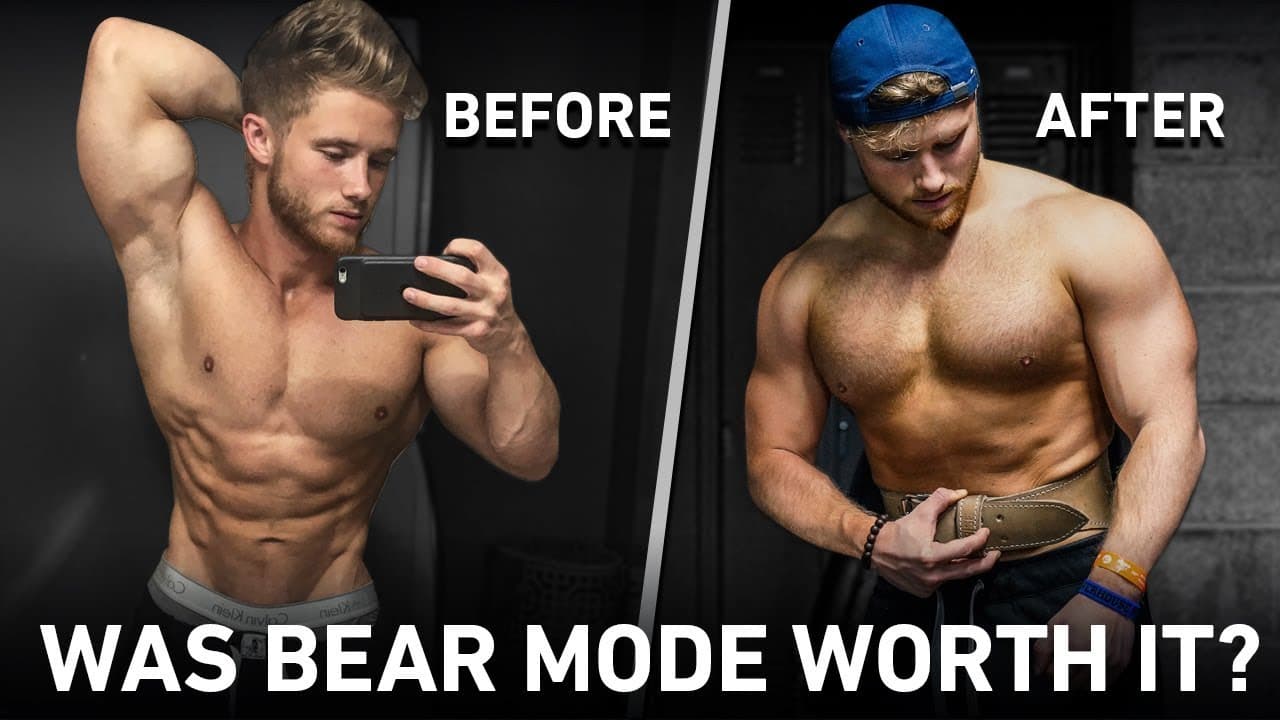
so last year I decided I was going to give this bear mode thing a shot for about eight months the basic concept isn't really anything new I basically eat and a heavy caloric surplus with the goal of gaining body weight at a pretty rapid pace in my case I went from about 160 pounds pretty lean to 183 pounds balked so it was 23 pounds gained and my 5... Read More
Key Insights
- Bear mode is a size-focused bulking approach that uses a heavy calorie surplus while emphasizing muscles such as the neck and traps. Its purpose is to create a big, beefy appearance in normal clothes, generally within a stated body-fat range of about 15 to 20 percent.
- A larger body can support greater strength because competitors in heavier powerlifting weight classes tend to lift more than those in lighter classes. If progressive overload drives muscle growth, strength increases during a bulk may help create conditions that support additional muscular development over time.
- Nutrition is permissive to resistance training because food alone does not initiate skeletal muscle growth. Training supplies the tension stimulus, while nutrition supports the resulting adaptation, so force-feeding extra calories without an appropriate training stimulus primarily increases body weight and body fat.
- A large calorie surplus does not guarantee significantly greater muscle gain. In the research discussed by Dr. Eric Helms, elite athletes overfed by about 600 calories while following a four-day training program gained no significantly greater muscle, but accumulated over three times as much fat mass.
- Excess fat gain creates a more difficult cutting phase because returning to a lean body weight may require dieting longer or more aggressively. The natural-bodybuilding case studies discussed indicate that more aggressive cutting phases tend to produce more muscle loss, potentially offsetting muscle gained during the bulk.
- Bear mode can reduce hunger, cravings, and mood-related pressures associated with staying lean. Shifting attention from constant aesthetic evaluation toward strength, gym performance, and body size may also help counter a distorted perception of being fatter than one actually is.
- Higher body weight can improve clothed appearance while reducing visible muscular definition without a shirt. Shirts and hoodies appear fuller at a heavier weight, but leaner natural bodybuilders can look substantially larger when flexing under good lighting despite weighing less.
- Cardiovascular conditioning can help address the sluggishness and reduced work capacity experienced at a higher body weight. Adding cardio two or three days per week may make high-volume leg training more manageable, although frequent cardio requires time and may interfere with muscle building.
Install to Summarize YouTube Videos and Get Transcripts
Explore YouTube Video Summarizer or Get YouTube Transcript Extractor
Questions & Answers
Q: What is bear mode for building muscle?
Bear mode is an approach centered on eating in a heavy calorie surplus, gaining body weight relatively quickly, training for strength and muscle, and accepting additional body fat. It also emphasizes muscles such as the neck and traps to create a naturally enhanced, three-dimensional appearance. The goal is to look big and muscular in everyday clothing, rather than remain extremely lean or prepare for a bodybuilding stage.
Q: Does bear mode build more muscle than a lean bulk?
Bear mode does not necessarily produce significantly more muscle than a smaller surplus. Dr. Eric Helms cited research in which elite athletes following a four-day-per-week training program were overfed by about 600 calories on average. They did not gain significantly more muscle than the other group, but they gained over three times as much fat mass. Training initiates growth, while nutrition supports it.
Q: What happened during the eight-month bear mode experiment?
The experiment increased body weight from about 160 pounds while lean to 183 pounds while bulked, a gain of 23 pounds on a 5-foot-5-inch frame. The added weight improved strength, reduced hunger-related concerns, and made shirts and hoodies look fuller. However, it also produced a softer shirtless appearance, greater sluggishness, easier breathlessness, and poorer work capacity during high-volume leg training.
Q: Why can bear mode make someone stronger?
Bear mode can support strength because greater body weight generally corresponds with bigger lifts when other factors are equal. This relationship is reflected by powerlifters in heavier weight classes tending to be stronger than competitors in lighter classes. Since progressive overload is presented as the main driver of muscle growth, steadily increasing strength while gaining weight may support muscle development, although a large surplus itself cannot force muscle growth.
Q: Why does a large calorie surplus mostly increase fat?
A large surplus mostly increases fat when the extra energy exceeds what training-supported muscle growth can use. Nutrition cannot independently make skeletal muscle grow because resistance training is the initiating event that provides muscular tension. In the research discussed, athletes consuming about 600 extra calories did not gain significantly more muscle than the comparison group, yet gained more than three times the fat mass.
Q: What are the psychological benefits of bear mode?
Bear mode can reduce the cravings, hunger, and mood changes that often accompany attempts to remain lean. Eating more becomes part of a plan to fuel gym performance and weight gain, rather than something that conflicts with an aesthetic target. Moving attention away from leanness and toward strength and size may also help break an excessive focus on appearance and a skewed perception of body fat.
Q: Why can someone look bigger leaner despite weighing less?
A leaner person can look bigger while shirtless because muscular separation, striations, lighting, and shadows make individual muscles appear more prominent. Natural bodybuilders often look substantially larger when contest lean and posing in favorable lighting, even though they weigh less than during the offseason. By contrast, a heavier bear-mode physique may fill out shirts and hoodies better while appearing smaller when flexing without a shirt.
Q: How should someone manage cardio while using bear mode?
Cardio can be added to counter reduced work capacity, sluggishness, and breathlessness at a higher body weight. The speaker plans to use additional cardio two or three days per week during a future bear-mode phase so high-volume leg sessions are easier to handle. However, cardio is described as time-consuming, and doing it too frequently may interfere with the ability to build muscle, creating a practical tradeoff.
Summary & Key Takeaways
-
Bear mode combines a heavy calorie surplus with resistance training and added emphasis on visually prominent muscles such as the neck and traps. The goal is to appear big, strong, and muscular in everyday clothing, even if maintaining that look requires accepting more body fat and giving up clearly visible abdominal definition.
-
The experiment increased body weight from about 160 pounds while lean to 183 pounds while bulked over approximately eight months. Greater body weight supported stronger lifts, reduced concerns about hunger, and created a fuller appearance in shirts and hoodies, but it also caused a softer shirtless appearance and greater training sluggishness.
-
Research discussed by Dr. Eric Helms challenges the need for aggressive overfeeding. In one study, elite athletes given about 600 extra calories gained no significantly greater muscle than the comparison group, but accumulated over three times the fat mass. Training initiates muscle growth, while adequate nutrition supports the training response.
Read in Other Languages (beta)
Share This Summary 📚
Summarize YouTube Videos and Get Video Transcripts with 1-Click
Try YouTube Summary with ChatGPT & Claude or YouTube Transcript Generator
Explore More Summaries from Jeff Nippard 📚
Summarize YouTube Videos and Get Video Transcripts with 1-Click
Try YouTube Summary with ChatGPT & Claude or YouTube Transcript Generator