How to Build 3D Shoulders: 7 Effective Tips
TL;DR
To achieve 3D shoulders, focus on techniques like removing traps from shoulder exercises, increasing training frequency, and implementing both short and long muscle length exercises. Consistent progressive overload is key, and targeting all deltoid segments ensures comprehensive development. Reducing body fat can enhance the 3D appearance by increasing muscle definition.
Transcript
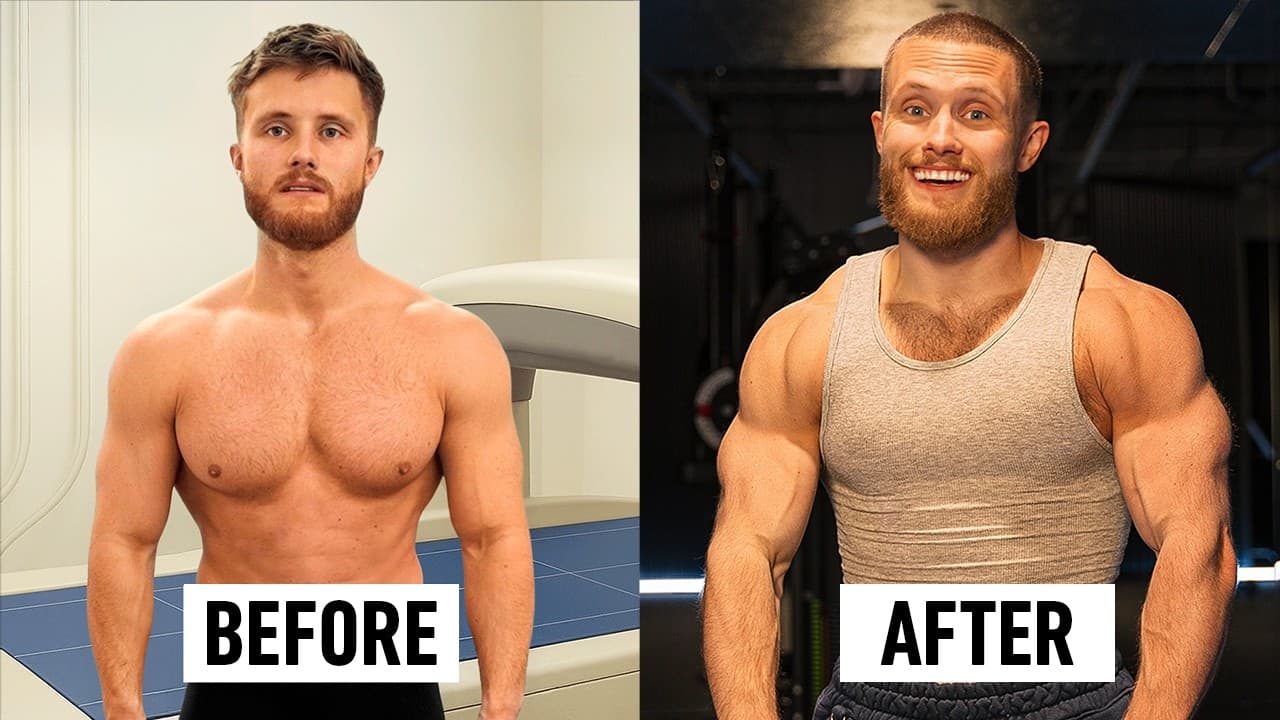
What's the difference between these three physiques? It's the shoulders, right? This person has underdeveloped delts. This person has well-developed delts. And this person has 3D delts. And in this video, I'm going to show you seven shoulder training tips for 3D delts. So, we'll start with a few tips that are a bit more common, and then as we go, t... Read More
Key Insights
- Removing traps from shoulder exercises can enhance delt activation, crucial for shoulder growth.
- Training shoulders more frequently than twice a week can lead to better muscle growth.
- A strong shoulder press increases mechanical tension, a primary driver of hypertrophy.
- Reducing body fat can enhance the appearance of 3D shoulders by increasing muscle definition.
- Incorporating both short and long muscle length exercises can maximize muscle growth.
- Choosing the right progression scheme is vital; linear for presses and double progression for isolation exercises.
- Targeting all deltoid segments ensures comprehensive shoulder development.
- Progressive overload is essential for muscle growth; adjust weight and reps accordingly.
Install to Summarize YouTube Videos and Get Transcripts
Explore YouTube Video Summarizer or Get YouTube Transcript Extractor
Questions & Answers
Q: How can I prevent my traps from taking over during shoulder exercises?
To prevent traps from dominating shoulder exercises, visualize using a long shovel to scoop sand out to the side. This cue helps keep shoulders down and engages side delts instead of traps. Focus on sweeping the weight out rather than lifting it up, which increases side delt activation and reduces trap involvement.
Q: How often should I train my shoulders for optimal growth?
Training shoulders more than twice a week is recommended for optimal growth. Spreading volume across three or four days allows for more effective work without exceeding the diminishing returns of high volume in a single session. Shoulders recover quickly, so frequent training can be beneficial without compromising recovery.
Q: What is the importance of a strong shoulder press in shoulder training?
A strong shoulder press is crucial for increasing mechanical tension, which is the main driver of hypertrophy. Progressive overload in shoulder presses ensures continuous tension on delts, promoting muscle growth. While front delts are often emphasized, presses also activate side delts, contributing to overall shoulder development.
Q: How does body fat reduction affect shoulder appearance?
Reducing body fat enhances the 3D appearance of shoulders by increasing muscle definition and separation between muscle heads. Leaner physiques exhibit broader and rounder shoulders due to less body fat around the deltoid muscle, creating the illusion of a more 3D look. Training hard while getting leaner can significantly improve shoulder aesthetics.
Q: Why is it important to train delts at different muscle lengths?
Training delts at different muscle lengths, both short and long, can maximize muscle growth. Longer length training has shown significant growth benefits in other muscles, and incorporating both short and long muscle length exercises for delts ensures balanced development. This approach addresses common overemphasis on short length training.
Q: What progression schemes should I use for shoulder exercises?
For shoulder presses, use a linear progression scheme by adding weight each week at a fixed rep count. For isolation exercises like lateral raises, use a double progression scheme. Start with a weight for a specific rep range, increase reps weekly, and add weight once the top range is reached. Adjust schemes based on exercise type.
Q: How can I target all deltoid segments effectively?
Targeting all deltoid segments involves incorporating exercises that address each segment's unique function. Use movements like incline dumbbell Y raises and 45° cable rear delt pulls to hit in-between fibers. Train shoulders in all three dimensions to ensure comprehensive development, considering the deltoid's complex anatomy and freedom of movement.
Q: What role does progressive overload play in shoulder training?
Progressive overload is essential for muscle growth, requiring the addition of stress to muscles over time. For shoulder training, this means adjusting weight and reps to continually challenge the muscles. Without progressive overload, muscles have no reason to grow, making it a critical component of effective shoulder development strategies.
Summary & Key Takeaways
-
Focus on removing traps from shoulder exercises to enhance delt activation. This can be achieved by visualizing a scooping motion to keep shoulders down, ensuring side delts are engaged over traps. Increasing training frequency beyond twice a week can also contribute to better muscle growth.
-
Building a strong shoulder press is crucial for increasing mechanical tension, a primary driver of hypertrophy. Reducing body fat can significantly improve the 3D appearance of shoulders by increasing muscle definition and separation between muscle heads.
-
Incorporating exercises that target both short and long muscle lengths can maximize muscle growth. Choose the right progression scheme for each exercise type: linear progression for shoulder presses and double progression for isolation exercises. Targeting all deltoid segments ensures comprehensive shoulder development.
Read in Other Languages (beta)
Share This Summary 📚
Summarize YouTube Videos and Get Video Transcripts with 1-Click
Try YouTube Summary with ChatGPT & Claude or YouTube Transcript Generator
Explore More Summaries from Jeff Nippard 📚




Summarize YouTube Videos and Get Video Transcripts with 1-Click
Try YouTube Summary with ChatGPT & Claude or YouTube Transcript Generator