How Can You Build Muscle and Lose Fat at the Same Time? A Step-by-Step Body Recomposition Guide
TL;DR
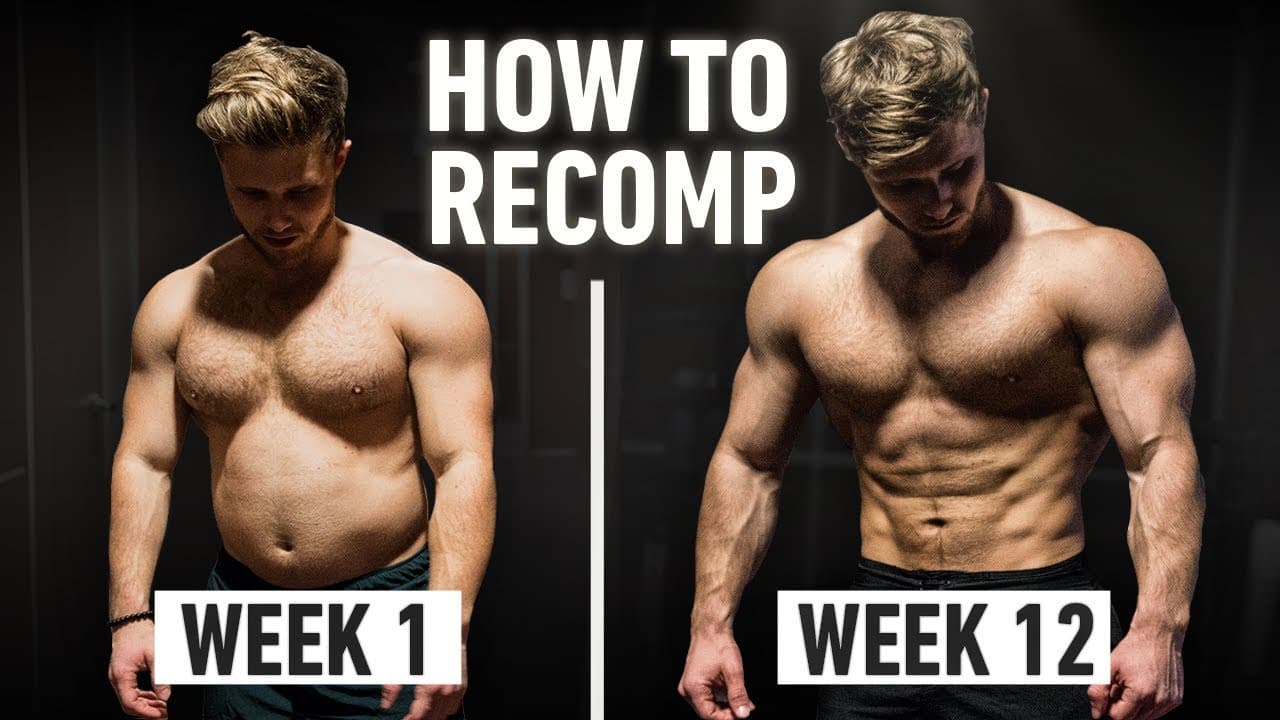
You can build muscle and lose fat at the same time by combining progressive resistance training with calories centered around maintenance, suitable macronutrient targets, and strong recovery habits. Training should emphasize progressive overload, effort, proper technique, and roughly 10 to 20 sets per body part each week. Calorie adjustments should reflect whether muscle gain or fat loss is your primary goal. Read on for the complete five-step body recomposition approach.
Transcript
how can you build muscle and lose fat at the same time a lot of people on the internet think the answer is simple you can't if you want to build muscle you need to do a proper bulk and if you want to lose fat you need to do a proper cut I think this idea has made its way into the mainstream from old a bodybuilding lure where it was thought that you... Read More
Key Insights
- Body recomposition is the process of building muscle and losing fat simultaneously.
- New lifters can easily achieve recomposition due to their primed state for muscle growth.
- Overweight individuals can use stored body fat to fuel muscle building while in a caloric deficit.
- Detrained individuals can quickly regain muscle due to muscle memory effects.
- Training is the primary driver of recomposition; progressive overload is key.
- Setting caloric intake around maintenance levels is crucial for recomposition.
- Protein intake should be adjusted based on lean body mass to optimize recomposition.
- Advanced strategies like nutrient timing and sleep optimization enhance recomposition efforts.
Install to Summarize YouTube Videos and Get Transcripts
Explore YouTube Video Summarizer or Get YouTube Transcript Extractor
Questions & Answers
Q: How can you build muscle and lose fat at the same time?
Use progressive resistance training to stimulate muscle growth while allowing stored body fat to help supply energy. Center calories around maintenance, adjust intake slightly toward your primary goal, set protein according to lean body mass, and support the process with sleep and nutrient timing.
Q: Who can realistically achieve body recomposition?
Body recomposition is especially practical for new lifters, overweight people, detrained lifters benefiting from muscle memory, and trainees whose training or nutrition has not been fully optimized. The transcript says it becomes least practical for truly advanced trainees who already have highly optimized habits and are near their genetic ceiling for muscle growth.
Q: What kind of training supports body recomposition?
Focus on progressive overload, sufficient effort, and proper technique. After establishing those fundamentals, adjust training volume to your experience level; 10 to 20 sets per body part per week is presented as a useful ballpark for most people and muscles.
Q: Should calories be in a surplus or deficit for body recomposition?
Start by deciding whether building muscle or losing fat is your primary goal, then center intake around maintenance calories. Use a slight surplus when muscle gain is the priority or a slight deficit when fat loss is the priority, with the size of the adjustment guided by leanness, training advancement, and how much fat you need to lose.
Q: How should protein, fat, and carbohydrates be set for body recomposition?
Set protein first because it is presented as the most important macronutrient for recomposition, using lean body mass and body-fat level to guide intake. The approach described sets fat at a minimum share of total calories and fills the remaining calories with carbohydrates.
Q: Why does sleep matter for body recomposition?
Sleep supports recovery and can affect whether dieting weight comes primarily from fat or lean mass. The transcript describes a controlled dieting study in which the well-rested group lost most of its weight from fat, while the sleep-restricted group lost most of its weight from lean mass.
Q: Does nutrient timing help with body recomposition?
Timing nutrients around workouts is presented as an optimization strategy rather than the foundation of recomposition. Beginners may progress through training, calorie control, and macronutrient targets alone, while more advanced trainees may benefit more from refining workout nutrition and other details.
Q: Which supplements can support body recomposition?
No supplement causes body recomposition on its own, but protein powder, creatine, and caffeine are identified as useful options. Protein powder can make daily protein targets easier to reach, creatine can support training, and caffeine may improve strength and delay fatigue, though tolerance can reduce its effects.
Summary & Key Takeaways
-
Body recomposition allows simultaneous muscle gain and fat loss by optimizing training and diet. Progressive resistance training and setting caloric intake around maintenance are crucial. New lifters, overweight individuals, and detrained athletes can achieve recomposition effectively.
-
Training is the driving force behind recomposition, with progressive overload being essential. Caloric intake should be centered around maintenance, with protein intake adjusted based on lean body mass. Advanced strategies like nutrient timing and sleep optimization further enhance results.
-
Recomposition is practical for most people, including those new to lifting or previously trained. Strategies include focusing on training, setting appropriate caloric and macronutrient targets, and optimizing lifestyle factors like sleep and stress management.
Read in Other Languages (beta)
Share This Summary 📚
Summarize YouTube Videos and Get Video Transcripts with 1-Click
Try YouTube Summary with ChatGPT & Claude or YouTube Transcript Generator
Explore More Summaries from Jeff Nippard 📚


Summarize YouTube Videos and Get Video Transcripts with 1-Click
Try YouTube Summary with ChatGPT & Claude or YouTube Transcript Generator