How to Bulk for Maximum Muscle Gain
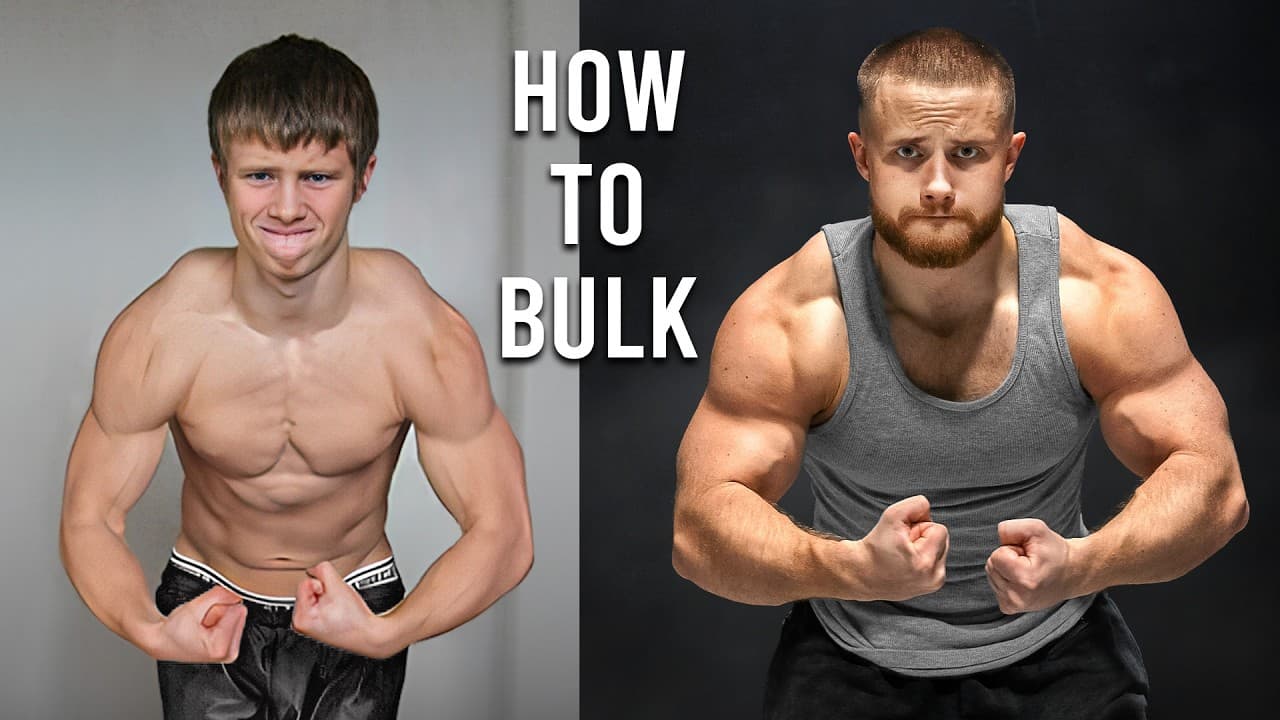
TL;DR
To bulk for maximum muscle gain, maintain a controlled caloric surplus, train with sufficient intensity and volume, and gain weight slowly enough to limit fat accumulation. Beginners should target 1–2% of body weight per month, while intermediate to advanced lifters should target 0.5–1%. Protein intake should be 0.7–1 gram per pound of body weight, with fat providing 20–30% of calories. Read on for the complete science-based setup.
Transcript
I've been bulking for this entire year straight an actual proper bulk with optimized training and nutrition and I've made the most gains that I've made in years and in this video I'm going to try to convince you to do the same if you click this video I'm sure you're interested in building some more muscle but maybe you're not sure if bulking is a g... Read More
Key Insights
- Bulking is consuming more calories than expended to gain muscle.
- Old school dirty bulks lead to more fat than muscle gain.
- Main gaining builds less muscle compared to proper bulking.
- A caloric surplus allows more energy for muscle growth.
- Lean bulking should target 1-2% body weight gain per month.
- Protein intake should be 0.7-1g per pound of body weight.
- Avoid high fat bulks; 20-30% of calories should come from fat.
- Training intensity and volume are crucial for muscle gain.
Install to Summarize YouTube Videos and Get Transcripts
Explore YouTube Video Summarizer or Get YouTube Transcript Extractor
Questions & Answers
Q: How do you bulk effectively for maximum muscle gain?
Eat more calories than you expend, but control the surplus so most of the added weight comes from muscle rather than fat. Combine this with adequate protein and training that provides sufficient intensity and volume. Track your rate of weight gain and adjust your intake when it is too fast or too slow.
Q: How quickly should you gain weight during a lean bulk?
Beginners should aim to gain 1–2% of their body weight per month. Intermediate to advanced lifters should target 0.5–1% per month because muscle growth becomes slower with training experience. Gaining weight faster is likely to produce more fat rather than forcing additional muscle growth.
Q: How much weight should a 170-pound lifter gain while bulking?
A 170-pound person who has trained for two years should gain about 1–2 pounds per month. Sustained for an entire year, that would amount to roughly 12–24 pounds. The slow pace is intended to support muscle gain while controlling fat gain.
Q: How much protein should you eat during a bulk?
The recommended protein intake is 0.7–1 gram per pound of body weight. Eating enough protein supports muscle growth and also helps preserve new muscle during a later cutting phase.
Q: How can you minimize fat gain while bulking?
Control how quickly you gain weight, since gaining too fast means most of the added weight may be fat. Follow the appropriate monthly target for your experience level and monitor your progress. Fat should account for 20–30% of total calorie intake rather than dominating the bulk.
Q: Is bulking better than maintaining weight while gaining muscle?
The transcript says muscle can be built at maintenance or even in a calorie deficit when training is hard, but the result will be smaller than with a proper bulk. A caloric surplus allows the body to allocate more energy toward muscle growth. In the cited eight-week comparison, the bulking group gained significantly more fat-free mass than the maintenance group.
Q: Does a proper bulk still cause fat gain?
It can, especially for experienced lifters who are closer to their muscular limit. The transcript says beginners may potentially gain entirely lean mass, while an experienced lifter's gain could be half lean mass and half fat. A later, relatively slow cut with smart training and enough protein can remove fat while retaining most of the added muscle.
Q: What role does training play during a bulk?
A calorie surplus alone does not ensure that weight gain will primarily be muscle. Training intensity and volume provide the stimulus needed for muscle growth, so the diet and training plan must work together. The transcript also emphasizes continuing to train smart during a later cut to preserve the muscle gained.
Summary & Key Takeaways
-
Bulking involves eating in a caloric surplus to gain muscle. A proper bulk requires strategic calorie and macronutrient management to minimize fat gain. Training intensity and volume are crucial for maximizing muscle growth.
-
Main gaining, or maintaining weight while gaining muscle, is less effective than bulking. A controlled caloric surplus allows the body to prioritize muscle growth over other functions. Monitoring protein and fat intake is essential.
-
The recommended protein intake during bulking is 0.7 to 1 gram per pound of body weight. Cardio can support cardiovascular health and training volume. Supplements like creatine, fish oil, and vitamin D can aid muscle growth.
Read in Other Languages (beta)
Share This Summary 📚
Summarize YouTube Videos and Get Video Transcripts with 1-Click
Try YouTube Summary with ChatGPT & Claude or YouTube Transcript Generator
Explore More Summaries from Jeff Nippard 📚

Summarize YouTube Videos and Get Video Transcripts with 1-Click
Try YouTube Summary with ChatGPT & Claude or YouTube Transcript Generator