How to Rebuild Muscle Fast After a Training Break

TL;DR
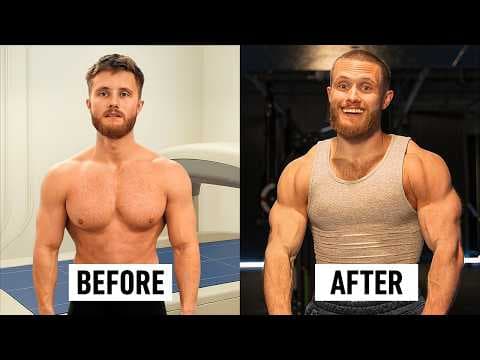
Rebuilding lost muscle after a layoff is far faster than building new muscle thanks to the muscle memory effect, but only if you balance stimulus and recovery instead of maxing out volume and intensity right away. Follow four principles: write a structured comeback plan, expect lost strength, pick low-soreness exercises, and ease back through a two to four week bridge.
Transcript
all right what's going on guys so in this video I'm going to lay out four steps for getting your gains back after a layoff so you can rebuild all the muscle and strength you lost as quickly as possible without setting yourself up for injury or overtraining and as I go through here I'm going to overlay some clips from my garage workouts this week I ... Read More
Key Insights
- Muscle memory makes rebuilding lost muscle much easier than building new muscle from scratch, so a returning lifter can experience newbie-style gains a second time depending on how much muscle was lost.
- Muscle growth requires both a stimulus and recovery: lifting causes stress, and it is the recovery from that stress that drives positive adaptation, so cranking the stimulus too high too fast actually slows gains.
- A structured comeback plan should be written down before entering the gym, because freestyling tempts you to overdo it and throw off the delicate stimulus-recovery balance right when recovery capacity is reduced.
- Taking more than two or three weeks off usually costs some strength, and the more time off, the more strength lost, so you must reset your starting numbers and stop chasing your old maxes.
- The half-the-time rule estimates strength regain: it takes roughly half your time off to recover most strength, so two months off needs about one month back, though the rule breaks down past six months.
- Soreness should be minimized because it does nothing extra for hypertrophy and reduces performance and recovery, so stretched-position moves like walking lunges and Romanian deadlifts are eliminated from the comeback.
- Cables and machines are prioritized early because they are lower impact and cause less muscle damage, giving a high stimulus-to-fatigue ratio while free-weight compounds are reintroduced gradually.
- The bridge splits into an intro phase and a transition phase of one to two weeks each, totaling two to four weeks, with the longer your break the longer the bridge you need.
Install to Summarize YouTube Videos and Get Transcripts
Explore YouTube Video Summarizer or Get YouTube Transcript Extractor
Questions & Answers
Q: How do you get your gains back quickly after a training break?
Set up a structured, intelligent comeback plan that balances stimulus and recovery rather than maxing out volume and intensity immediately. The video lays out four principles: use muscle memory to your advantage, expect and accept lost strength, select exercises that minimize soreness, and ease back through a two to four week bridge with light loads before returning to your old program. Jacking volume to prior levels and training to failure right away almost guarantees failure because it overwhelms your reduced recovery capacity.
Q: Why is it easier to rebuild lost muscle than to build new muscle?
Because of the muscle memory effect, which research repeatedly shows makes it much easier to regain muscle you previously had than to build it from scratch. In this sense you might consider yourself more supercharged than a newbie, depending on how much muscle you lost. This is one of the rare times you can experience newbie-style gains a second time, the only other paths being starting fresh or taking steroids, which the video does not recommend.
Q: How much strength will you lose after taking time off from lifting?
If you take more than two or three weeks off, you will likely be a bit weaker, and the more time you take off the more strength you lose. Strength is a skill, like a basketball shooting stroke that feels off after months away. You should check your ego, forget your old numbers entirely, set wherever you are now as your new starting place, and log your lifts, which will climb rapidly again in the first few weeks.
Q: How long does it take to regain strength after a break?
As a general rule, expect it to take about half the time you took off to get most of your strength back. If you took two months off, it might take about one month to recover, and six months off might need up to three months to rebuild, assuming you do everything right. Good programming or genetic advantages can speed this up. However, the half-the-time rule only applies to breaks on the scale of months, and starts to break down if your layoff was longer than about six months.
Q: Which exercises should you avoid when coming back from a break?
Avoid exercises that load the muscle in a highly stretched position, such as walking lunges and Romanian deadlifts, which should be completely eliminated from the comeback program. They are not inherently more dangerous, but other exercises can stimulate the glutes and hamstrings equally well without the same recovery cost at a time when recovery is already low. Prioritize movements with a high stimulus-to-fatigue ratio, and lean on cables and machines since they tend to be lower impact and less damaging than free-weight counterparts.
Q: What is a bridge program and how long should it last?
A bridge is a gradual reintroduction plan that gets you from no training or high-rep bodyweight workouts back to standard progressive training. It divides into an intro phase lasting one or two weeks and a transition phase also lasting one or two weeks, so the bridge takes two to four weeks total. The longer the break you took from the gym, the longer the bridge you will need. The video offers a free four-week bridge program covering all the comeback principles.
Q: What weight and intensity should you use in the intro phase?
For compound lifts, keep everything at an RPE of 5 or lower, leaving at least 5 reps in the tank, which is roughly 50 to 60 percent of your old one-rep max for sets of about 4 to 6 reps. For example, a 275-pound bench press max means starting around 135 to 165 pounds for 2 sets of 5. Though that seems light, you do not need heavy loads to rebuild strength and size, and initial strength regain comes mostly from your nervous system relearning the movement pattern.
Q: How many sets and how often should you train each muscle when returning?
Start with around 7 to 10 sets per body part per week, the range Schoenfeld and Gergich gave in their 2017 paper outlining an intro phase, especially if you did bodyweight work during your break. Knock prior per-exercise sets down, for example from three or four sets to two or three. For frequency, hitting each muscle twice per week is the sweet spot, since once a week gives too little lifting practice and more than two or three sessions may exceed your recovery until the repeated bout effect ramps up.
Summary & Key Takeaways
-
Most people return from a layoff by jacking volume back to prior levels and training to failure to shock growth, but this only addresses stimulus while ignoring recovery. When stimulus overwhelms recovery capacity, gains slow despite more work, so the goal is a balance that maximizes positive adaptation.
-
Four principles guide the comeback: leverage muscle memory since rebuilding lost muscle beats building new; expect lost strength and reset expectations using the half-the-time regain rule; choose low-soreness exercises with a high stimulus-to-fatigue ratio; and build a structured bridge rather than jumping into your old program.
-
The intro phase reteaches the neural pattern using light compound loads at RPE 5 or lower, around 50 to 60 percent of old one-rep max for 4 to 6 reps. Isolation work runs at RPE 7 to 8 avoiding failure, with 7 to 10 sets per body part hit twice weekly.
Read in Other Languages (beta)
Share This Summary 📚
Summarize YouTube Videos and Get Video Transcripts with 1-Click
Try YouTube Summary with ChatGPT & Claude or YouTube Transcript Generator
Explore More Summaries from Jeff Nippard 📚





Summarize YouTube Videos and Get Video Transcripts with 1-Click
Try YouTube Summary with ChatGPT & Claude or YouTube Transcript Generator