What Does Each Body Fat Percentage Look Like?
TL;DR
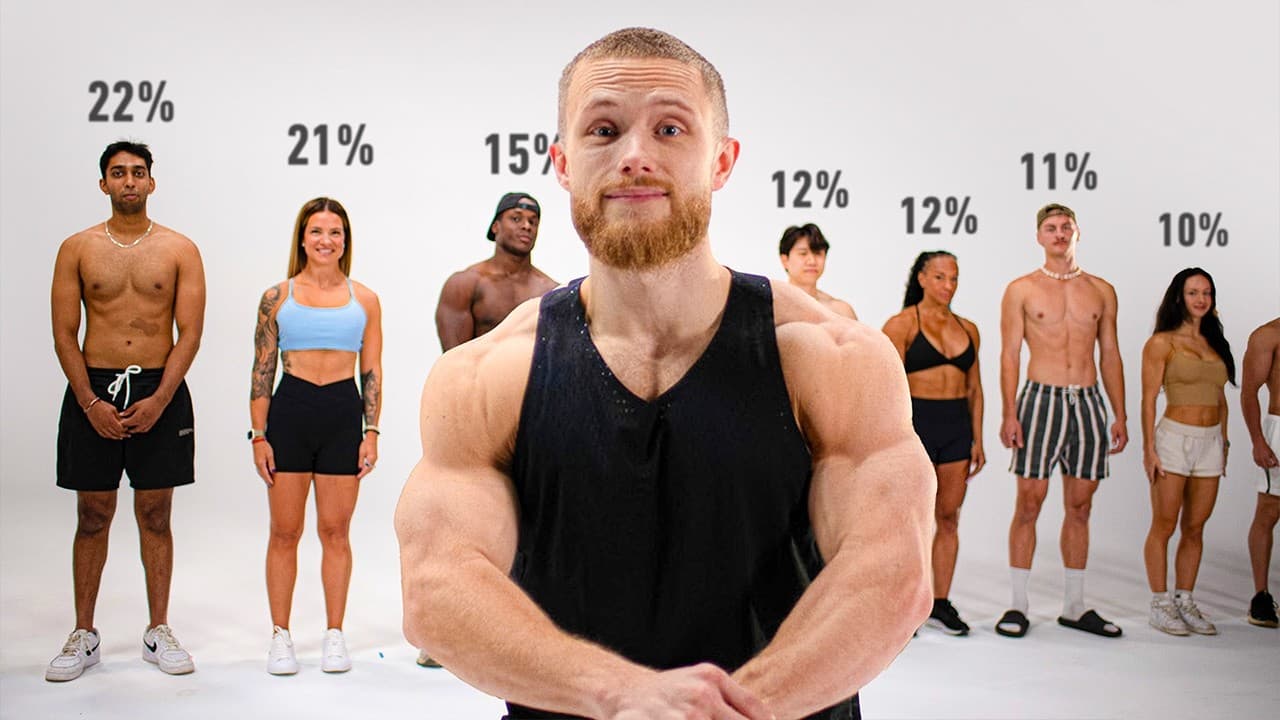
Body fat percentage significantly influences appearance, health, and performance. The video showcases real-life examples of body fat percentages from 50% to 5%, highlighting how they look and feel. It emphasizes the importance of finding a healthy and sustainable body fat range rather than fixating on a specific number.
Transcript
Do you know your body fat percentage? Take a guess. I'm going to guess 21, 17, 15. Most people don't know their body fat percentage. Some people think they're way leaner than they are. Oo, that was a little bit higher than I thought. Others are harder on themselves than they should be and find out they're closer to their goals than they realize. He... Read More
Key Insights
- Body fat percentage affects not just appearance but also health, sleep, and performance.
- DEXA scans provide a highly accurate measurement of body fat percentage.
- Average body fat percentages in the US are around 27% for men and 39% for women.
- Women naturally have higher body fat percentages due to essential fat requirements.
- Maintaining extremely low body fat can lead to health issues like hormonal imbalances and fatigue.
- Genetics play a significant role in determining a person's comfortable body fat range.
- For most men, 10-20% body fat is a healthy range, while for women, it's 20-30%.
- Focusing on lifestyle habits, rather than a specific body fat percentage, is key to health.
Install to Summarize YouTube Videos and Get Transcripts
Explore YouTube Video Summarizer or Get YouTube Transcript Extractor
Questions & Answers
Q: What is the average body fat percentage for men and women in the US?
The average body fat percentage for men in the US is approximately 27%, while for women it is about 39%. These averages are based on data from the NHANES 2017-2018 study, and they highlight the natural differences in body composition between genders.
Q: How accurate are DEXA scans for measuring body fat?
DEXA scans are considered highly accurate for measuring body fat percentage, often used as a reference standard in exercise science and clinical practice. They provide precise measurements, which are more reliable than methods like calipers or handheld devices.
Q: Why do women have higher body fat percentages than men?
Women have higher body fat percentages due to the need for essential fat, which supports reproductive functions and hormonal balance. Estrogen promotes fat storage in the lower body, contributing to the higher overall body fat percentage compared to men.
Q: What are the health risks of maintaining very low body fat percentages?
Maintaining very low body fat percentages can lead to health risks such as hormonal imbalances, fatigue, loss of menstrual cycle in women, bone mineral loss, and increased hunger. These risks are often pronounced when body fat drops below essential levels needed for basic bodily functions.
Q: How does muscle mass affect the appearance of body fat percentage?
Muscle mass significantly affects the appearance of body fat percentage. Individuals with higher muscle mass may appear leaner at the same body fat percentage compared to those with less muscle. Muscle adds definition and shape, influencing how body fat is distributed and perceived.
Q: What is considered a healthy body fat range for men and women?
A healthy body fat range for men is typically between 10-22%, while for women it is 20-32%, according to the American College of Sports Medicine. These ranges support overall health, performance, and aesthetics, but individual genetic factors can influence where a person feels best.
Q: What role do genetics play in body fat distribution?
Genetics play a crucial role in body fat distribution, influencing where fat is stored, a person's natural set range for body fat, and how easily they can gain or lose fat. This genetic predisposition affects individual responses to diet and exercise, making personalized approaches important.
Q: Why is it important to focus on lifestyle habits rather than specific body fat percentages?
Focusing on lifestyle habits is important because they determine long-term health and well-being more than a specific body fat percentage. Healthy habits like balanced nutrition, regular exercise, and adequate sleep contribute to sustainable body composition changes and overall health, beyond just reaching a certain percentage.
Summary & Key Takeaways
-
Body fat percentage impacts both physical appearance and health, with different levels offering varying risks and benefits. The video uses DEXA scans to accurately show what different body fat percentages look like, from 50% down to 5%.
-
Men and women have different body fat distribution patterns, influenced by hormones like estrogen and testosterone, affecting how body fat is stored and appears.
-
Achieving extremely low body fat percentages can be unsustainable and unhealthy for most people, underscoring the importance of finding a balance that supports overall well-being.
Read in Other Languages (beta)
Share This Summary 📚
Summarize YouTube Videos and Get Video Transcripts with 1-Click
Try YouTube Summary with ChatGPT & Claude or YouTube Transcript Generator
Explore More Summaries from Jeff Nippard 📚





Summarize YouTube Videos and Get Video Transcripts with 1-Click
Try YouTube Summary with ChatGPT & Claude or YouTube Transcript Generator