How to Tackle Big Scientific Challenges in Research

TL;DR
A prepared mind and a strong research environment are crucial to pursuing ambitious science. The interview emphasizes staying open to opportunities, drawing on a lineage of Japanese Nobel laureates, and relentlessly working hard to attack grand questions. It also highlights keeping lights on and maintaining a culture of original inquiry at Kyoto University.
Transcript
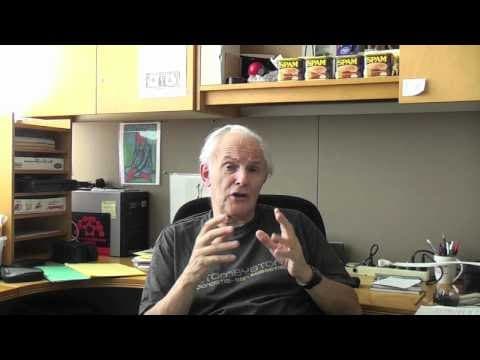
Hello. Hello. Am I speaking with Professor Kitigawa? Yes, I'm speaking. Hello. Congratulations on the award of the Nobel Prize. Oh, thank you very much. One of the things that is special about your work perhaps is that now everybody talks about the application of metal organic frameworks. Many people at in the 90s were not convinced that this was a... Read More
Key Insights
- A prepared mind is essential for recognizing and pursuing opportunities in science, and this mindset forms a foundation for tackling difficult problems.
- The key to progress is maintaining an environment that supports original work and long-term experimentation, as exemplified by Kyoto University’s culture and mentorship lineage.
- Attacking big challenges requires learning from a lineage of great researchers, including Fukui, Yoshino, and Yukawa, to shape one’s own approach to questions.
- Flexibly shifting targets when new information appears is a practical method to navigate research, such as moving from quantum chemistry to porous coordination polymers.
- Perseverance and hard work are integral to scientific success, with a culture that discourages switching off the light even at night symbolizing dedication.
- The approach to questions combines solid-state properties, electricity, and magnetism with an openness to new structures and materials that reveal useful behavior.
- Observing and analyzing material structures in unexpected contexts can reveal new directions, as seen when porous materials were discovered in a different setup.
- A prepared mind accumulates experience across environments, and cross-disciplinary insights strengthen the ability to ask the most challenging questions.
- More videos from this channel:
- More from this channel: Nobel Prize
Install to Summarize YouTube Videos and Get Transcripts
Explore YouTube Video Summarizer or Get YouTube Transcript Extractor
Questions & Answers
Q: A real search query question about the video (e.g. 'How to...', 'What is...', 'Why does...', 'When should...'). Question 1
A prepared mind and a supportive research environment enable scientists to pursue grand challenges. The interview emphasizes that readiness to notice opportunities, combined with long-term commitment and collaboration with mentors, builds the foundation for breakthroughs. This mindset helps researchers shift focus when new directions appear, increasing the odds of meaningful discoveries.
Q: Question 2
The speaker traces a lineage from Fukui to Yoshino and beyond, showing how mentorship and academic heritage influence individual research paths. Understanding this lineage helps frame how researchers learn to attack big questions, adopting methods, values, and ways of thinking that persist across generations of scholars.
Q: Question 3
The interview underscores the importance of not giving up when confronted with skepticism about a new approach. Persistence, curiosity, and willingness to explore unproven ideas are central to advancing fields like solid-state chemistry and porous materials, even when early opinions doubt feasibility.
Q: Question 4
Attention to the environment that nurtures science is highlighted as a key factor in success. A good environment provides resources, collaboration, and intellectual freedom, enabling researchers to pursue challenging problems and sustain long-term efforts without excessive constraint.
Q: Question 5
The conversation discusses the value of learning from the past, including notable figures in physics and chemistry, and applying those lessons to current research. This historical perspective strengthens the researcher’s ability to frame questions, justify methods, and anticipate possible outcomes.
Q: Question 6
The idea of keeping the mind ready to recognize the useful and sometimes unlikely direction is emphasized. By remaining open to possibilities, researchers can identify promising avenues that were not part of the initial plan, thereby expanding the scope of inquiry.
Q: Question 7
Hard work is presented as a non negotiable habit for scientists, along with intellectual curiosity. The speaker illustrates that substantial effort over time is necessary to realize ambitious research programs and turn ideas into tangible materials or technologies.
Q: Question 8
The discussion points to the balance between deep theoretical grounding and practical exploration of materials. Researchers benefit from combining quantum chemistry knowledge with solid state chemistry and material science to create new systems that exhibit desirable properties and potential applications.
Summary & Key Takeaways
-
The speaker credits a strong research environment and a lineage of Japanese Nobel laureates for enabling ambitious work, stressing the need to create favorable conditions for breakthrough research.
-
The conversation highlights readiness to seize unexpected opportunities, the discipline of persistent effort, and a focus on original questions as engines of scientific progress.
-
The overall message is about preparation, mentorship, and dedication to pursuing challenging questions within the tradition of scientific inquiry at Kyoto University.
Read in Other Languages (beta)
Share This Summary 📚
Summarize YouTube Videos and Get Video Transcripts with 1-Click
Try YouTube Summary with ChatGPT & Claude or YouTube Transcript Generator
Explore More Summaries from Nobel Prize 📚



Summarize YouTube Videos and Get Video Transcripts with 1-Click
Try YouTube Summary with ChatGPT & Claude or YouTube Transcript Generator