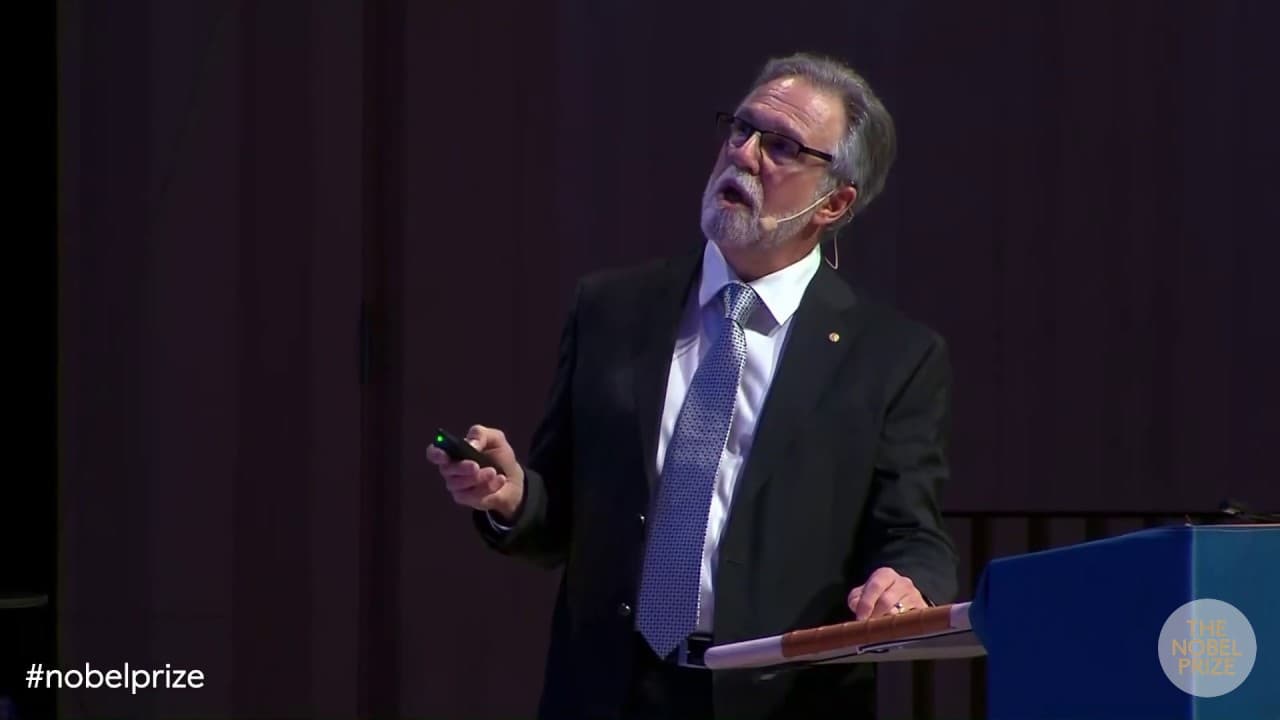
Nobel Lecture: Gregg L. Semenza, Nobel Prize in Physiology or Medicine 2019
TL;DR
Hypoxia-inducible factor 1 helps balance cellular oxygen demand with oxygen supplied through the blood. When oxygen is available, hydroxylation enables the VHL protein to bind HIF-1 alpha and target it for destruction. When oxygen decreases, hydroxylation is inhibited, HIF-1 alpha accumulates, and the resulting signaling machinery activates processes that help cells and tissues adapt.
Transcript
[Applause] Nobel laureates excellencies ladies and gentlemen it's a great pleasure and indeed a privilege to welcome all of you to Korea's constituted all-america we're here for the 2019 Nobel lectures in Physiology or medicine my name is Ollie Olsen and I'm the president of Karolinska Institutet during the Nobel week and particularly I should say ... Read More
Key Insights
- Every one of the hundred trillion cells in the human body requires oxygen to make energy, creating a continuous need to balance cellular oxygen demand with oxygen supplied by blood through vessels across the body.
- Hypoxia-inducible factors are master regulators of cellular and systemic oxygen homeostasis, constantly monitoring oxygen levels and initiating processes that enable cells and tissues to adapt when oxygen availability changes.
- Erythropoietin is produced in the kidney and controls red blood cell production in bone marrow. Chronic kidney disease can stop erythropoietin production and cause anemia, while laboratory-produced human erythropoietin can treat anemia in that context.
- The hypoxia response element is a 33-base-pair DNA sequence located downstream from the human erythropoietin gene. When inserted into a foreign gene, it causes that gene's expression to be induced by low oxygen.
- HIF-1 is a heterodimer composed of HIF-1 alpha and HIF-1 beta. Under hypoxic conditions, these subunits dimerize, bind the hypoxia response element, and recruit co-activators that connect them with the RNA polymerase responsible for transcription.
- HIF-1 alpha is hydroxylated at two proline residues when oxygen is available. This modification inserts oxygen into the alpha subunit and enables the von Hippel-Lindau protein, known as VHL, to bind it.
- VHL binding targets HIF-1 alpha for destruction under normal oxygen conditions. When oxygen decreases, hydroxylation is inhibited, VHL cannot bind, and HIF-1 alpha rapidly accumulates within hypoxic cells.
- The oxygen-activated signaling pathway controls at least 300 genes affecting metabolism, immune and inflammatory responses, respiration, new blood vessel generation, altitude adaptation, and red blood cell production. Its medical relevance includes anemia, ischemic vascular diseases, and cancer.
Install to Summarize YouTube Videos and Get Transcripts
Explore YouTube Video Summarizer or Get YouTube Transcript Extractor
Questions & Answers
Q: How do cells sense and adapt to low oxygen?
Cells use hypoxia-inducible factors to monitor oxygen availability and coordinate adaptation. When oxygen is available, two proline residues in HIF-1 alpha are hydroxylated, enabling VHL to bind the protein and target it for destruction. When oxygen decreases, hydroxylation is inhibited, VHL cannot bind, and HIF-1 alpha rapidly accumulates within hypoxic cells to support an adaptive response.
Q: What is hypoxia-inducible factor 1?
Hypoxia-inducible factor 1, or HIF-1, is a protein identified through its ability to bind the hypoxia response element under low-oxygen conditions. It is a heterodimer composed of alpha and beta subunits. During hypoxia, these subunits dimerize, bind DNA, and recruit co-activators that bridge the complex to RNA polymerase, which transcribes DNA into RNA.
Q: How does oxygen regulate HIF-1 alpha levels?
Oxygen regulates HIF-1 alpha through a post-translational modification involving hydroxylation. When oxygen is available, two proline residues in HIF-1 alpha are hydroxylated. That modification permits VHL to bind and target HIF-1 alpha for destruction. Under hypoxic conditions, hydroxylation is inhibited, so VHL cannot bind and HIF-1 alpha rapidly accumulates inside the hypoxic cell.
Q: What role does the VHL protein play in oxygen sensing?
The von Hippel-Lindau protein, called VHL, recognizes HIF-1 alpha after two of its proline residues have been hydroxylated under normal oxygen conditions. Once VHL binds HIF-1 alpha, it targets the protein for destruction. When oxygen levels decline, hydroxylation is inhibited, preventing VHL binding and allowing HIF-1 alpha to accumulate rapidly.
Q: What is the hypoxia response element in the erythropoietin gene?
The hypoxia response element is a short regulatory DNA sequence located downstream from the human erythropoietin gene. It consists of 33 base pairs and can transfer oxygen responsiveness to another gene. When researchers removed it from the erythropoietin gene and inserted it into a foreign gene, expression of that gene became inducible by hypoxia, meaning low oxygen.
Q: How is erythropoietin connected to red blood cell production?
Erythropoietin is a signal produced in the kidney that controls red blood cell production in the bone marrow. People with chronic kidney disease can stop making erythropoietin and become anemic. Cloning the human erythropoietin gene enabled laboratory production of erythropoietin, which became useful as a therapy for anemia associated with chronic kidney disease.
Q: What processes are controlled by oxygen-responsive signaling?
The oxygen-activated signaling pathway controls at least 300 genes and affects a wide range of functions. These include rewiring metabolism, regulating immune and inflammatory responses, respiration, generating new blood vessels, adapting to altitude, and producing red blood cells. The breadth of these effects reflects the fundamental need to match oxygen supply with cellular oxygen demand.
Q: Why is oxygen sensing important in medicine?
Oxygen sensing is medically important because it is central to normal physiology and to major diseases identified in the lecture, including anemia, ischemic vascular diseases, and cancer. The discoveries also prompted intense efforts to develop drugs that target the oxygen-sensing machinery. Laboratory-produced erythropoietin already provides a treatment for anemia arising in the context of chronic kidney disease.
Summary
In this video, the Nobel laureates in Physiology or Medicine for 2019, William Kaelin Jr., Sir Peter Ratcliffe, and Gregg Semenza, give lectures on their groundbreaking discoveries on how cells sense and adapt to oxygen availability. They discuss the role of the hypoxia-inducible factors (HIFs) in regulating oxygen homeostasis and its implications in various diseases such as anemia, cardiovascular disease, and cancer. They also explore the potential of targeting the HIF pathway for therapeutic interventions.
Questions & Answers
Q: How do cells sense and adapt to changes in oxygen availability?
Cells sense and adapt to changes in oxygen availability through a master regulator called hypoxia-inducible factor (HIF). HIF is composed of two subunits, HIF-1α and HIF-1β, and under hypoxic conditions, HIF-1α accumulates within cells and forms a complex with HIF-1β. This complex then binds to specific DNA sequences known as hypoxia response elements (HREs) in the genes involved in oxygen homeostasis, leading to the activation of gene expression. In this way, cells can respond to changes in oxygen levels by altering their metabolism, immune responses, and other functional properties.
Q: How do HIFs regulate red blood cell production?
HIFs play a crucial role in the regulation of red blood cell production. The production of erythropoietin (EPO), a hormone responsible for stimulating red blood cell production, is controlled by HIFs. Under normal oxygen conditions, HIF-1α is hydroxylated and targeted for degradation by the von Hippel-Lindau (VHL) protein. However, under hypoxic conditions, HIF-1α is stabilized and can bind to HREs in the EPO gene, resulting in increased EPO production. This, in turn, stimulates the production of red blood cells, ensuring an adequate oxygen supply to the body.
Q: What happens when HIFs are dysfunctional?
Dysfunction in the HIF pathway can have detrimental effects on human health. For example, mutations in HIF or its regulatory proteins can lead to conditions such as congenital polycythemia, where there is excessive red blood cell production, or critical limb ischemia, where there is inadequate blood flow to the limbs. Additionally, dysregulated HIF signaling has been implicated in cancer progression and resistance to therapy. High levels of HIF in cancer cells promote tumor growth, invasion, metastasis, and the evasion of immune responses. Understanding the role of HIFs in these diseases has opened up new possibilities for targeted therapies.
Q: Can HIF inhibitors be used in cancer therapy?
Yes, HIF inhibitors have shown promise as potential cancer therapies. By blocking HIF activity, these inhibitors can disrupt the ability of cancer cells to adapt to hypoxic conditions and evade immune responses. Studies in animal models, such as mice with prostate or breast cancer, have demonstrated that HIF inhibitors can inhibit tumor growth, prevent metastasis, and enhance the efficacy of chemotherapy. Moreover, the high expression of HIF in human cancer tissues has been associated with poor patient outcomes, making HIF a potential target for personalized cancer treatments. However, further research and development are needed to optimize HIF inhibitors for clinical use.
Q: Are there any clinical applications of HIF research?
Research on HIFs has not only provided valuable insights into the fundamental understanding of oxygen homeostasis but also has significant clinical implications. The HIF pathway is involved in various disease processes, including anemia, cardiovascular diseases, and cancer. In anemia, where there is a deficiency in red blood cells or EPO production, HIF activators or stabilizers could be used to stimulate red blood cell production. In cardiovascular diseases, HIF manipulation could potentially enhance blood vessel growth and improve tissue oxygenation. Furthermore, targeting HIFs in cancer therapy holds promise for inhibiting tumor growth, metastasis, and drug resistance. Efforts are underway to develop drugs and therapies that specifically target the HIF pathway to address these clinical challenges.
Q: What is the importance of aging in HIF regulation and disease progression?
Aging has been shown to impair the HIF response and contribute to disease progression. As we age, the ability of our cells and tissues to adapt to changes in oxygen availability is diminished. For example, in older individuals, the recovery of blood flow after a limb ischemia event is significantly reduced compared to young individuals. This impairment in HIF response correlates with a decrease in the induction of HIF-1α protein and a higher risk of tissue injury and amputation. Understanding the age-related changes in HIF regulation could help develop strategies to enhance HIF activity and improve the outcomes of diseases associated with impaired oxygen homeostasis.
Q: Can HIF inhibition be used as a strategy to enhance sensitivity to chemotherapy in cancer treatment?
Yes, combining HIF inhibition with chemotherapy has shown promising results in preclinical studies. HIFs are known to play a role in promoting the survival and resistance of cancer cells to chemotherapy. By targeting HIFs, it is possible to sensitize cancer cells to chemotherapy and enhance the efficacy of the treatment. In animal models of breast cancer, for example, combining the HIF inhibitor digoxin with the chemotherapeutic drug gemcitabine was able to completely eradicate the tumor. These findings suggest that HIF inhibition could be a valuable strategy to overcome drug resistance and improve patient outcomes in cancer treatment.
Q: Can HIF inhibitors be used to enhance immune responses against cancer cells?
Yes, targeting HIFs can help enhance immune responses against cancer cells. HIFs play a role in regulating the expression of proteins involved in immune evasion by cancer cells. For instance, HIFs can upregulate the expression of proteins like PD-L1, which interacts with PD-1 receptors on immune cells and inhibits their function. By inhibiting HIFs, it is possible to reduce the expression of these immunosuppressive proteins and restore immune responses against cancer cells. This approach can be combined with immune checkpoint inhibitors or other immunotherapies to enhance the effectiveness of cancer immunotherapy.
Q: Are there any challenges in developing HIF inhibitors for clinical use?
Developing HIF inhibitors for clinical use presents several challenges. One major challenge is specificity, as HIFs are involved in important physiological processes beyond disease-related pathways. It is crucial to develop inhibitors that selectively target cancer-specific HIF pathways to minimize off-target effects on normal tissue. Additionally, optimizing the drug properties to ensure sufficient bioavailability, stability, and efficacy is challenging. Another consideration is the potential side effects of HIF inhibition, as complete inhibition of HIF activity could have unintended consequences on normal physiological processes. Ongoing research is focused on overcoming these challenges and developing safe and effective HIF inhibitors for targeted therapies.
Q: What are the potential future directions in HIF research and therapy?
Future research in HIF biology and therapy is likely to focus on several areas. First, refining the understanding of the structural and functional aspects of HIFs and their interaction with regulatory proteins will provide insights into potential therapeutic targets. Second, identifying and validating new small molecule inhibitors or gene-based approaches that specifically target disease-related HIF pathways will be a priority. Third, optimizing drug delivery strategies to ensure efficient targeting of HIF activity within tumors or specific tissues will be key. Finally, conducting large-scale clinical trials to evaluate the safety and efficacy of HIF inhibitors in different disease contexts will be necessary to bridge the gap between preclinical findings and clinical applications.
Takeaways
The lectures by the Nobel laureates highlight the groundbreaking discoveries on how cells sense and adapt to oxygen availability through the hypoxia-inducible factors (HIFs). The HIF pathway, consisting of HIF-1α and HIF-1β subunits, plays a vital role in regulating oxygen homeostasis and has profound implications in various diseases such as cancer, anemia, and cardiovascular diseases. Understanding the mechanisms behind HIF regulation and dysfunction has paved the way for potential therapeutic interventions targeting the HIF pathway. The development of HIF inhibitors holds promise for improving patient outcomes and enhancing the effectiveness of existing therapies. However, challenges remain in terms of specificity, drug optimization, and minimizing side effects. Further research and clinical trials are needed to fully harness the potential of HIF inhibitors and realize their clinical applications.
Summary & Key Takeaways
-
Every cell requires a continuous oxygen supply to make energy, so oxygen demand must be matched by oxygen delivery through blood vessels. Hypoxia-inducible factors help maintain this balance by monitoring oxygen availability and initiating adaptive responses when oxygen levels decline in cells and tissues throughout the human body.
-
Research into erythropoietin regulation identified a 33-base-pair hypoxia response element downstream of the human erythropoietin gene. The sequence could make a foreign gene responsive to low oxygen. It also enabled the identification and purification of hypoxia-inducible factor 1, a DNA-binding protein composed of alpha and beta subunits.
-
Oxygen controls HIF-1 alpha through post-translational modification. Under normal oxygen conditions, two proline residues are hydroxylated, allowing VHL to bind HIF-1 alpha and target it for destruction. Under hypoxic conditions, hydroxylation is inhibited, VHL cannot bind, and HIF-1 alpha rapidly accumulates inside affected cells.
Read in Other Languages (beta)
Share This Summary 📚
Summarize YouTube Videos and Get Video Transcripts with 1-Click
Try YouTube Summary with ChatGPT & Claude or YouTube Transcript Generator
Explore More Summaries from Nobel Prize 📚






Summarize YouTube Videos and Get Video Transcripts with 1-Click
Try YouTube Summary with ChatGPT & Claude or YouTube Transcript Generator