What Is Gradient Descent and How Do Neural Networks Learn?
TL;DR
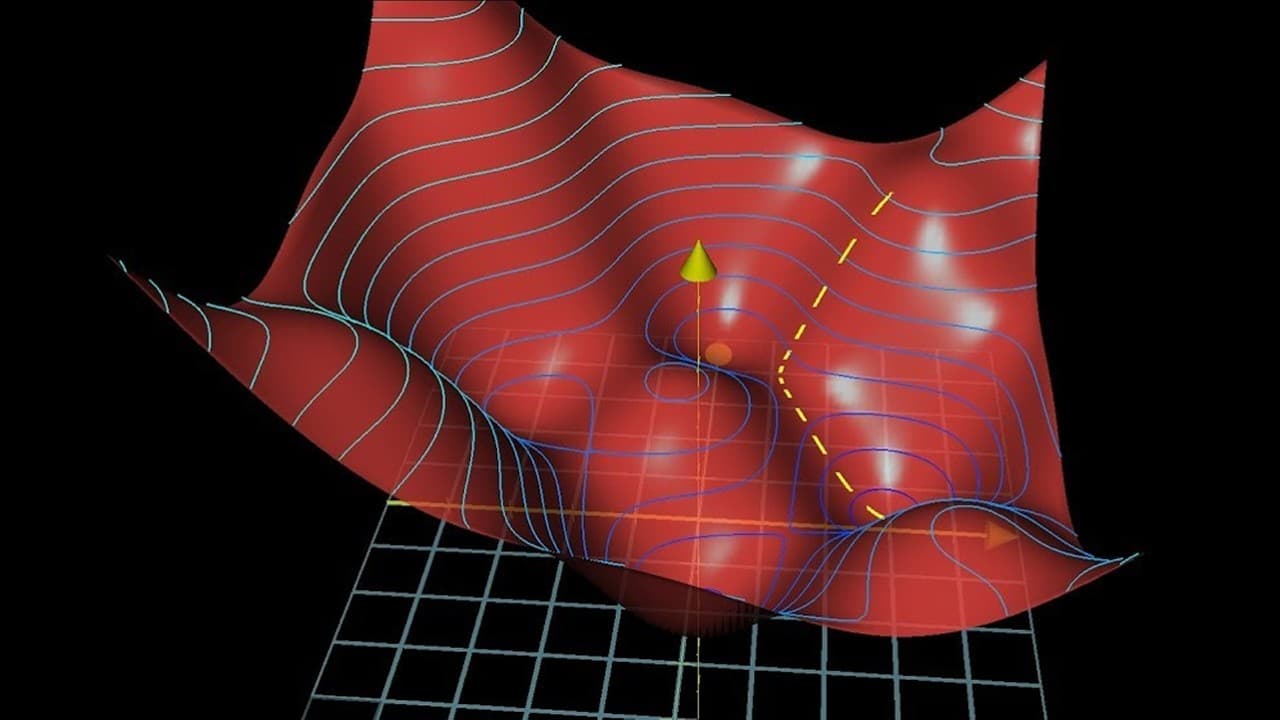
Gradient descent is the algorithm that allows neural networks to learn by adjusting weights and biases to minimize a cost function. It works by calculating the gradient of the cost function and taking steps in the opposite direction to converge towards a local minimum, improving the network's accuracy in tasks like handwritten digit recognition.
Transcript
Last video I laid out the structure of a neural network. I'll give a quick recap here so that it's fresh in our minds, and then I have two main goals for this video. The first is to introduce the idea of gradient descent, which underlies not only how neural networks learn, but how a lot of other machine learning works as well. Then after that we'll... Read More
Key Insights
- 🧠 Neural networks learn through gradient descent, a process that adjusts weights and biases to improve performance on training data.
- 👀 The network's goal is to classify handwritten digits, with the brightest neuron in the final layer representing the identified digit.
- 💡 The layered structure of the network is designed to capture different features, such as edges and patterns, that help recognize digits.
- ♂️ Training the network involves showing it labeled training data and adjusting weights and biases to minimize a cost function.
- 🖥️ The cost function measures how well the network is performing, and its gradient provides directions for adjusting weights and biases.
- 👥 Backpropagation is the algorithm used to efficiently compute the gradient and minimize the cost function.
- ⚙️ Gradient descent is the process of repeatedly adjusting weights and biases based on the negative gradient to converge towards a local minimum of the cost function.
- 📋 The performance of the network on unseen images is evaluated, with the described network achieving around 96% accuracy on handwritten digits.
Install to Summarize YouTube Videos and Get Transcripts
Explore YouTube Video Summarizer or Get YouTube Transcript Extractor
Questions & Answers
Q: What is the purpose of gradient descent in neural networks?
The purpose of gradient descent in neural networks is to minimize the cost function, which measures the network's performance, by adjusting the weights and biases of the neurons. This helps improve the network's accuracy on training data.
Q: How does the network determine the weights and biases that need to be adjusted?
The network determines the weights and biases that need to be adjusted by computing the gradient of the cost function, which indicates the direction to nudge each weight and bias for the fastest decrease in the cost function. The negative gradient vector represents the direction of steepest descent.
Q: How does the network classify digits?
The network classifies digits by assigning the digit with the brightest activation in the final layer of neurons. The activation values are based on weighted sums of activations in previous layers, as well as biases. The network has been trained to recognize patterns and make decisions based on these weighted sums.
Q: What impact does the cost function have on the network's learning?
The cost function plays a critical role in the network's learning process. It measures the difference between the network's output and the expected output for a given training example. The network adjusts its weights and biases to minimize the cost function, which leads to improved performance on the training data.
Summary & Key Takeaways
-
The video introduces the concept of gradient descent, which is the basis for how neural networks learn.
-
It explains the structure and function of a neural network, specifically one used for handwritten digit recognition.
-
The video discusses the cost function, which measures the network's performance, and how gradient descent is used to minimize this function and improve the network's accuracy.
Read in Other Languages (beta)
Share This Summary 📚
Summarize YouTube Videos and Get Video Transcripts with 1-Click
Try YouTube Summary with ChatGPT & Claude or YouTube Transcript Generator
Explore More Summaries from 3Blue1Brown 📚
Summarize YouTube Videos and Get Video Transcripts with 1-Click
Try YouTube Summary with ChatGPT & Claude or YouTube Transcript Generator