How to Choose Sellers Using Binomial Distributions
TL;DR
To determine which seller to choose, apply Laplace's rule of succession to online ratings by adjusting ratings with two additional reviews — one positive and one negative. This provides a more reliable estimate of expected experience quality. For example, a seller with 48 positive out of 50 reviews becomes 49 out of 52, offering a 94.2% probability of a good experience.
Transcript
You're buying a product online, and you see three different sellers. They're all offering that same product at essentially the same price. One of them has a 100% positive rating, but with only 10 reviews. Another has a 96% positive rating, with 50 total reviews. And yet another has a 93% positive rating, but with 200 total reviews. Which one should... Read More
Key Insights
- Laplace's rule of succession adjusts ratings by adding two hypothetical reviews, offering a more reliable estimate of experience probability.
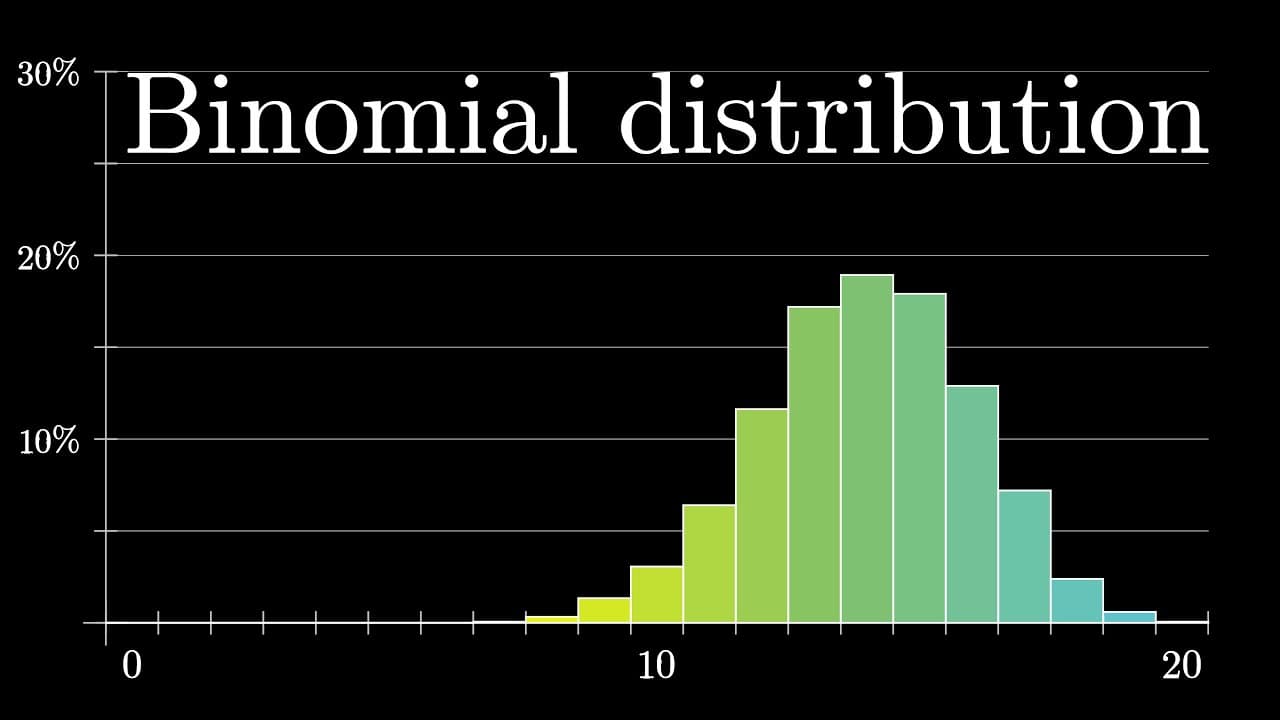
- A binomial distribution models the probability of a fixed number of successes in a series of independent trials.
- The probability of observed data given a success rate can be calculated using binomial distribution formulas.
- The most likely success rate is not always the best estimate of future experiences; consider the distribution's center of mass.
- Bayes' rule is essential for updating beliefs about success rates based on observed data.
- Simulations can provide empirical probability estimates, complementing analytical calculations.
- The probability of a data set given a success rate is distinct from the probability of a success rate given data.
- Understanding probabilities of probabilities is crucial for making informed decisions with limited data.
Install to Summarize YouTube Videos and Get Transcripts
Explore YouTube Video Summarizer or Get YouTube Transcript Extractor
Questions & Answers
Q: How to adjust online ratings using Laplace's rule of succession?
Laplace's rule of succession adjusts online ratings by adding two hypothetical reviews: one positive and one negative. This adjustment provides a more reliable estimate of the probability of a good experience. For example, a seller with 48 positive out of 50 reviews becomes 49 out of 52, resulting in a 94.2% probability of a good experience.
Q: What is a binomial distribution?
A binomial distribution is a probability distribution that models the number of successes in a fixed number of independent trials, each with the same probability of success. It is used to calculate the probability of obtaining a specific number of successes in scenarios like coin flips or online reviews, where each event has two possible outcomes.
Q: How to calculate the probability of observed data given a success rate?
To calculate the probability of observed data given a success rate, use the binomial distribution formula. This involves calculating the number of ways to achieve the observed successes, multiplied by the probability of each success raised to the power of the number of successes, and the probability of failure raised to the power of the number of failures.
Q: Why is the most likely success rate not always the best estimate?
The most likely success rate, or the peak of the probability distribution, is not always the best estimate for future experiences because it doesn't account for the distribution's spread. A more reliable estimate considers the distribution's center of mass, which reflects the average success rate across all probable scenarios, offering a balanced view of expectations.
Q: What is Bayes' rule and how is it used in this context?
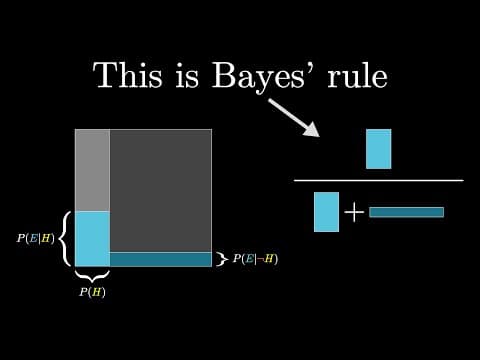
Bayes' rule is a mathematical formula used to update the probability of a hypothesis based on new evidence. In this context, it helps update beliefs about the true success rate of a seller based on observed reviews. By considering prior beliefs and new data, Bayes' rule provides a more informed estimate of future experiences.
Q: How can simulations complement analytical probability calculations?
Simulations complement analytical probability calculations by providing empirical estimates of probabilities through repeated random sampling. They offer a practical way to visualize and verify theoretical predictions, especially when analytical solutions are complex or infeasible. Simulations help validate models and provide insights into the behavior of probability distributions.
Q: What is the difference between probability of data given a success rate and probability of a success rate given data?
The probability of data given a success rate calculates the likelihood of observing specific outcomes based on an assumed success rate. In contrast, the probability of a success rate given data estimates the likelihood of different success rates based on observed outcomes. The latter requires Bayesian inference to update beliefs about success rates using observed data.
Q: Why is understanding probabilities of probabilities important in decision-making?
Understanding probabilities of probabilities is crucial in decision-making because it helps quantify uncertainty about unknown parameters, such as success rates, based on limited data. This understanding allows for more informed decisions by considering the range of possible outcomes and their likelihoods, rather than relying solely on point estimates or assumptions.
Summary & Key Takeaways
-
Laplace's rule of succession helps adjust online ratings by adding two hypothetical reviews, one positive and one negative, to provide a more reliable estimate of the probability of a good experience. For instance, a seller with 48 out of 50 positive reviews becomes 49 out of 52, resulting in a 94.2% probability of a good experience.
-
Binomial distributions model the probability of a fixed number of successes in independent trials. The video explains how to calculate the probability of observed data given an assumed success rate using these distributions. It emphasizes that the most likely success rate isn't always the best estimate for future experiences.
-
The video introduces Bayes' rule as a method to update beliefs about success rates based on observed data. Simulations can provide empirical probability estimates, complementing analytical calculations. Understanding probabilities of probabilities is vital for making informed decisions with limited data.
Read in Other Languages (beta)
Share This Summary 📚
Summarize YouTube Videos and Get Video Transcripts with 1-Click
Try YouTube Summary with ChatGPT & Claude or YouTube Transcript Generator
Explore More Summaries from 3Blue1Brown 📚




Summarize YouTube Videos and Get Video Transcripts with 1-Click
Try YouTube Summary with ChatGPT & Claude or YouTube Transcript Generator