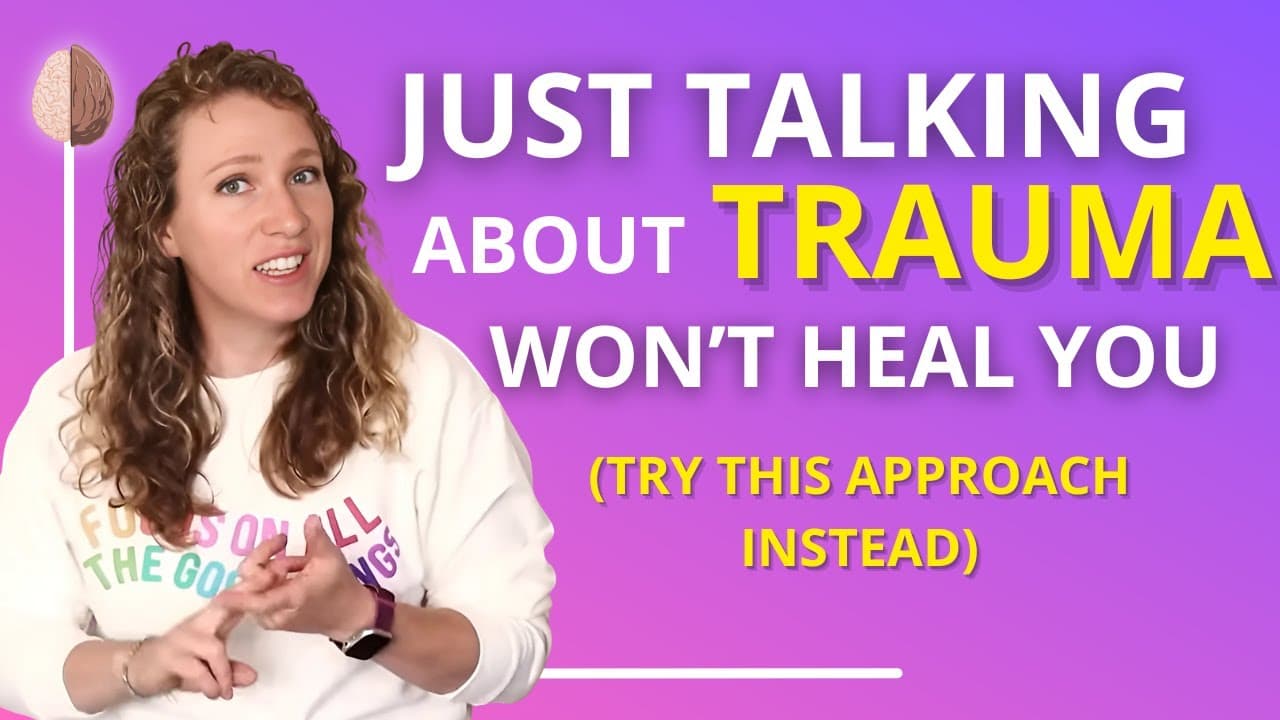
Why Talking About Trauma Won't Heal It
TL;DR
Repeatedly talking about trauma can reinforce it, because visualizing a past event triggers the same fight-flight-freeze stress response as real danger, thickening fear pathways in the brain. A better approach uses a four-step visualization exercise: identify trauma-based beliefs, rewrite them as healed beliefs, and vividly imagine living your new story.
Transcript
Talking about trauma doesn't heal trauma. For a lot of people, it makes them feel much worse and this is one thing that sets human brains apart from animals. When we visualize something, whether it's past trauma or a worry about the future, we perceive danger and our brain triggers the same physiological reaction to perceived danger as it does ... Read More
Key Insights
- Talking about trauma alone does not heal it, and for many people, especially those with PTSD, repeatedly retelling the story makes them feel much worse rather than better.
- The human brain triggers the same physiological reaction to perceived danger as it does to real danger, releasing a cascade of stress chemicals that start the fight, flight, freeze response when you visualize a past trauma.
- Rehashing trauma reinforces it by making the fear, panic, and shame pathways in the brain thicker and stronger, so the more you think about it, the easier it is to get stuck reliving it.
- Trauma therapy works when talking is paired with facing fears inside a safe therapeutic relationship, working through body sensations, restoring internal safety, and connecting with your inner flame while feeling loving and powerful.
- Traumatic memories can flood the prefrontal cortex, the thinking part at the front of the brain, and physically prevent it from processing trauma through talk therapy alone for many people.
- Trauma installs self-limiting 'I am' beliefs such as 'I'm unlovable,' 'I'm powerless,' or 'I'm worthless,' and believing them reverts the body to fight, flight, freeze mode long after the danger has passed.
- Trauma-fueled beliefs get reinforced through action: believing you're worthless leads you to settle for bad relationships, and believing you'll fail keeps you from pursuing dreams, which fuels more powerlessness and resentment.
- The four-step visualization intervention replaces talking about the event with exploring how trauma affects you now: writing 'I am' beliefs, rewriting healed versions, journaling your new life in present tense, and creating a visual representation.
Install to Summarize YouTube Videos and Get Transcripts
Explore YouTube Video Summarizer or Get YouTube Transcript Extractor
Questions & Answers
Q: Why doesn't talking about trauma heal it?
Just talking about trauma over and over does very little to heal the brain and body in the present. When you bring trauma to mind, you physically relive it, and the more you rehash it, the easier it is to get stuck in the fight, flight, freeze response. This reinforces the trauma, making the fear, panic, and shame pathways in the brain thicker and stronger, which can actually make you feel much worse rather than better.
Q: How does the brain react when you visualize a past trauma?
One thing that sets human brains apart from animals is that when we visualize something, whether a past trauma or a future worry, we perceive danger. The brain triggers the same physiological reaction to perceived danger as it does to real danger, releasing a cascade of stress chemicals that kick off the fight, flight, freeze response. In that moment you are physically in your body reliving the trauma, even though the actual danger has passed.
Q: When does trauma therapy actually help you heal?
Trauma therapy works when talking about trauma happens alongside other elements. You need to face your fears while enveloped in the safety of a therapeutic relationship, work through your body sensations, restore an internal sense of safety, and connect with your inner flame so you feel loving and powerful while talking through the trauma. A good therapist uses tools like a warm safe relationship, body-based grounding skills, channeling activated energy into action, and narrative therapy.
Q: What are the four steps of the visualization exercise for trauma?
The visualization method has four steps. First, explore the self-limiting beliefs you adopted because of trauma by writing 'I am' statements. Second, write what the healed version of yourself would say for each 'I am' statement. Third, get out your journal and visualize in incredible detail, in present tense, what your day looks like when you fully believe each new statement. Fourth, you can create some kind of visual representation of the new belief.
Q: What are trauma-fueled beliefs and how do they keep you stuck?
Trauma-fueled beliefs are self-limiting messages like 'I'm unlovable,' 'I'm broken,' 'I'm powerless,' or 'I can't trust anyone,' which you started believing without realizing the trauma was lying. When you believe them, your body reverts to fight, flight, freeze mode. They keep getting reinforced through your actions: if you believe you're worthless you settle for bad relationships, and if you believe you're powerless you give up on your dreams, fueling more resentment.
Q: How do you rewrite a trauma belief into a healed belief?
In step two, you write what the healed version of yourself would say. For example, if your trauma belief is 'I'm worthless, I'll never find true love,' the new belief becomes 'I am totally lovable, I deserve to be treated with respect and love, and I won't settle for less.' If your belief was 'I am powerless,' the new belief is 'I can directly influence my success, I can learn the skills to be awesome at life, and I can build a successful business.'
Q: Why does trauma prevent talk therapy from working for some people?
For many people with trauma, the traumatic memories flood the thinking part of the brain, the prefrontal cortex, which is the front part of the brain. This flooding physically prevents the brain from processing through the trauma using talk therapy. That is why visualization is offered as a tool: it targets the problem of flashbacks and the negative messaging we internalized, using the same brain pathways that previously kept us stuck in re-experiencing the trauma.
Q: How should you use your new positive belief statements day to day?
When you start using healthy beliefs, you may need to refer back to your list to remember the words that counteract your trauma-fueled beliefs, and eventually you'll recall them as needed in the moment. It's a good idea to keep a list of positive phrases somewhere you see regularly, like your bathroom mirror or your phone home screen. The editor's example shows spending one minute every day grounding yourself and reading your vision while imagining the emotions it brings.
Summary & Key Takeaways
-
Talking about trauma does not by itself heal it, and can make people feel worse because the brain treats a visualized past event as real danger, firing the same stress chemicals and fight, flight, freeze response, which reinforces fear, panic, and shame pathways.
-
Talk-based therapy still helps when it pairs facing fears with a safe therapeutic relationship, body-based grounding, restoring internal safety, and connecting with your inner flame. But traumatic memories can flood the prefrontal cortex and block processing, so an alternative tool is needed.
-
The visualization method has four steps: explore the self-limiting 'I am' beliefs trauma gave you, write what the healed version of yourself would say instead, journal in vivid present-tense detail what your day looks like living the new belief, and create a visual representation.
Read in Other Languages (beta)
Share This Summary 📚
Summarize YouTube Videos and Get Video Transcripts with 1-Click
Try YouTube Summary with ChatGPT & Claude or YouTube Transcript Generator
Explore More Summaries from Therapy in a Nutshell 📚




Summarize YouTube Videos and Get Video Transcripts with 1-Click
Try YouTube Summary with ChatGPT & Claude or YouTube Transcript Generator