How aldosterone regulates salt balance and BP
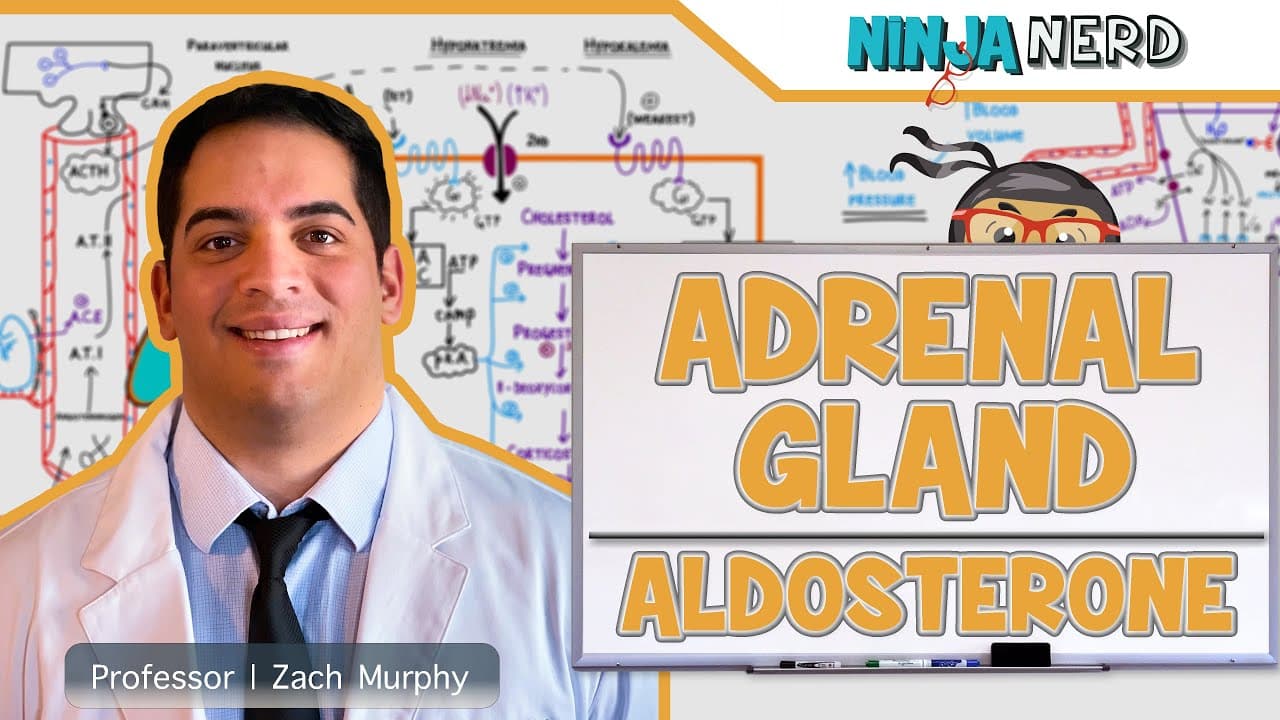
TL;DR
Aldosterone is produced in the zona glomerulosa of the adrenal cortex and its release is driven mainly by angiotensin II and high potassium, with ACTH playing a weaker role. It acts on the distal nephron to increase sodium reabsorption and potassium excretion, raising extracellular fluid volume and blood pressure. This process involves mineralocorticoid receptors and upregulation of ENaC and Na+/K+ ATPase.
Transcript
all engineers in this video we're going to talk about the adrenal gland all right so first off here where would you actually find the adrenal gland so you know okay if we're taking here anatomical position all right you have your abdominal cavity right now in the abdominal cavity you have your liver on your right side you got your spleen on your le... Read More
Key Insights
- Aldosterone is produced in the zona glomerulosa of the adrenal cortex.
- Angiotensin II stimulates aldosterone production via a G protein coupled receptor pathway.
- Renin release from the kidney triggers the conversion of angiotensinogen to angiotensin II.
- Hyperkalemia and low sodium levels strongly stimulate aldosterone secretion.
- ACTH can stimulate aldosterone but is a weaker stimulus.
- Aldosterone acts on the distal nephron to promote sodium reabsorption and potassium excretion.
- Mineralocorticoid receptors mediate aldosterone effects and upregulate ENaC and Na+/K+ ATPase.
- Cholesterol is a precursor for aldosterone synthesis via a steroidogenic pathway.
Install to Summarize YouTube Videos and Get Transcripts
Explore YouTube Video Summarizer or Get YouTube Transcript Extractor
Questions & Answers
Q: What stimulates aldosterone release most powerfully
The strongest stimulus for aldosterone secretion is low blood pressure which leads to renin release from the kidneys. Renin converts angiotensinogen to angiotensin I, which is converted to angiotensin II in the lungs. Angiotensin II then stimulates zona glomerulosa cells to produce aldosterone, increasing sodium reabsorption and water retention to raise blood pressure.
Q: What role does angiotensin II play in aldosterone production
Angiotensin II acts on receptors in zona glomerulosa cells to activate a Gs protein, which increases cAMP via adenylate cyclase. This signaling cascade stimulates processes that lead to aldosterone synthesis from cholesterol through a steroidogenic pathway, ultimately driving sodium retention and potassium excretion to restore blood pressure.
Q: How does ACTH relate to aldosterone secretion
ACTH can stimulate aldosterone production but it is considered a weaker stimulus compared to angiotensin II or hyperkalemia. It acts through a similar signaling pathway involving G proteins and cAMP, but its effect on aldosterone levels is less robust under normal physiological conditions.
Q: What happens in the kidney when aldosterone is released
Aldosterone binds to mineralocorticoid receptors in the distal nephron, upregulating sodium channels (ENaC) and Na+/K+ ATPase pumps. This increases sodium reabsorption, potassium excretion, and hydrogen ion secretion, leading to water retention and a rise in extracellular fluid volume and blood pressure.
Q: What are the clinical implications of aldosterone imbalance
Hyperaldosteronism increases sodium reabsorption, promoting hypertension and potential hypokalemia, while hypoaldosteronism reduces sodium reabsorption, potentially causing hyperkalemia and low blood pressure. Treatments may involve aldosterone antagonists like spironolactone in conditions such as heart failure and hypertension to modulate its effects.
Q: Where in the adrenal gland is aldosterone produced
Aldosterone is produced in the zona glomerulosa, the outer layer of the adrenal cortex. This layer is distinct from the zona fasciculata and zona reticularis, which make other steroid hormones, while the adrenal medulla consists of neural tissue. The production of aldosterone involves cholesterol conversion through a steroidogenic pathway.
Q: What is the steroidogenic pathway leading to aldosterone
The pathway starts with cholesterol, which is converted to pregnenolone and then to progesterone, then 11-deoxycorticosterone, followed by corticosterone, and finally aldosterone. Enzymes such as 21-hydroxylase participate in this sequence, and mineralocorticoid receptor signaling further regulates the expression of sodium transport proteins in the kidney.
Q: How is aldosterone’s action different from peptide hormones
Aldosterone is a steroid hormone derived from cholesterol, so it diffuses into target cells and binds intracellular mineralocorticoid receptors to modulate gene transcription. In contrast, peptide hormones usually act via membrane receptors and activate signaling cascades without requiring transcriptional changes to the same extent, leading to faster but often shorter-lived responses.
Summary & Key Takeaways
-
Aldosterone is synthesized in the zona glomerulosa of the adrenal cortex and is part of the RAAS pathway driven by angiotensin II and potassium levels.
-
The transcriptional action of aldosterone increases sodium channels and pumps in the distal nephron to conserve sodium and excrete potassium.
-
Clinically, aldosterone imbalance leads to conditions like hyperaldosteronism or hypoaldosteronism and guides therapies such as spironolactone use in heart failure and hypertension.
Read in Other Languages (beta)
Share This Summary 📚
Summarize YouTube Videos and Get Video Transcripts with 1-Click
Try YouTube Summary with ChatGPT & Claude or YouTube Transcript Generator
Explore More Summaries from Ninja Nerd 📚






Summarize YouTube Videos and Get Video Transcripts with 1-Click
Try YouTube Summary with ChatGPT & Claude or YouTube Transcript Generator