How to Scale Facebook Ads Without Losing ROAS

TL;DR
Real scaling comes from concentrating budget on new (cold) audiences rather than making cautious 10% increases or leaning on engaged and existing customers. Open the audience segments breakdown to see how spend splits across new, engaged, and existing, accept that cold traffic returns a lower ROAS, and increase new-customer spend aggressively week over week while that segment's return stays stable.
Transcript
if you're running Facebook ads and you've ever hit a wall when you're advertising meaning you've never been able to get over a hump in terms of how much you could actually spend you always get stuck at $100 or $1,000 a day or even $5,000 per day but you can't seem to actually get over that amount of spend and maintain your target return on ad spend... Read More
Key Insights
- Scaling a Facebook ad account is not about small incremental 10 to 20% budget bumps or worrying about the learning phase. Real growth comes from aggressively increasing spend, sometimes doubling or tripling week over week, when new-customer acquisition stays stable.
- The core scaling exercise starts by opening the audience segments breakdown, which splits results into new, engaged, existing, and unknown or uncategorized. Properly configured accounts show unknown and uncategorized spend as negligible, so attention goes to the meaningful three.
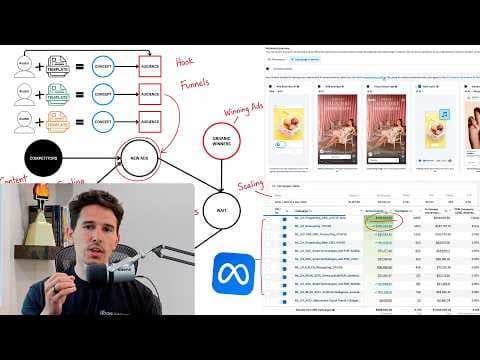
- Healthy scaling directs the majority of spend toward new audiences, not existing customers. In the example account, engaged and existing spend barely moved while new-audience spend grew dramatically, proving growth came from incremental acquisition.
- Cold new audiences naturally convert at a lower return on ad spend than engaged or existing customers, because warm segments are fundamentally different from cold traffic. Expecting the same high ROAS from new customers as from existing ones is unrealistic.
- Educating the client to accept a lower new-audience ROAS baseline is essential to scaling. If a business insists on the same high return it gets from warm audiences, it cannot grow new-customer acquisition at volume.
- When evaluating each week, the focus stays on new audience and new customer segmentation only. Engaged and existing performance is set aside so decisions are driven purely by whether cold acquisition remains stable or improves.
- Facebook's attribution windows have expanded, and the compare attribution settings view exposes one-day click, seven-day click, one-day view, and incremental columns. View conversions are deduplicated from click conversions, so one-day view plus seven-day click equals total purchases.
- View-through conversions exceeding roughly 30% of total conversions signal a problem, often too much spend hitting existing or engaged audiences. Click-based and incremental conversions should drive the majority, indicating the platform is genuinely incremental for the business.
Install to Summarize YouTube Videos and Get Transcripts
Explore YouTube Video Summarizer or Get YouTube Transcript Extractor
Questions & Answers
Q: Why do Facebook advertisers get stuck at a spending ceiling?
Advertisers hit a wall because they scale timidly, making small incremental budget increases and obsessing over the learning phase. That approach keeps spend stuck at the same level while chasing an unrealistically high return. The video argues you break the ceiling by aggressively increasing spend on new audiences, accepting a lower cold-traffic return, rather than nudging budgets up by small percentages and expecting warm-audience performance from cold acquisition.
Q: How do you scale Facebook ad spend without hurting ROAS?
You concentrate additional budget on new audiences and monitor that segment's return closely rather than spreading spend across engaged and existing customers. In the case shown, spend rose steeply while overall return on ad spend stayed roughly flat because acquisition volume grew profitably. The key is watching new-customer performance week over week and increasing budget aggressively whenever that cold-audience return remains stable or improves.
Q: What is the audience segments breakdown in Facebook Ads?
It is a reporting view opened by clicking the breakdown button and selecting audience segments, which splits results into new, engaged, existing, and unknown or uncategorized buyers. A well-configured account shows negligible unknown and uncategorized spend. The valuable signal is how budget and return distribute across new, engaged, and existing audiences, letting you see whether growth is coming from fresh acquisition or from remarketing to warm customers.
Q: Why should most ad spend go to new audiences when scaling?
New audiences represent incremental customer acquisition, whereas engaged and existing audiences are people the brand could often reach anyway. In the example, engaged and existing spend barely increased while new-audience spend grew dramatically, driving substantial new-customer revenue. Those new customers also carry lifetime value and return repeatedly, so directing budget toward profitable, incremental new acquisition is what actually grows a business rather than inflating warm-audience numbers.
Q: Why do new (cold) audiences have a lower ROAS than existing customers?
Cold audiences are fundamentally different from warm ones. Existing and engaged customers already know the brand and convert at a much higher return, while new prospects require more spend to acquire. The video stresses setting a realistic new-audience baseline that is noticeably lower than the warm-audience return, then working on the back end to improve it. Expecting cold traffic to match existing-customer performance simply is not realistic.
Q: How should you scale ad budget week over week?
Rather than increasing budgets by small percentages, you raise spend sharply, even doubling or tripling in a short period, as long as new-customer acquisition stays stable. The account in the example moved from a long flat stretch to progressively larger weekly spend, occasionally trimming back slightly to protect a target return. Each week's decision rests on evaluating new-audience and new-customer segmentation, not engaged or existing performance.
Q: What do Facebook's attribution windows show when scaling?
Using compare attribution settings, you can view one-day click, seven-day click, one-day view, and incremental conversion columns. View conversions are deduplicated from click conversions, so one-day view plus seven-day click equals total purchases under that model. Incremental attribution, available only from April 1st 2025 onward, typically lands between one-day and seven-day click. The goal is confirming clicks and incremental conversions drive the majority of results.
Q: What does a high view-through conversion rate indicate?
When view-through conversions exceed roughly 30% of total conversions, it is a warning sign that something is wrong. It usually means the account is reaching too many existing customers or engaged audiences rather than driving genuine incremental sales. Healthy accounts see click-based and incremental conversions dominate, showing the platform is truly incremental. If half of conversions are view-based, you should question why with whoever manages the ads.
Summary & Key Takeaways
-
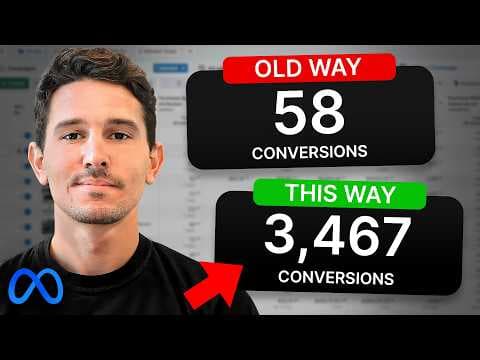
The video explains how an agency broke through a client's spending ceiling, sharply raising ad spend over about 40 days while keeping return on ad spend flat or slightly better. The lesson: abandon cautious percentage-based scaling and the learning-phase mindset, because real growth requires bold budget increases tied to new-customer performance.
-
The central method is the audience segments breakdown, which separates new, engaged, existing, and uncategorized results. Smart scaling pours budget into new (cold) audiences rather than existing customers. Because cold traffic returns a lower ROAS than warm segments, marketers must set and communicate a realistic new-audience baseline before pushing volume.
-
Scaling happens week by week, watching only new-audience return, and increasing spend steeply when it holds. The second step uses expanded attribution windows, comparing one-day click, seven-day click, one-day view, and incremental columns. Excessive view-through conversions, above roughly 30%, warn that spend is wrongly reaching existing or engaged audiences instead of new customers.
Read in Other Languages (beta)
Share This Summary 📚
Summarize YouTube Videos and Get Video Transcripts with 1-Click
Try YouTube Summary with ChatGPT & Claude or YouTube Transcript Generator
Explore More Summaries from Sam Piliero 📚


Summarize YouTube Videos and Get Video Transcripts with 1-Click
Try YouTube Summary with ChatGPT & Claude or YouTube Transcript Generator