What will 2026 look like and why it matters
TL;DR
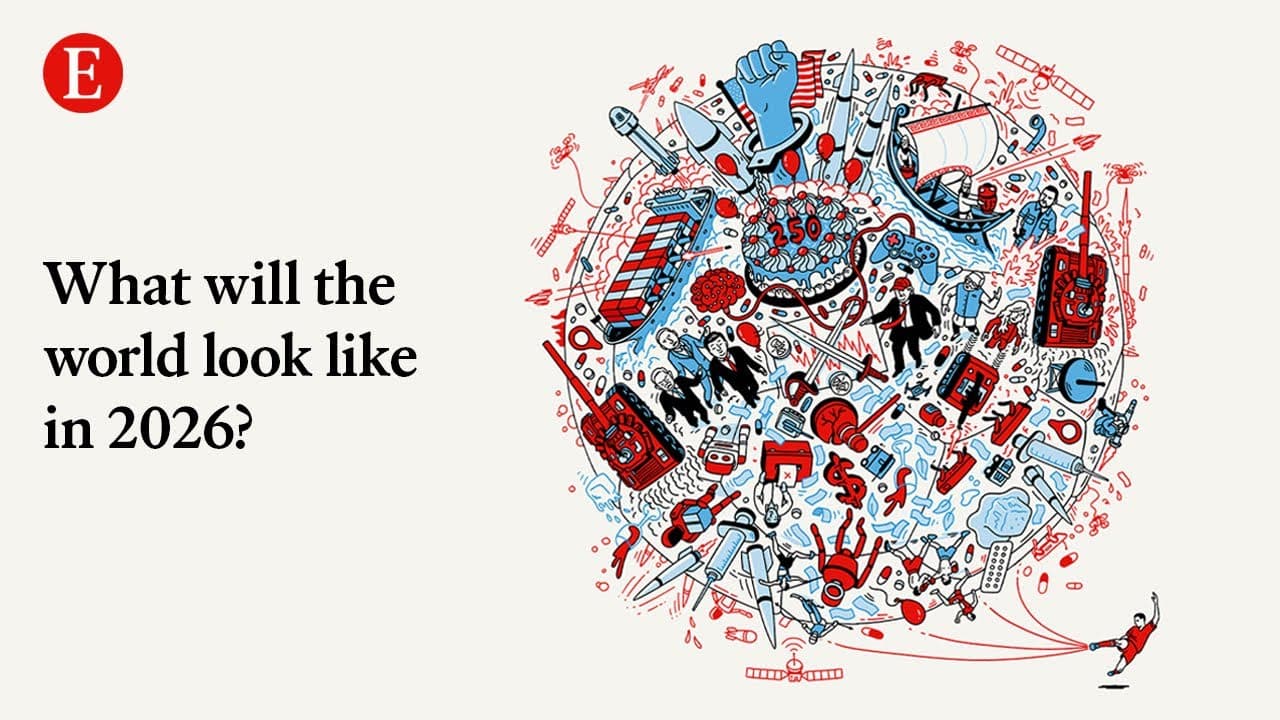
The year 2026 is shaped by four big trends: space warfare and missile defense expanding around the world, political pressure on central banks and independent monetary policy, a controversial wave of human enhancement in sports, and competing narratives for America’s 250th birthday. These forces collectively redefine security, finance, sport ethics, and national memory in the coming year.
Transcript
What lies in store for 2026? This is Donald Trump’s world and we’re all just living in it His presidency will be the biggest factor influencing the coming year across the globe and even up in space As the Trumpnado spins on, here are four stories that will shape the world ahead Military competition in space will intensify in 2026 In a future confl... Read More
Key Insights
- Space competition is intensifying with upgrades to missile defense and space based interceptors that can target missiles in launch, and leaders are considering how to protect assets as space becomes central to warfare.
- Starship and other launch assets are positioned as potential tools to replenish satellite constellations if space assets are damaged, affecting national security planning and global launch monopolies.
- Other nations are expanding space capabilities, with Britain, France, and China increasing counter space or on orbit activities, signaling a wider strategic race beyond the US.
- Russia is rumored to explore space based nuclear options which would challenge current treaties and could redefine risk in low Earth orbit, even as such weapons would violate the Outer Space Treaty.
- Central banks are under political pressure in many rich economies, raising questions about independence and the potential for policy to be guided by political goals rather than purely economic conditions.
- The Enhanced Games push the boundaries of sport ethics by allowing performance enhancing drugs under supervision, backed by notable investors, sparking debate about long term health risks and integrity of records.
- Human enhancement is a growing industry, driven by wearables, implants, and exoskeletons, signaling a shift toward a more bioengineered economy where the line between medicine and enhancement blurs.
- America faces a contested narrative for its 250th birthday, with two competing commissions and contrasting visions for national storytelling, reflecting broader political polarization about history and national identity.
- More videos from this channel:
- More from this channel: The Economist
Install to Summarize YouTube Videos and Get Transcripts
Explore YouTube Video Summarizer or Get YouTube Transcript Extractor
Questions & Answers
Q: A real search query question about the video (e.g. 'How to...', 'What is...', 'Why does...', 'When should...'). Question 1
How will space warfare evolve in 2026 and what are the key drivers behind the push for space based missile defense and interceptors? The video outlines four central threads including a bigger US Space Force budget, plans for Golden Dome interceptors, the potential use of space based weapons, and the broader race among nations to secure space assets. It also notes that SpaceX Starship could play a role in replenishing satellites if a conflict damages American orbital assets. Together these points describe a transition toward more contested and weaponized space, with strategic implications for deterrence, alliances, and how space assets are protected and used in future conflict scenarios.
Q: Question 2
What roles do central banks and political pressure play in 2026, and what are the potential outcomes for monetary independence? The video discusses that central bankers will face political pressure from leaders who want different economic results, and it mentions a potential replacement for Powell as a sign that the administration aims to influence policy. It explains that historically shielding technocrats from politics has helped independence, but the coming year could test that boundary. The broader implication is that political meddling could alter inflation control, growth trajectories, and the credibility of monetary policy across advanced economies, affecting investors and households.
Q: Question 3
What is the Enhanced Games and why is it controversial in 2026? The video describes the event in Las Vegas where performance enhancing drugs are not banned but encouraged under medical supervision, offering substantial prizes for breaking world records. It highlights criticism from sporting bodies and anti-doping agencies, who warn about health risks and the normalization of drug use. The discussion centers on ethics, health safety, and whether such a policy improves the spectacle or erodes the integrity of sport, while acknowledging investors backing the initiative and the broader trend toward normalization of enhancement technologies.
Q: Question 4
How does the narrative around Americas 250th birthday reflect political divisions in 2026? The video explains that two commissions, America250 and Task Force 250, propose contrasting celebration approaches, with debates over which stories to tell and how to present them publicly. It notes that Task Force 250 imagines a televised youth athletics event and a White House lawn UFC fight, illustrating partisan confrontations over national memory. The overall point is that history is being used as a battleground, influencing how Americans perceive their past and what future policies they advocate.
Q: Question 5
What implications do international space activities have beyond the United States in 2026? The transcript mentions Britain expanding counter space capabilities, France engaging in on orbit proximity operations with the US, and China increasing satellite activity, including on orbit demonstrations. These signals suggest a broader strategic competition in space that could affect security, alliance coordination, and norms governing space activities, as well as potential responses to safeguard satellites and space-based assets across multiple countries.
Q: Question 6
Why is there concern about Russia potentially pursuing a space based nuclear weapon, and how does that relate to international law? The video notes that Russia has been suspected of developing space based nuclear capabilities which would threaten large numbers of satellites in low Earth orbit in a single strike, a concept that would violate the Outer Space Treaty of 1967 prohibiting weapons of mass destruction in orbit. The concern is that such a move would modify strategic power in space, trigger a new arms dynamic, and test treaty enforcement, while potentially leading to a dangerous escalatory cycle among spacefaring nations.
Q: Question 7
What role do future economic scenarios play in the video, and how might investors react to political moves on policy and inflation? The discussion ties central bank independence to broader policy credibility, suggesting that if leaders push for lower rates or other political goals, markets could react to perceived changes in economic governance. The potential implications include shifts in inflation expectations, bond yields, and growth prospects as investors reassess the political risks around monetary policy, and as new leadership emerges at central banks that may align more closely with political priorities.
Q: Question 8
How might the Starship and other launch assets influence defense planning and space resilience? The video indicates that SpaceX has been allocated most national security launches for sensitive missions, and Starship’s rapid reuse could help replenish satellites quickly if needed. This suggests defense planners are counting on commercial space capabilities to augment national security, raise questions about launch cadence, reliability, and dependency on a single contractor, and could influence strategy for protecting space-based assets and ensuring continuity of operations in conflict scenarios.
Summary & Key Takeaways
-
In 2026 space competition grows with a 40 percent budget increase for the US Space Force and plans for space based interceptors, while nations like Britain, France, and China expand on orbit activities and potential on orbit engagements.
-
Central banks face political pressure that could influence independence, with discussions around who should set policy and how much politicians can steer rates, and a possible replacement for Powell signals increased scrutiny of monetary autonomy.
-
The Enhanced Games in Las Vegas test a new normal for performance enhancing drugs under medical supervision, highlighting a broader rise of human enhancement in a multi hundred billion dollar industry and the debate over safety and ethics in sport.
Read in Other Languages (beta)
Share This Summary 📚
Summarize YouTube Videos and Get Video Transcripts with 1-Click
Try YouTube Summary with ChatGPT & Claude or YouTube Transcript Generator
Explore More Summaries from The Economist 📚
Summarize YouTube Videos and Get Video Transcripts with 1-Click
Try YouTube Summary with ChatGPT & Claude or YouTube Transcript Generator