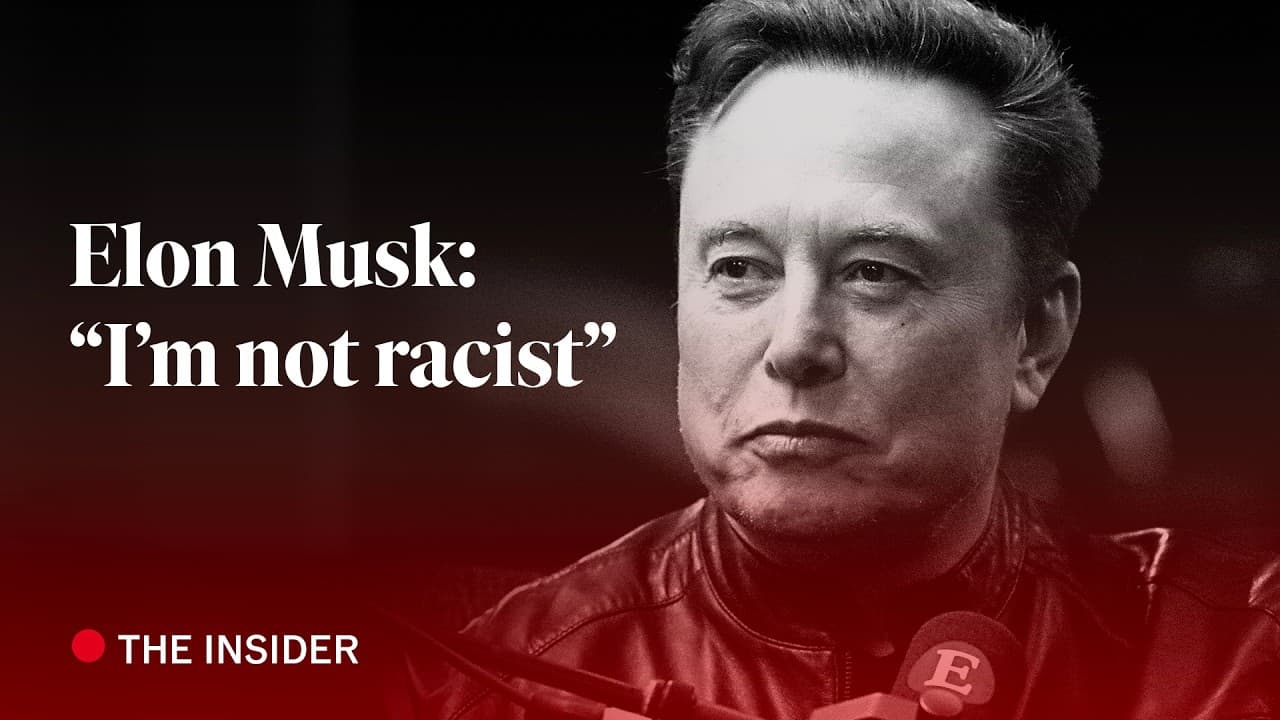
What did Elon Musk say about Europe and civil war?
TL;DR
Musk denies supporting the far right and argues that voters label him due to his large following. He claims the political center has shifted left and discusses how public perception is shaped by media and social media. He also emphasizes his stance against violence and anti Western views while defending his business leadership.
Transcript
You support not just the populist right but the far right in fact very fringe parties in some countries I support the normal people okay what you call the far right falsely you think is the normal person okay yes um literally you could you could go back uh 10 or 15 years and these these these policies were completely normal in fact you yo... Read More
Key Insights
- Musk denies backing the far right and insists he supports normal people.
- The center of gravity in politics has shifted left, according to Musk, not because of his ideology.
- Musk argues that his large follower base significantly shapes public opinion in Europe and the UK.
- He contends that media mischaracterizes his views and inflates perception of danger in Europe.
- Musk asserts he is not racist and highlights diversity in his company leadership.
- He differentiates between anti Muslim sentiment and actionable policy views on immigration.
- Musk opposes coercive or violent ideals and frames his stance as safeguarding Western values.
- He acknowledges public loathing from some audiences but remains unapologetic about his influence.
- More videos from this channel:
- More from this channel: The Economist
Install to Summarize YouTube Videos and Get Transcripts
Explore YouTube Video Summarizer or Get YouTube Transcript Extractor
Questions & Answers
Q: How does Elon Musk describe his view of the far right and normal people?
Musk says he does not support the far right and that he is defending what he calls normal people. He emphasizes that his critique focuses on policies he sees as contrary to Western norms, while denying accusations of bigotry. This stance is framed as a defense of practical concerns like borders and safety rather than ideology.
Q: Why does Musk claim the political center has shifted to the left?
Musk argues that the Democratic party shifted to the left and that this shift, not his influence, is changing the political landscape. He suggests that normal people may feel pushed by the evolving centrist norms, while he positions himself as opposing what he sees as an overextended leftward trend.
Q: What does Musk say about his influence on European politics?
Musk asserts that his large follower base on X gives him the power to influence opinions, but he frames this influence as a natural outcome of having a global audience. He argues that public perception is shaped by his posts and media portrayal, not by coercive tactics.
Q: How does Musk respond to being labeled racist or anti Muslim?
Musk denies racism and states he is against having people with opposing views come to Western countries. He emphasizes that he opposes violence and specifically the imposition of rules contrary to Western norms. He notes his diverse workforce as evidence against racial prejudice.
Q: What is Musk’s stance on immigration and Western values?
Musk says he is against people coming to a country with views antithetical to Western beliefs. He frames this as a concern for safety and cultural compatibility, while insisting that he rejects violence and supports rules aligned with what Western societies have accepted.
Q: How does the interview address media portrayal of Musk?
The interview discusses how media coverage can mischaracterize Musk as extremist or controversial, influencing public opinion. Musk argues that the center of gravity in politics has shifted and that his critics may use selective framing to attack his leadership and influence.
Q: What does Musk say about crime and safety in Europe versus the US?
Musk points to crime and safety discourse as part of the public debate about Europe, arguing that perceptions are shaped by content on social media and film. He contends that crime statistics and safety narratives are manipulated by those who oppose his worldview.
Q: What does Musk claim about his personal background and diversity in leadership?
Musk mentions his partner is half Indian and notes their children, using this to illustrate his non racist stance. He argues that his companies employ people of various races, suggesting that his leadership reflects diversity and that accusations of racism do not align with his personal and professional life.
Summary & Key Takeaways
-
Musk challenges the idea that he backs extremist groups and frames his stance as defending ordinary people. He notes his large follower base influences public perception and political discourse. He contrasts media portrayal with his own views on Western values and safety.
-
The discussion covers Europe, immigration, and crime as perceived by Musk and his interviewers, highlighting how online content shapes opinions about the UK and other European nations. It also touches on how he presents his companies’ diversity and leadership.
-
The interview probes Musk on racism and anti Muslim sentiment, asking about his motivations, and he responds by separating his personal beliefs from policies he opposes or supports, while asserting his goal of Western cultural preservation and safety.
Read in Other Languages (beta)
Share This Summary 📚
Summarize YouTube Videos and Get Video Transcripts with 1-Click
Try YouTube Summary with ChatGPT & Claude or YouTube Transcript Generator
Explore More Summaries from The Economist 📚



Summarize YouTube Videos and Get Video Transcripts with 1-Click
Try YouTube Summary with ChatGPT & Claude or YouTube Transcript Generator