What is the future of war with AI and drones
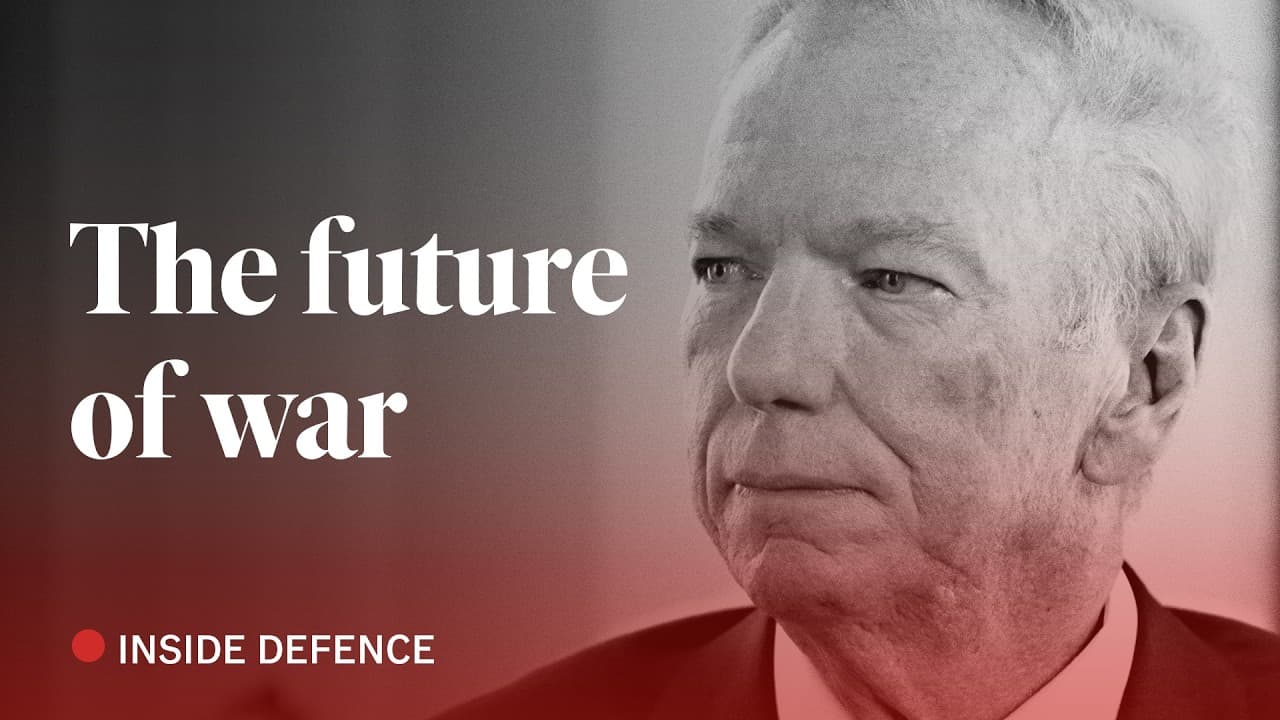
TL;DR
AI and drones are accelerating warfare and changing both offense and defense. Ukraine relies on rapid innovation but faces stiff Russian improvements and scaling limits. Western assistance, including funding and technology sharing, could be decisive to elevate Ukraine’s innovation cycle and battlefield capabilities to deter or stop aggression.
Transcript
Eric Schmidt, welcome to Inside Defense. I'm glad to be here. I am delighted to be having this conversation with you, particularly here in Kiev, Ukraine. Um, you will be known to most of our viewers as one of the fathers of the modern Silicon Valley. You're a former CEO of Google. You're now a mentor and investor in some of the leading li... Read More
Key Insights
- Ukraine has built a rapid innovation edge on the battlefield and relies on sustained support to maintain it.
- Russia is accelerating its own innovation with substantial resources, narrowing the gap with Ukraine.
- Jet shahads and glide bombs show both sides are fielding advanced propulsive and precision targeting tech.
- Starlink like satellite networks would dramatically affect battlefield awareness and targeting
- There is a political dimension to enabling private satellite services for military use, not just a technical one.
- The core AI use in warfare discussed is machine vision for targeting, not autonomous weapons as such.
- A successful defense requires both high pace of innovation and scalable manufacturing in Ukraine.
- Western capability to fund and scale defense tech is pivotal to Ukraine prolonging resilience.
Install to Summarize YouTube Videos and Get Transcripts
Explore YouTube Video Summarizer or Get YouTube Transcript Extractor
Questions & Answers
Q: What is the main takeaway about AI and drones in future warfare?
The main takeaway is that AI and drones are creating a new era where offensive and defensive technologies converge. The current battlefield already relies on machine vision for targeting, while the broader implications include the potential for more autonomous systems, enhanced surveillance, and the need for rapid, scalable innovation to counter well funded adversaries.
Q: How does Schmidt describe Ukraine’s innovation compared to Russia’s?
Schmidt notes that Ukraine has historically held the advantage in innovation but Russia is now climbing a similar slope of improvement with more resources. The gap is narrowing because Russia is rapidly ramping up its capabilities, including missiles, drones, and communication networks, while Ukraine fights to scale and sustain its tech edge.
Q: What role do jet shahads play in the conflict according to the interview?
Jet shahads represent a major threat because Russia has added jet propulsion to drones, increasing speed and altitude which makes interception harder. Schmidt mentions Ukraine has several companies testing solutions and that it could be a decisive factor in the near term if Ukraine can effectively counter or neutralize them.
Q: Why is Starlink discussed in relation to Russia and Ukraine?
Starlink is discussed as a tool for battlefield connectivity and targeting. Ukraine wants access to satellite networks to counter Russia’s missiles and to maintain command and control, while Russia is attempting to build its own networks. The policy question is whether to grant access for use inside Russia, which has strategic implications.
Q: What is the political dimension of using satellite networks in warfare?
The political dimension involves whether a government can or will compel a private company to provide military satellite services in another country. Schmidt explains that while technically feasible, decisions rest with policymakers and national security strategies, not just technical capability.
Q: What challenges does Ukraine face in scaling its defense tech?
Ukraine faces challenges in scaling its defense tech due to limited anti ballistic missiles, difficulty manufacturing at scale, and a need for faster production of weapons like Flamingo missiles. Addressing these issues requires sustained funding and improvements in the innovation pipeline to match Russian advances.
Q: What does Schmidt say about final autonomous weapons and AI?
Schmidt distinguishes between AI that learns systems and the broader use of machine vision for targeting. He suggests that while autonomous targeting is a progression, the current battlefield relies on known technologies and engineering, with autonomy being a spectrum rather than an immediate leap to fully autonomous weapons.
Q: What is identified as essential for Ukraine to hold the line against Russia?
The essential elements are a strong and rapid innovation cycle in Ukraine, sufficient funding, and the ability to scale production of defense tech. Schmidt emphasizes that without Western support to fund and scale these capabilities, Ukraine cannot maintain its edge against Russia’s expanding resources and improving technology.
Summary & Key Takeaways
-
Ukraine is innovating rapidly to counter Russian advances, yet faces scaling and resource constraints that limit its battlefield reach.
-
Russia is catching up in innovation with greater resources, creating a tougher, more technologically mixed battlefield.
-
Western help, especially funding and access to advanced tech, is essential to sustain Ukraine’s defense and push back on Russian momentum.
Read in Other Languages (beta)
Share This Summary 📚
Summarize YouTube Videos and Get Video Transcripts with 1-Click
Try YouTube Summary with ChatGPT & Claude or YouTube Transcript Generator
Explore More Summaries from The Economist 📚






Summarize YouTube Videos and Get Video Transcripts with 1-Click
Try YouTube Summary with ChatGPT & Claude or YouTube Transcript Generator