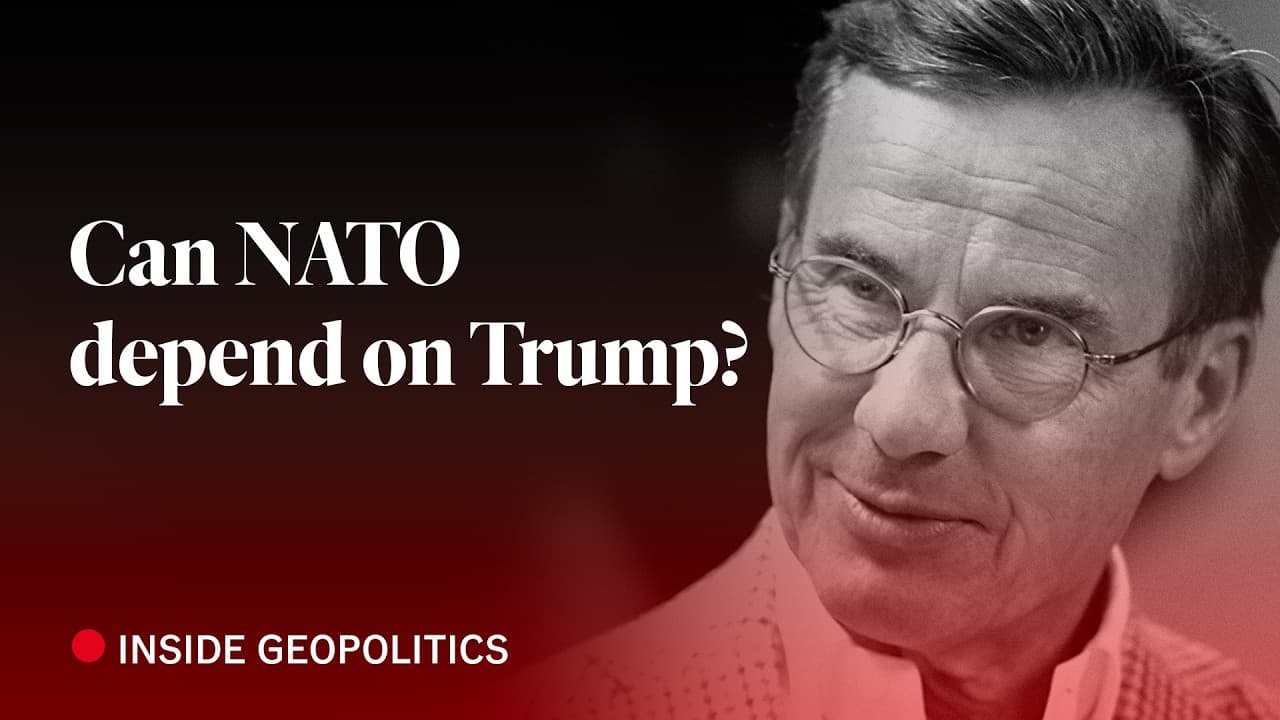
How does Sweden view NATO reliance on the US?
TL;DR
Sweden treats NATO membership as a way to strengthen security while maintaining diverse partnerships. The prime minister stresses an orderly burden sharing with America, but also emphasizes increasing collaboration with Nordic neighbors and Europe. Swedens defense stance blends reliance on the US with self reliance and broader transatlantic cooperation.
Transcript
Joining NATO is a bet on America among other things. It's a bet on the strong transatlantic link. Your own security, national security documents talk about, you know, that strong transatlantic link. Does relying on America feel like a much riskier bet now than when you joined NATO? The story of Swedish security policy since the 40s or at least the ... Read More
Key Insights
- US dependency is acknowledged as significant but not absolute for Sweden.
- Joining NATO is framed as expanding cooperation with neighbors, not replacing national capabilities.
- Sweden aims to increase regional collaboration to reduce bilateral American reliance.
- There is a belief in orderly burden sharing with allies as a core principle.
- The possibility of buying non American fighters is discussed as diversification of suppliers.
- Europe is increasing its own defense capabilities to complement transatlantic arms supplies.
- Public trust in America as a defense partner has been questioned by some European governments.
- Sweden emphasizes maintaining niche national competencies and multiple sources for military equipment.
- More videos from this channel:
- More from this channel: The Economist
Install to Summarize YouTube Videos and Get Transcripts
Explore YouTube Video Summarizer or Get YouTube Transcript Extractor
Questions & Answers
Q: How does Sweden describe its shift from neutrality to NATO membership and its impact on security policy?
Sweden presents its shift as a broadening of security cooperation rather than a rejection of its past neutrality. The government notes that joining NATO has brought closer ties with neighbors and allies, enabling a more integrated regional approach to defense. This shift also aims to distribute dependencies more evenly across partners, reducing sole reliance on any single power.
Q: What does the Swedish leader say about depending on the United States for security?
The leader acknowledges that the United States remains a major provider and a central element of Sweden’s security framework but emphasizes that dependence should be managed and not oversized. Sweden seeks an orderly burden sharing process with the US alongside deeper cooperation with Nordic and European partners to ensure resilience against uncertainties.
Q: How does Sweden view the role of its Nordic neighbors in defense after NATO membership?
Nordic cooperation has intensified since joining NATO, with Sweden prioritizing close collaboration with regional neighbors. The government highlights that this shift strengthens collective security and helps diversify sources of support and defense capabilities. It sees the Nordic bloc as a stabilizing factor that complements U.S. partnerships.
Q: What is said about selling military equipment like the Gripen to Canada and other openness to non American suppliers?
The conversation indicates Sweden is open to offering Swedish defense technology such as the Gripen and seeks opportunities in international markets. At the same time, it acknowledges the broader global trend toward diversification of suppliers. This reflects a pragmatic approach to defense trade that does not single out the United States as the only option.
Q: What concerns are raised about American arms supply and guarantees of access?
European governments express concerns about trust and the ability to access necessary equipment when needed. The discussion notes that visible disruptions and political shifts can erode confidence in guaranteed access, underscoring the importance of diversified supply lines and robust national defense capabilities to mitigate risk.
Q: How does the description characterize Europe’s defense posture relative to the US?
Europe is portrayed as stepping up its defense capabilities for practical reasons including availability and reliability. The description suggests a trend toward greater European self sufficiency in defense to complement America’s roles, while maintaining productive transatlantic ties and ensuring mutual interests are protected through shared standards and cooperation.
Q: What is the underlying rationale for spreading dependencies across regions?
Spreading dependencies across regions is presented as a prudent risk management strategy. It reduces vulnerability to political shifts in any one country and supports a more resilient security architecture. This approach aligns with both Swedish history of self sufficiency and current NATO dynamics that favor diversified sources of military capability.
Q: How does the Swedish leader address the argument that NATO membership could escalate confrontation with the US?
The leader argues that the aim is not confrontation but constructive engagement with multiple partners. By balancing NSA style cooperation with the US and enhanced regional ties, Sweden seeks to safeguard its values and strategic interests while avoiding unnecessary clashes. The emphasis is on pragmatism and transparent dialogue to manage disagreements.
Summary & Key Takeaways
-
Sweden shifted from neutrality to NATO alignment and increased defense spending to deter threats. The government stresses a balanced approach to dependencies, mixing American cooperation with regional partnerships. The description highlights a pragmatic strategy amid a shifting transatlantic security landscape.
-
The discussion covers how Sweden wants to reduce sole reliance on the US by expanding European and Nordic ties, while still benefiting from American military provisions. It argues for mutual dependencies to be managed transparently and orderly.
-
The interview explains that Sweden seeks to preserve national interests through multiple suppliers and sources, including a preference for self sufficiency born from neutrality history, while participating actively in NATO for regional security and defense modernization.
Read in Other Languages (beta)
Share This Summary 📚
Summarize YouTube Videos and Get Video Transcripts with 1-Click
Try YouTube Summary with ChatGPT & Claude or YouTube Transcript Generator
Explore More Summaries from The Economist 📚




Summarize YouTube Videos and Get Video Transcripts with 1-Click
Try YouTube Summary with ChatGPT & Claude or YouTube Transcript Generator