What Is the Coronavirus and How Does It Spread?
TL;DR
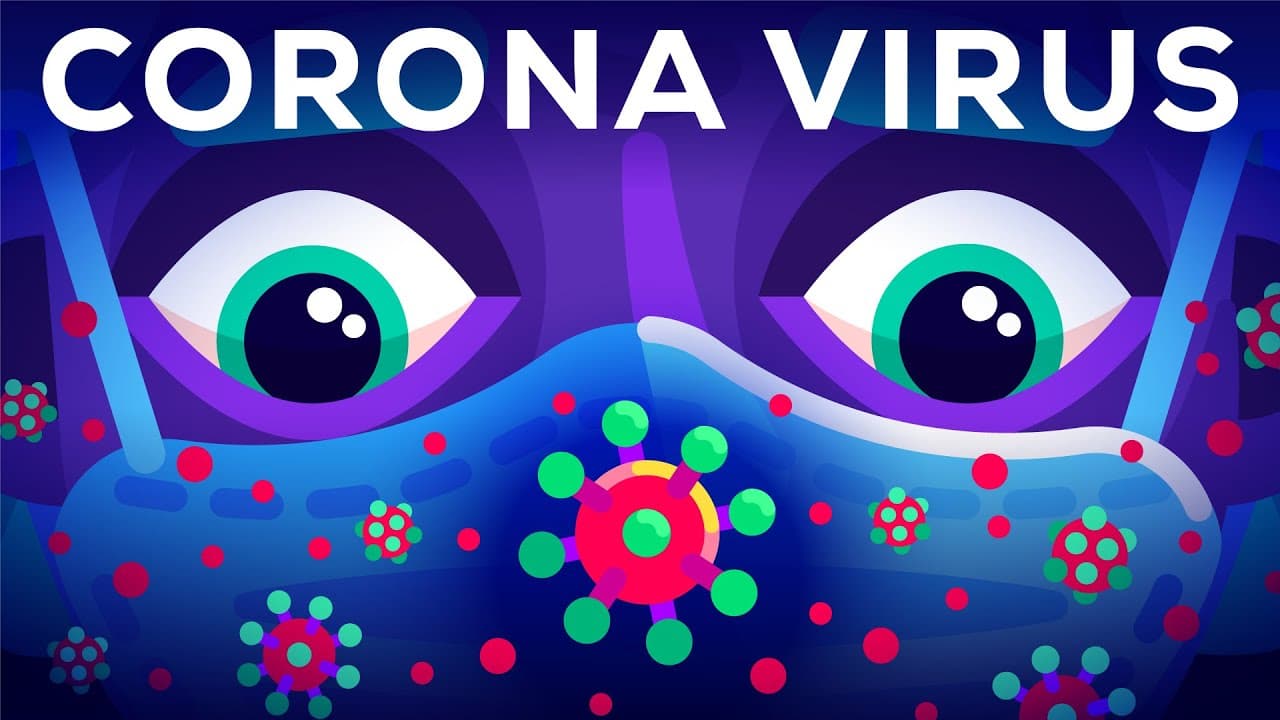
The coronavirus, or SARS-CoV-2, infects humans by attaching to cell receptors, primarily spreading through droplet transmission and contact. It mainly affects the lungs, causing severe respiratory damage, and the immune response can exacerbate the situation. To slow its spread, essential measures include handwashing, social distancing, and quarantines.
Transcript
In December 2019 the Chinese authorities notified the world that a virus was spreading through their communities. In the following months, it spread to other countries, with cases doubling within days. This virus is the Severe Acute Respiratory Syndrome-Related Coronavirus 2 that causes the disease called Covid-19 and that everyone simply calls cor... Read More
Key Insights
- ❓ The coronavirus, SARS-CoV-2, is a virus that spreads by entering living cells and replicating.
- 💦 Droplet infection and contact are the main modes of transmission for the virus.
- 😣 The virus primarily affects the lungs, causing severe damage to the respiratory system.
- 🥺 The immune system's response to the virus, although meant to protect, can be detrimental, leading to additional damage to healthy cells.
- 😣 The virus can cause severe symptoms and complications, particularly in cases where the immune system is overwhelmed.
- 🐢 Slowing the spread of the virus is crucial to prevent overwhelmed healthcare systems and reduce the number of deaths.
- 🐢 Practices such as handwashing, social distancing, and quarantines can help slow the spread of the virus.
Install to Summarize YouTube Videos and Get Transcripts
Explore YouTube Video Summarizer or Get YouTube Transcript Extractor
Questions & Answers
Q: How does the coronavirus infect humans?
The coronavirus infects humans by attaching to specific receptors on cell membranes and injecting its genetic material, which hijacks the cell's replication process.
Q: How does the virus spread from person to person?
The primary modes of transmission are through droplet infection when an infected person coughs and via contact, such as touching an infected person and then touching your face.
Q: What happens when the virus reaches the lungs?
When the virus reaches the lungs, it can cause severe damage to the epithelial cells lining the lungs, leading to pneumonia and respiratory difficulties.
Q: How does the immune system respond to the coronavirus?
The immune system responds to the virus by sending immune cells to fight the infection. However, the virus can confuse and overstimulate immune cells, leading to an overreaction that damages healthy lung tissue.
Summary & Key Takeaways
-
The coronavirus, known as SARS-CoV-2, infects humans by attaching to specific receptors on cell membranes to inject its genetic material.
-
Infected cells produce more copies of the virus until reaching a critical point, where they self-destruct and release new coronavirus particles.
-
The immune system's response to the virus can be dangerous, leading to an overreaction and damage to healthy lung tissue.
Read in Other Languages (beta)
Share This Summary 📚
Summarize YouTube Videos and Get Video Transcripts with 1-Click
Try YouTube Summary with ChatGPT & Claude or YouTube Transcript Generator
Explore More Summaries from Kurzgesagt – In a Nutshell 📚




Summarize YouTube Videos and Get Video Transcripts with 1-Click
Try YouTube Summary with ChatGPT & Claude or YouTube Transcript Generator