Why Celebrating Science and Nobel Work Matters
TL;DR
Celebrating science draws attention to the curiosity, persistence, teamwork, and repeated failure behind meaningful discoveries. Nobel recognition may focus on individual laureates, but its joy spreads through laboratories, families, universities, towns, and wider communities, giving people a shared reason to value scientific work and the international culture that supports it.
Transcript
[Applause] All the seats in the concert hall go up together and they bang against the back of the chair. So you get this thump from all the chairs in the room as everyone stands and then you get their round of applause. It's a double celebration. The room is celebrating as well. The room is celebrating. Exactly. What does it mean to celebrate scien... Read More
Key Insights
- Celebrating science is a way to direct public attention toward the people and processes involved in understanding how the world works. The Nobel Prize creates a moment when audiences can appreciate exploration, discovery, and the effort underlying scientific knowledge.
- Scientific success is especially meaningful because research frequently goes wrong. Researchers learn to value working experiments, useful results, and incremental steps forward, making a late-night breakthrough in a laboratory a powerful occasion for personal or collective celebration.
- The central scientific question is often how something works, rather than what immediate practical benefit it will provide. Nobel recognition can celebrate curiosity-driven investigation that later supports medical improvements, new devices, and other applications.
- A Nobel Prize should not replace the goal of doing interesting and important work. Most laureates described by Adam Smith would reject pursuing the prize itself, although another perspective holds that researchers should aim for work important enough to merit the highest recognition.
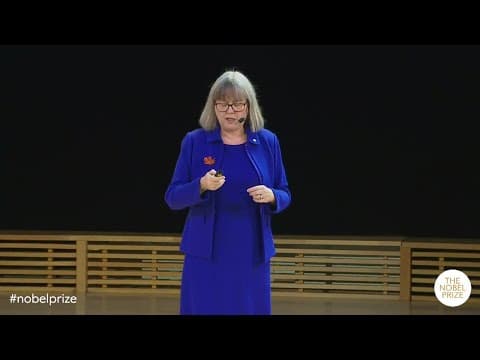
- Private discovery and public recognition are connected forms of celebration. Donna Strickland described the excitement of building something that worked, while the later Nobel announcement publicly reflected the importance of that earlier achievement for laser physics.
- Science is a collective enterprise even when a Nobel Prize focuses attention on particular individuals. Laureates frequently emphasize their teams and collaborators, and those contributors can participate in the ceremonies and share the happiness created by the award.
- Scientific culture is strengthened by internationalism, diversity, and mutual respect. Benjamin List’s research group celebrated its many nationalities through a shared dinner, country-specific foods, and personal remarks, illustrating how community itself can be a source of scientific joy.
- Nobel recognition creates expanding circles of celebration around a laureate. Families, collaborators, universities, towns, and larger communities may identify with the achievement, allowing one person’s award to become a shared affirmation of participation in science.
Install to Summarize YouTube Videos and Get Transcripts
Explore YouTube Video Summarizer or Get YouTube Transcript Extractor
Questions & Answers
Q: Why is celebrating science important?
Celebrating science encourages people to pause and consider how researchers explore the world, test ideas, endure setbacks, and gradually build knowledge. The Nobel Prize is especially effective at attracting this attention. Its value is not limited to honoring a result or its applications. It also recognizes curiosity, experimentation, and the sustained process that makes later medical improvements, devices, and other benefits possible.
Q: What does the Nobel Prize celebrate about scientific work?
The Nobel Prize celebrates significant results while also drawing attention to the work required to produce them. Adam Smith emphasizes that science often begins with questions such as how something works or whether it is properly understood, rather than with a guaranteed practical outcome. Recognition therefore honors both the discovery and the broader exploratory process from which useful applications may eventually emerge.
Q: How do Nobel Prize celebrations extend beyond an individual laureate?
A laureate’s recognition produces circles of happiness that include collaborators, research teams, families, universities, towns, and other communities. Victor Ambros initially feared that receiving the prize would feel uncomfortable, but the happiness of strangers and colleagues helped him understand the wider meaning. His university and the state of Massachusetts could celebrate their connection to science through the occasion.
Q: Why can receiving a Nobel Prize feel frightening to a scientist?
Receiving a Nobel Prize can appear frightening because it brings intense attention and can interrupt a scientist’s life and work. Victor Ambros also worried that accepting such recognition might require him to pretend or participate in something that felt untrue. His perspective changed when he saw genuine happiness across his campus and realized that the prize gave others a reason to celebrate science and their institution.
Q: Should scientists aim to win a Nobel Prize?
Most Nobel laureates, according to Adam Smith, would say that winning the prize should not be a researcher’s direct objective. The proper focus is doing interesting work and making the experiment or project succeed. A contrasting view says scientists should aim high enough to pursue discoveries worthy of major recognition. Both positions place the importance of the work above the ceremony itself.
Q: How do scientists celebrate discoveries in the laboratory?
Scientists may celebrate when an experiment finally works, a new result appears, or a smaller step advances the research. These moments can occur late at night and may be enjoyed privately or with nearby colleagues. Donna Strickland described the distinctive excitement of building something nobody else had built and seeing it work. Such direct achievements can become a researcher’s most memorable celebrations.
Q: How does teamwork fit with individual Nobel recognition?
Nobel Prizes focus strongly on individual laureates, but scientific research is usually a collective activity shaped by teams, collaborators, and ongoing exchanges of ideas. Laureates commonly respond to recognition by discussing the people who helped them. Teams may also be invited into celebrations and share the award’s joy, allowing an individual honor to acknowledge a much broader joint effort.
Q: How can research groups build a culture of celebration?
Research groups can celebrate both discoveries and the community that enables them. Benjamin List described holding small parties for promising findings and organizing an international dinner where members brought food from their countries and spoke about their cultures. The gathering highlighted diversity, respect, creativity, and happiness, showing that scientific life can be rewarding through shared experiences before any formal prize is received.
Summary & Key Takeaways
-
Scientific celebration begins with the private satisfaction of making something work after repeated setbacks. Donna Strickland connected the excitement of building something unprecedented with the later public recognition of the Nobel Prize. Adam Smith argues that these direct moments of discovery, often shared with colleagues, can remain the most memorable celebrations.
-
The Nobel Prize captures public attention and encourages people to consider how scientific knowledge is created. Rather than celebrating applications alone, it honors the fundamental effort to understand how nature works. Medical improvements, devices, and other benefits depend on this exploratory process, even when immediate usefulness is not the original research question.
-
Although Nobel Prizes emphasize individual laureates, science is generally a collective and international enterprise. Laureates commonly recognize collaborators, teams, institutions, and loved ones when receiving the award. Benjamin List’s group celebrations show how discoveries, shared meals, cultural diversity, creativity, and mutual respect can make scientific work rewarding long before any major prize arrives.
Read in Other Languages (beta)
Share This Summary 📚
Summarize YouTube Videos and Get Video Transcripts with 1-Click
Try YouTube Summary with ChatGPT & Claude or YouTube Transcript Generator
Explore More Summaries from Nobel Prize 📚



Summarize YouTube Videos and Get Video Transcripts with 1-Click
Try YouTube Summary with ChatGPT & Claude or YouTube Transcript Generator