Nobel Minds 2016
TL;DR
Lasting scientific breakthroughs require patience, sustained fundamental research, and enough time to determine whether an idea remains significant. Researchers must balance dependable publication with ambitious long-term questions, while students need strong filters for navigating abundant online information without losing focus or the accidental discoveries once encouraged by browsing journals.
Transcript
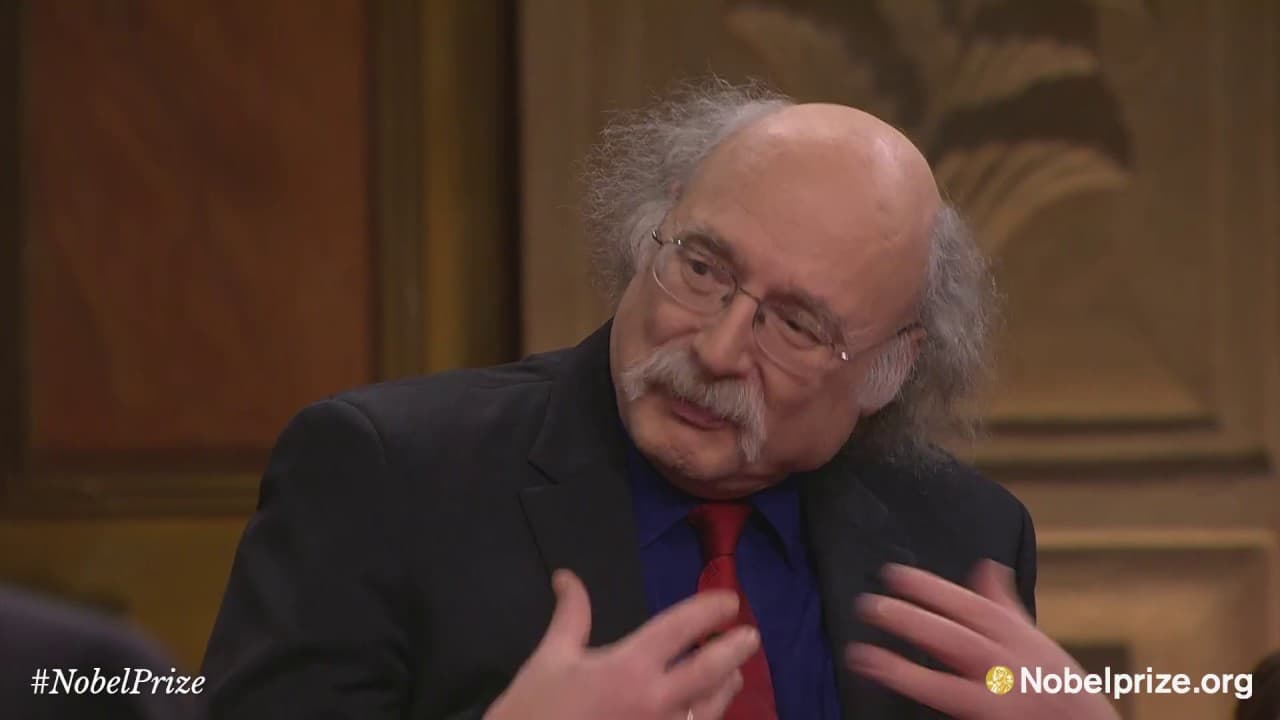
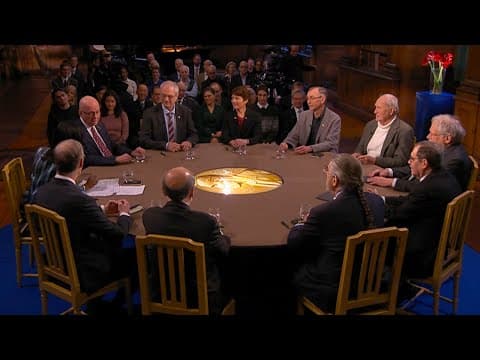
hello and welcome to the concert hall in Stockholm where this year's Nobel laurates received their awards from the king of Sweden for their outstanding contributions to science and economics and they join a small and Elite group and this is the first time that they'll be appearing together on TV and we've also invited their family and friends to ou... Read More
Key Insights
- Nobel recognition often comes decades after the original contribution because committees may wait to see whether an idea survives changing academic fashions and remains important over time.
- Scientific progress combines accumulated knowledge with sudden moments of insight. Researchers stand on earlier discoveries, yet a breakthrough can abruptly reveal that a new field has opened, even if recognition takes several years.
- Basic science can eventually contribute to drugs, vaccines, and other applications, but basic researchers may remain far removed from those practical outcomes during their everyday work.
- Digital technology gives researchers faster access to information, but the growing volume of papers makes filtering essential. Students must learn to distinguish useful knowledge from distracting or unreliable information.
- Online searching can reduce scientific serendipity because researchers often read only what they already intend to find. Browsing physical journals once created accidental encounters with unfamiliar papers, illustrations, and ideas.
- Fundamental and applied research are not necessarily separate categories. Fraser argues that good research can move naturally between industrial, fundamental, and applied settings, with early industrial work contributing ideas for later discoveries.
- Publication pressure does not disappear automatically after tenure. Researchers may continue producing many papers because publishing creates activity, communicates progress, and feels easier to explain than a long project without immediate results.
- A balanced research strategy uses two parallel paths: one produces dependable papers that support funding and professional recognition, while the other tackles a challenging question that may require several years before yielding results.
Install to Summarize YouTube Videos and Get Transcripts
Explore YouTube Video Summarizer or Get YouTube Transcript Extractor
Questions & Answers
Q: Why are Nobel Prizes often awarded late in a researcher's life?
Nobel recognition may arrive late because committees want to determine whether a contribution will survive the test of time. Oliver Hart says economics prizes can follow the relevant work by about 30 years because an initially popular topic may appear much less important five or ten years later. Waiting helps distinguish lasting contributions from temporary excitement.
Q: How do scientific breakthroughs emerge from earlier research?
Scientific breakthroughs build on knowledge, experience, and discoveries developed by earlier researchers. Ben Feringa describes scientists as standing on the shoulders of giants, while also recognizing sudden moments when a researcher realizes that a genuine breakthrough has occurred. Such an insight can open a new field, although the importance of that field may take several years to be recognized.
Q: What is the relationship between basic and applied research?
Basic and applied research can merge rather than forming completely separate categories. Fraser argues that the meaningful distinction is between good and less successful research, noting that fundamental work can occur in an industrial laboratory and later contribute to major discoveries. Sauvage adds that basic research may eventually lead to drugs or vaccines, although everyday laboratory work can remain far from those applications.
Q: How has the internet changed scientific research?
The internet has made scientific information much faster to access, eliminating much of the time once spent traveling to libraries and reading physical journals. It also allows papers to circulate almost immediately. However, the resulting overload makes it difficult to follow everything published, so researchers and students need stronger filters to select relevant and trustworthy information.
Q: Why can online research reduce scientific serendipity?
Online research often directs people toward papers they already expect or intend to read. Sauvage contrasts this with browsing physical journals, where an appealing drawing or unfamiliar article could attract attention by accident and lead to an unexpected idea. Digital access improves speed, but highly targeted searching can remove some of these productive accidental encounters.
Q: Why do researchers keep publishing after receiving tenure?
Researchers may continue publishing frequently after tenure even when their positions are no longer immediately threatened. Hart suggests that many academics like feeling busy and want to tell colleagues what they are doing. A long-term project is mentally difficult because it may produce little visible progress for years, making regular papers more comfortable and easier to communicate.
Q: How can young scientists balance publications with ambitious research?
Young scientists can pursue two lines of research at the same time. One line should generate solid papers that demonstrate useful work and support grant applications. The second should address a more challenging question that may not produce a paper for three, four, or five years. The ambitious path is risky, but it can establish a distinctive reputation and shape a future career.
Q: What challenges do young researchers face in basic science?
Young researchers face strong pressure to publish, obtain funding, and secure tenure-track positions. A student notes that these demands can leave little time and energy for high-quality work driven by personal intellectual interests. Basic science may also appear less attractive to students when career rewards favor visible short-term output over patient investigation of difficult questions.
Summary
This video is a discussion with Nobel laureates in various fields, including economics, chemistry, and physics. The laureates discuss topics such as the age at which Nobel prizes are awarded, the challenges of being a scientist in today's fast-paced, digital age, the role of mentors in scientific research, the importance of distinguishing facts from opinions, and the future applications of their research. The discussion also touches on the impact of Brexit, the rejection of experts' advice by the public, and the lack of women receiving Nobel prizes in science.
Questions & Answers
Q: Do the Nobel laureates think it's a good thing to wait longer to be recognized for their work in economics?
The laureates in economics believe that waiting longer to be recognized can ensure that the contributions being recognized stand the test of time. They acknowledge the importance of ensuring the long-term significance of the work before awarding prizes.
Q: Is there a higher quantity of physicists now compared to a hundred years ago? Does it take longer for real talent to shine through?
The physicists believe that the quantity of physicists has increased significantly, making it harder to determine which piece of work will be significant. They emphasize that talent doesn't necessarily take longer to shine through, but the abundance of information to assimilate makes it more challenging to identify significant contributions.
Q: Does the Nobel laureate in chemistry think the prize acknowledges the benefits of incrementalism?
The laureate in chemistry agrees that incrementalism is beneficial and acknowledges the importance of building upon previous knowledge and experiences. However, they also highlight the occasional eureka moments that open up new fields and the recognition they bring.
Q: Does fast science play a pivotal role in addressing urgent problems like the Zika virus?
The laureate in chemistry recognizes the urgency of problems like the Zika virus and acknowledges that faster scientific progress is necessary to develop drugs and vaccines. However, they also stress the importance of basic science research, which may not have immediate practical applications but could lead to breakthroughs in the future.
Q: How has technology affected the younger generation's ability to focus and conduct research?
The students in the audience express concerns about the impact of technology on their attention spans and the constant distractions they face. However, the Nobel laureates believe that technology can be both an opportunity and a threat, depending on how it's utilized. They emphasize the importance of teaching students how to select and evaluate information critically.
Q: Are Nobel laureates in economics concerned about the trend of reducing funding for fundamental science research?
The laureates in economics acknowledge the pressure on young scientists to secure funding for their research. They believe that maintaining a mentoring system and providing funding for long-term projects are critical to ensuring high-quality research. They also emphasize the importance of distinguishing between good and not-so-good research rather than differentiating between fundamental and applied research.
Q: What are the fundamental limits to the size of artificial molecular machines?
The laureates in chemistry discuss the challenges of the size and integration of molecular machines. While they acknowledge that there are limits to how small these machines can be, they also highlight the importance of integrating them into larger systems for practical applications.
Q: Will molecular robots be mainly used in medicine or molecular electronics?
The laureates in chemistry believe that molecular robots could have applications in both medicine and molecular electronics. However, they acknowledge that the development of these technologies takes time and collaboration between scientists and industries.
Q: What are the negative social or environmental challenges that could arise from the misuse of molecular machine technology?
The laureates in chemistry acknowledge that the misuse of molecular machine technology, like any other technology, can have negative social and environmental consequences. They emphasize the need for responsible and ethical use of new technologies and the importance of understanding the distinction between facts and opinions.
Q: What can Nobel laureates and the general public do to encourage more women to pursue careers in science?
The laureates discuss the underrepresentation of women in science and the importance of role models, mentoring, and addressing subconscious biases. They believe that promoting diversity and creating supportive environments are vital to encouraging more women to pursue careers in science.
Q: Do the Nobel laureates think technological advancements like quantum computers will come from the new insights in quantum mechanics?
The laureates in physics believe that their discoveries in quantum mechanics could lead to technological advancements, including advancements in quantum computers. However, they emphasize that their initial motivation was purely curiosity-driven rather than focused on practical applications.
Q: Are the Nobel laureates concerned about the lack of women receiving Nobel prizes in science?
The laureates express their desire to see more women receive Nobel prizes in science. They highlight the need for institutional support, encouragement, and changes in societal perceptions. They also discuss the challenges that women face at different stages of their scientific careers and the importance of addressing subconscious biases and discrimination.
Takeaways
The discussion with the Nobel laureates covers a wide range of topics, including the age at which prizes are awarded, the challenges of contemporary science, the impact of technology, the role of mentors, the need for critical evaluation of information, the funding of fundamental research, the potential applications of molecular machines, and the underrepresentation of women in science. The laureates emphasize the importance of supporting long-term research, responsible use of technology, and creating an inclusive and supportive environment to encourage more women to pursue careers in science. Overall, the discussion highlights the complex and ever-evolving nature of scientific research and the need for continuous exploration and innovation.
Summary & Key Takeaways
-
The 2016 Nobel laureates discuss why major contributions are often recognized late in life. Economics prizes may follow decades after the original research because committees want evidence that an influential contribution will survive changing fashions. In crowded scientific fields, identifying which discoveries will remain important is also increasingly difficult.
-
Digital access allows researchers to obtain papers much faster than earlier generations, who often had to visit libraries. However, the vast flow of online publications creates a serious filtering problem. Targeted searching can also reduce serendipity because researchers encounter fewer unexpected articles, drawings, or ideas outside their planned areas of interest.
-
Young researchers face pressure to publish, secure funding, and obtain tenure-track positions, which can leave limited time for challenging long-term work. One proposed strategy is to pursue two research paths: produce solid papers that support grants and recognition, while also investigating a difficult question that may take several years to succeed.
Read in Other Languages (beta)
Share This Summary 📚
Summarize YouTube Videos and Get Video Transcripts with 1-Click
Try YouTube Summary with ChatGPT & Claude or YouTube Transcript Generator
Explore More Summaries from Nobel Prize 📚
Summarize YouTube Videos and Get Video Transcripts with 1-Click
Try YouTube Summary with ChatGPT & Claude or YouTube Transcript Generator