How Do You Make Promises to Readers in a Plot?

TL;DR
Promises are what make readers engage with a story, progress is what keeps them there, and payoff is what makes them read the next book. Beyond tone, you can promise the kind of plot, a character arc, or a stand-up-and-cheer moment. Worrying about originality is usually wasted energy: originality grows naturally as you practice writing.
Transcript
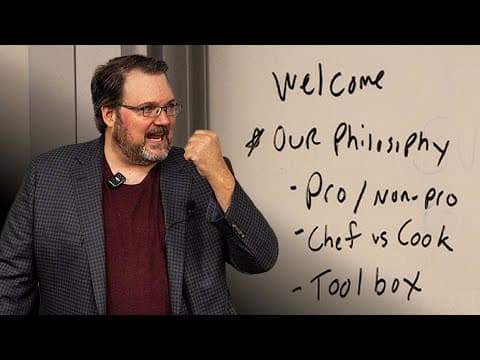
hey welcome to week four of Brandon sanderson's writing lectures the 2025 Edition I'm taking questions from the audience this time but you weren't there in that audience I'd like to give you a chance so if you watch this video and have questions about plot do try to watch the previous two as well uh but if you've been following along and I don't ge... Read More
Key Insights
- Promises are what make people engage with a story, progress is what keeps them reading, and payoff is what makes them pick up the next book. Sanderson notes readers rarely abandon a book over bad payoff, they finish it and then write a bad review instead.
- Star Wars promises its big P plot in scene one: a big ship dominating a little ship signals the story is about the little ship blowing up the big ship. Sanderson references it often because everyone has seen it and it breaks down cleanly.
- Character promises establish how a protagonist solves problems. The original Disney Mulan opens with her feeding the chickens by tying feed to a dog and sending it running, promising a character who uses wits and unconventional solutions, which is who she remains throughout.
- Every Disney movie has an I want song, which functions as a promise of the character arc: what the character wants, the journey they will go on, and who they will become. Sanderson says you usually want to promise a character arc, though not necessarily at the very beginning.
- Promising a stand-up-and-cheer moment helps readers tolerate a character being beaten down, because each defeat reads as setup for eventual victory. The original Captain America promises a superhero transformation by showing a spindly guy who fights anyway and needs his friend to bail him out.
- Chekhov's gun is the adage that a gun shown in act one should be fired before the end. The underlying principle is that readers expect anything a writer highlights to become relevant, which means it can also be deliberately used as a red herring for a different payoff.
- Two-star reviews are worse for an author than one-star reviews. One-star reviewers typically did not finish and say it was not for them, while two-star reviewers say the book could have been good but the ending was ruined.
- Twists should not exist for their own sake. Surprising a reader is easy, for example having a character open a door and get shot; making a surprise that leaves readers feeling the story is better because of it is the hard part. Pride and Prejudice is not worse for ending with the couple together.
Install to Summarize YouTube Videos and Get Transcripts
Explore YouTube Video Summarizer or Get YouTube Transcript Extractor
Questions & Answers
Q: What kinds of promises should a writer make besides tone promises?
Beyond tone, Sanderson lists several promise types. You can promise the kind of plot, the little P plot early on, with the big P plot arriving by the end of act one. You can make a character promise that shows how the protagonist solves problems. You can promise a character arc, what the character wants and who they will become. You can also promise a stand-up-and-cheer moment so readers know a payoff is coming. Chekhov's gun, showing an object in act one that will matter later, is the classic version of setting up a promise.
Q: How does Star Wars make a plot promise in its opening scene?
Sanderson uses Star Wars because it is a movie everybody has seen and it breaks down really well. In scene one you see a big ship dominating a little ship, which promises that the story is about the little ship blowing up the big ship. That single visual sets up the big P plot before any dialogue explains it. He notes Star Wars does a lot of things like this that click into place, which is why he returns to it repeatedly as a teaching example across his lectures.
Q: What is a character promise and how does Mulan use one?
A character promise establishes early who a character is and how they solve problems. In the original Disney Mulan, the opening has her needing to feed the chickens, so she ties the feed to a dog and sends the dog running to feed the animals. That scene promises a character who solves problems in an unconventional way using her wits, and Sanderson says that is basically who Mulan is all the way through the film. The promise made at the start holds for the whole story.
Q: Why does promising a stand-up-and-cheer moment help a story?
Promising the stand-up-and-cheer moment helps readers put up with the character getting beaten down, because each beating reads as setup for the moment the character will finally be victorious. Sanderson cites the original Captain America: a spindly little guy who cannot fight still tries to protect people and needs his friend to bail him out. You know you are watching a superhero transformation, so you tolerate him being a spindly dweeb for a while, knowing the heart-over-body payoff is coming.
Q: What is Chekhov's gun and can you break the rule?
Chekhov's gun is a story writing adage: if you hang a gun on the wall or show it in act one, you should fire it before the end. Sanderson paraphrases it and explains the underlying principle, which is that readers expect anything a writer highlights to be important or relevant. That expectation can be used against them. You can deliberately deploy highlighted objects as red herrings, setting up a different kind of payoff where readers thought they knew what was happening and did not.
Q: What should you do if you think your plot is too unoriginal?
Most of the time you should stop stressing about it. Sanderson says artists love to worry about being unoriginal, but originality almost certainly emerges as a natural growth of progressing as a storyteller. The exception is when early readers consistently tell you your books feel derivative and you are already established past your first book. Then you can play off reader expectations and force yourself to take the next step: ask what the story would normally do here, and choose a different decision that makes the story deeper and more interesting.
Q: Why did Brandon Sanderson rewrite the character in Way of Kings Prime?
Way of Kings Prime is the 2002 version, available free for study purposes, and Sanderson says he does not think it is that good. A lot of the book worked, but the character in Kaladin's place did not. That character had a standard plot line: a young spearman saves the king or the king's brother, earns a knighthood, and learns to navigate the upper crust of society. Sanderson felt he was the blandest person in the story despite most of the book being seen through his eyes, so the revision asked what would happen if the character made the opposite decision most people would make.
Q: When should a writer avoid adding a twist?
Do not twist for twist's sake. Sanderson points out that anyone can surprise a reader: have a character open a door and get shot, then end it. Surprising readers is not hard. What is hard is surprising them in a way that makes the story more interesting, so readers feel the story is better because the twist happened. If your story does not need a twist, do not feel bad about not having one. He notes Pride and Prejudice is not worse because the couple gets together at the end.
Summary & Key Takeaways
-
Brandon Sanderson opens week four of his 2025 writing lectures by taking audience questions on plot, and invites online viewers to post their own questions in the comments so he can film an exclusive webcam Q&A session covering them. He recommends watching the previous two plot lectures first and referencing them in the questions.
-
The first question covers promises beyond tone. You can promise the little P plot early and the big P plot near the end of act one, as Star Wars does with a big ship dominating a little ship in scene one. Character promises work too, like Mulan feeding chickens by tying feed to a dog.
-
The second question covers unoriginal plots. Sanderson says most writers should stop stressing about originality, but if early readers consistently call the work derivative, take the next step past what a story would normally do. His own Way of Kings Prime failed because its Kaladin-equivalent character followed a standard plot, so the revision reversed the character's key decision.
Read in Other Languages (beta)
Share This Summary 📚
Summarize YouTube Videos and Get Video Transcripts with 1-Click
Try YouTube Summary with ChatGPT & Claude or YouTube Transcript Generator
Explore More Summaries from Brandon Sanderson 📚


Summarize YouTube Videos and Get Video Transcripts with 1-Click
Try YouTube Summary with ChatGPT & Claude or YouTube Transcript Generator