How Should Worldbuilding Serve Story? Lecture #6 with Brandon Sanderson
TL;DR
Worldbuilding should serve the story by making the impossible plausible, supporting engaging characters, and strengthening the plot without overwhelming readers with setting details. Brandon Sanderson ranks a writer’s priorities as character first, plot second, and setting third, then recommends filtering world information through a character’s viewpoint. Read on for eight practical answers about avoiding world builder’s disease, info dumps, and unnatural exposition.
Transcript
BRANDON: All right, guys, World Building Week Two. Woo hoo! The fun stuff. We'll be talking about world building this week and then we will have Mary Robinett here to do next week, a lecture on short stories. And at some point I will do the Q&A on worldbuilding, either maybe next week is half of that lecture, depending on how much time Mary Robinet... Read More
Key Insights
- Setting is simultaneously the element that defines sci-fi and fantasy works and the least important part of those stories, because a story with excellent worldbuilding but weak characters or plot will be worse than one with strong characters and plot and weak worldbuilding.
- The recommended priority order for a writer's time is characters first, plot second, and setting third. All three should ideally be learned, but effort spent on making engaging and interesting characters returns the most.
- World builder's disease is the condition of becoming so enthralled with building a story's world that the writer never finishes worldbuilding and never starts the story, or fills every nook and cranny of the story with world detail and undermines the story being told.
- The grand skill of writing science fiction and fantasy, as opposed to other genres, is learning to convey information about the world in a way that is interesting and not boring. Mastering it is the single best thing a writer with good characters and plot can do.
- Conveying worldbuilding well is what gets writers picked up by agents, passed up to editors, and through to the next round of acquisition, or for self-publishers, what makes a reader finish the first chapter and want the next one.
- The best technique for delivering setting information is to filter it through a character's eyes so the point of the sentence or paragraph is revealing who that character is, with world information arriving as a side effect.
- The spinach-in-the-smoothie metaphor describes the goal: readers should think the story and characters are fascinating and only incidentally realize they have learned a great deal about the world, the way hidden spinach turns a smoothie green.
- Maid and butler dialogue, named for old stage plays where a maid and butler opened by telling each other things they both already knew, reads stilted and should be avoided when trying to move worldbuilding into conversation.
Install to Summarize YouTube Videos and Get Transcripts
Explore YouTube Video Summarizer or Get YouTube Transcript Extractor
Questions & Answers
Q: How should worldbuilding serve a science fiction or fantasy story?
Worldbuilding should enhance the specific story being told rather than distract from it. It can make the impossible plausible, reinforce themes, create wonder, explore cultural consequences, and approach real-world ideas in a less immediately polarizing way.
Q: Why does Brandon Sanderson call worldbuilding the least important story element?
A story with excellent worldbuilding but weak characters or plot will generally be worse than one with strong characters and plot but weak worldbuilding. Sanderson therefore recommends prioritizing character first, plot second, and setting third, while still learning all three.
Q: What is world builder’s disease?
World builder’s disease occurs when a writer becomes so absorbed in creating a world that the actual story never begins. It can also cause writers to fill every part of a story with setting details, undermining the story they intended to tell.
Q: How can writers explain worldbuilding without boring readers?
Filter setting information through a character’s viewpoint so the passage primarily reveals who that character is. Readers then learn about the world as a side effect of following an engaging character and story.
Q: What is the grand skill of writing science fiction and fantasy?
The grand skill is conveying information about the world in an interesting, non-boring way. For writers who already have good characters and plot, mastering this skill can help agents, editors, or readers want to continue beyond the first chapter.
Q: What does the spinach-in-the-smoothie metaphor mean for worldbuilding?
The metaphor describes hiding world information inside something readers already want, just as spinach can be blended into an appealing smoothie. Readers should focus on the fascinating characters and story while absorbing substantial knowledge about the world incidentally.
Q: What worldbuilding exposition techniques should writers avoid?
Writers should avoid info dumps, poorly disguised encyclopedia entries, and maid-and-butler dialogue. These techniques foreground explanations instead of integrating world information naturally into the story.
Q: What purposes can worldbuilding serve?
Worldbuilding can make impossible ideas feel plausible, match a setting’s tone to its themes, and create wonder or opportunities for exploration. It can also show a cultural butterfly effect, deliver sheer coolness, and examine real-world problems at a less immediately polarizing distance.
Summary & Key Takeaways
-
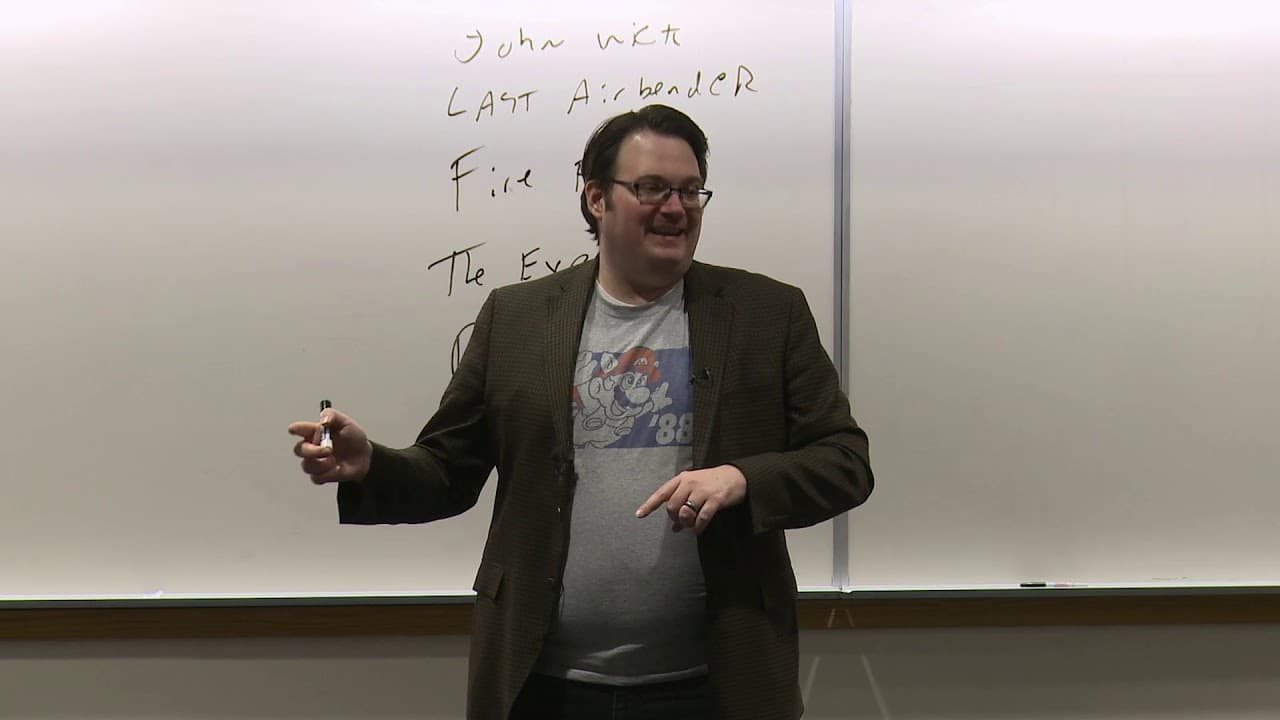
The lecture is the second part of a worldbuilding series in a BYU 2020 creative writing class on science fiction and fantasy. It opens by collecting student favorites for worldbuilding, including John Wick, Avatar the Last Airbender, Firefly, The Expanse, and Dune, then turns to why students want to build worlds at all.
-
Student answers produce a list of worldbuilding purposes written on the board: making the impossible plausible so disbelief can be suspended, playing with theme by matching setting tone to story tone, sense of wonder, exploration, sheer coolness, the cultural butterfly effect where changing one small thing ripples outward, approaching real world ideas in a fresh and less immediately polarizing way, and the appeal of playing God.
-
The core argument is worldbuilding in service of story. Info dumps, encyclopedia entries at the front or back of a book, and maid and butler dialogue are named as the failure modes to avoid. Tolkien is granted a pass for his many encyclopedia entries because he invented a subgenre and executed it better than almost anyone.
Read in Other Languages (beta)
Share This Summary 📚
Summarize YouTube Videos and Get Video Transcripts with 1-Click
Try YouTube Summary with ChatGPT & Claude or YouTube Transcript Generator
Explore More Summaries from Brandon Sanderson 📚



Summarize YouTube Videos and Get Video Transcripts with 1-Click
Try YouTube Summary with ChatGPT & Claude or YouTube Transcript Generator