How Lahori Zeera beat giants in Indian beverages
TL;DR
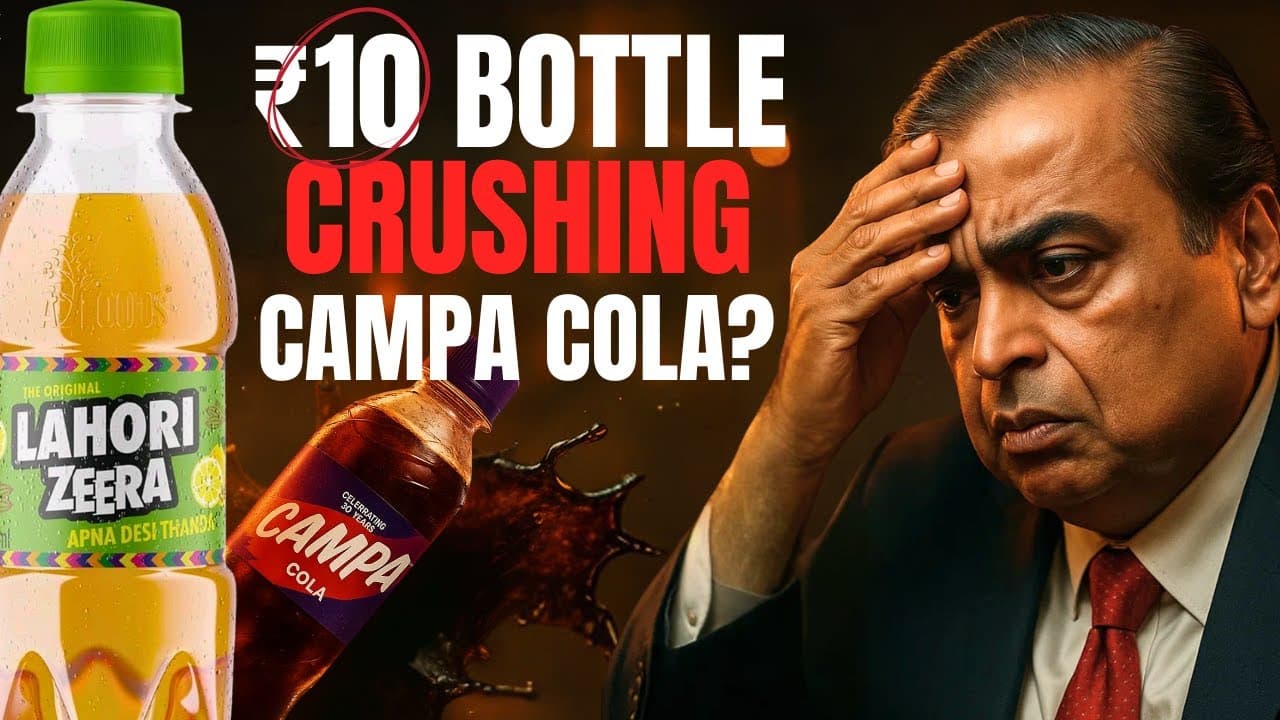
Lahori Zeera built a 525 crore brand by differentiating with ethnic Indian flavors and strong distribution, while pricing for value and navigating GST. The founder highlights why branding matters over commodity selling, how rural markets are a hidden opportunity, and what strategies helped survive competition from Coke and Pepsi.
Transcript
You entered the space at a very interesting time because now you also have MK Dirubai and Bani as your competitor. Relant Consumer Products is now relaunching the iconic 50-year-old drink which is campa less than 10 bucks at a 10 rupee price point. You managed to build a 525 cr company against global giants and deep pockets. Lahori Zera rose from a... Read More
Key Insights
- Lahori Zeera grew from a 10 rupee bottle to a 525 crore company by leveraging ethnic Indian flavors aligned with local taste profiles.
- Brand building is more durable than commodity selling and should include consumer experience and communication beyond the sale.
- India’s price sensitivity requires a value-for-money positioning where price can influence brand choice as much as product quality.
- Distribution is a critical, often underappreciated, driver of scale, with rural markets offering a dark horse opportunity for growth.
- GST and regulatory framing are integral to pricing strategy and profitability, affecting margins across the beverage category.
- The market’s giants like Coca-Cola and Pepsi rely on distribution muscle and manufacturing scale to maintain leadership against new entrants.
- A robust go-to-market plan includes channel differentiation, regional flavor variants, and targeted hiring to support growth.
- Entrepreneurial success in this space requires learning from incumbents’ mistakes and focusing on sustainable long-term brand equity.
- More videos from this channel:
- More from this channel: Think School
Install to Summarize YouTube Videos and Get Transcripts
Explore YouTube Video Summarizer or Get YouTube Transcript Extractor
Questions & Answers
Q: What inspired Lahori Zeera to enter the beverage space and pursue an ethnic flavor strategy?
Saurabh Munjal explains that the idea came from recognizing India as a country of diverse regional tastes and the opportunity to build a brand around rooted traditions. The company saw that different regions demand distinct flavors, which could be captured through authentic curry and masala profiles that resonate with local consumers. This insight led to a brand proposition centered on cultural identity, rather than competing purely on price or convenience.
Q: How does the founder describe the difference between branding and commodity selling?
The founder differentiates branding as creating a differentiated offering that extends beyond the sale to the consumer experience and ongoing communication. In contrast, commodity selling focuses on production and rapid turnover without building an emotional connection or long-term loyalty. This distinction guided Lahori Zeera to invest in flavor authenticity, packaging, and story that reinforces the brand in every interaction.
Q: What role does price play in the Indian beverage market according to the discussion?
Price is a crucial lever in India, where consumers are highly price sensitive and tend to choose value for money. The brand emphasizes value rather than premium pricing alone, and the strategy includes aligning price with perceived value while ensuring margins remain sustainable. This approach helps attract a broad base of customers across different income segments.
Q: Why are rural markets described as a dark horse in the beverage space?
Rural markets are a dark horse because they represent a large, evolving opportunity that is often overlooked in favor of urban channels. The discussion highlights that rural consumers respond to value, regional flavors, and accessible distribution. Tapping into these channels requires tailored distribution, pricing, and promotion strategies, rather than a one-size-fits-all urban-centric approach.
Q: How did Lahori Zeera address competition from multinational giants and new entrants?
The strategy focused on building a strong local brand with authentic flavors that align with Indian palates, combined with a robust distribution network and cost-efficient operations. By differentiating through taste and cultural messaging, the brand could grow without relying solely on high marketing spend or celebrity endorsements, enabling it to compete with global giants who rely on scale and visibility.
Q: What GST considerations are mentioned as impacting the beverage business?
GST is cited as a significant factor that affects profitability and pricing decisions. The discussion notes that regulatory framing influences margins and that navigating these taxes is essential for sustainable growth in a highly competitive market. Understanding how GST applies to beverages helps the brand plan pricing, compliance, and channel strategies accordingly.
Q: What are the three core learnings the podcast intends to share about the beverage space?
First, identify the biggest gaps and opportunities in beverages through a consumer-centric lens. Second, determine how a brand can survive against giants by leveraging authentic products, differentiated branding, and efficient distribution. Third, focus on practical business strategies and the top hires needed to scale from zero to hundreds of crores while maintaining brand integrity.
Q: What does the episode suggest about product differentiation and long-term brand value?
Product differentiation is the foundation for brand longevity. A unique flavor profile, storytelling that resonates with local culture, and consistent quality contribute to repeat purchases and word-of-mouth growth. Building long-term brand value requires investing in packaging, regional relevance, and a distribution strategy that reaches diverse markets, not just a single channel or region.
Summary & Key Takeaways
-
Lahori Zeera grew from a small town experiment to a national brand by focusing on ethnic Indian flavors and a differentiated product. The company leveraged distribution networks and kept pricing aligned with value for money in a price sensitive market. Brand storytelling and regional taste adaptation were central to growth.
-
The interview explains how the beverage space rewards brands that connect with culture, and how GST and regulatory factors shape pricing strategies. It contrasts brand building with commodity selling and emphasizes the importance of sustainable margins and scale.
-
The discussion outlines practical lessons for new entrants, including identifying opportunities in rural channels, avoiding common pitfalls, and the need for a cohesive go-to-market plan to reach hundreds of crores in revenue.
Read in Other Languages (beta)
Share This Summary 📚
Summarize YouTube Videos and Get Video Transcripts with 1-Click
Try YouTube Summary with ChatGPT & Claude or YouTube Transcript Generator
Explore More Summaries from Think School 📚






Summarize YouTube Videos and Get Video Transcripts with 1-Click
Try YouTube Summary with ChatGPT & Claude or YouTube Transcript Generator