How to Trade Using Order Block Strategy
TL;DR
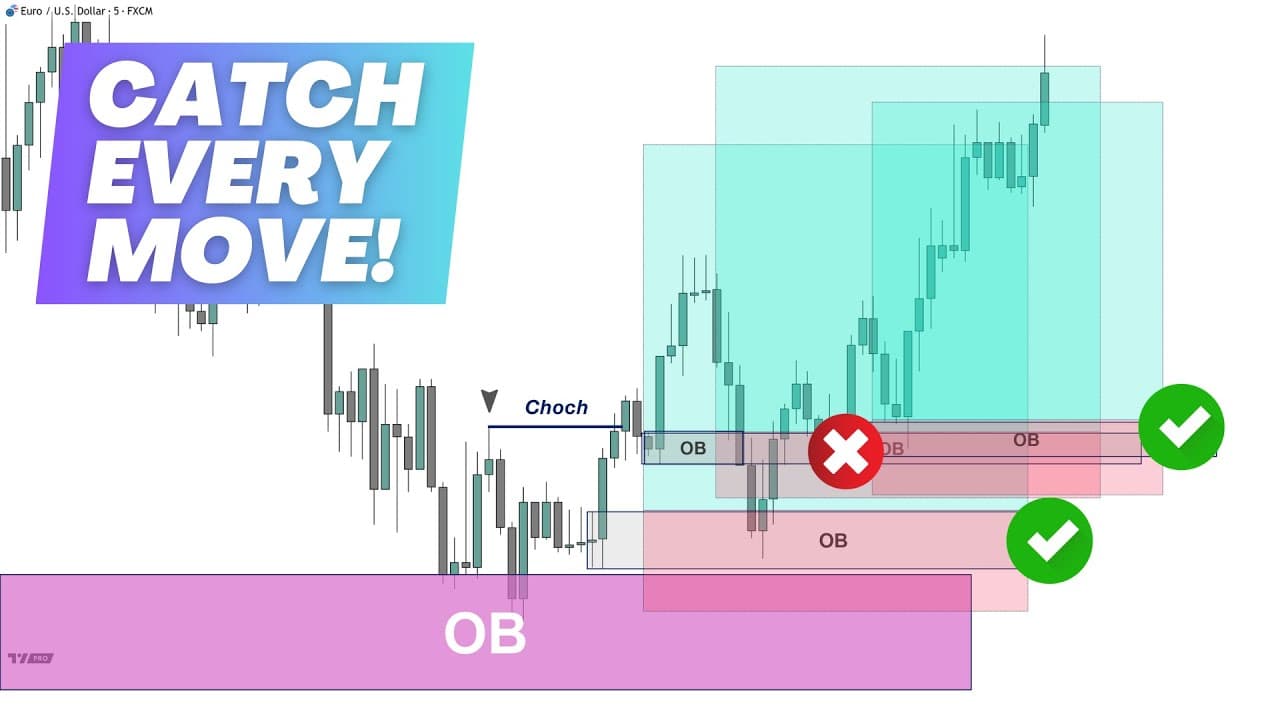
Order blocks are critical supply and demand zones in trading where large institutional orders create price imbalances. By combining order blocks with market structure analysis, traders can identify high-probability trade opportunities. This strategy is applicable across various markets, including forex, crypto, and stocks, and involves analyzing higher and lower time frames for optimal entry and exit points.
Transcript
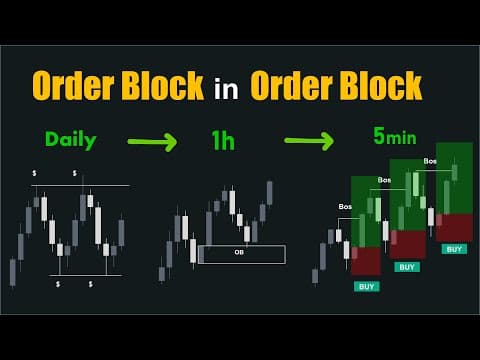
Hey guys, in this video we're going to explain one of the most powerful smart money trading strategies, the order block in order block setup by combining market structure with order blocks. This strategy helps you identify simple yet highquality trade opportunities. If you're interested in learning advanced trading concepts, strategies, entry techn... Read More
Key Insights
- Order blocks are optimized supply and demand areas where large orders create price imbalances.
- Market structure analysis is crucial for identifying the trend direction and potential trade opportunities.
- Order blocks form when price moves quickly, leaving fair value gaps that the market may revisit.
- High-quality order blocks align with the market structure, increasing their reliability as trading zones.
- Trading strategy involves analyzing higher time frames for trend direction and lower time frames for entry confirmation.
- The strategy can be applied to any asset class, including forex, crypto, and stocks.
- Risk management is essential, with a focus on maintaining a positive overall result despite potential losses.
- Back testing the strategy is recommended to assess its effectiveness before trading with real money.
Install to Summarize YouTube Videos and Get Transcripts
Explore YouTube Video Summarizer or Get YouTube Transcript Extractor
Questions & Answers
Q: How do order blocks function in trading?
Order blocks function as key supply and demand zones where large institutional orders create price imbalances. They form when the market moves rapidly, leaving fair value gaps. Traders use these zones to anticipate potential price reactions, as the market often returns to these areas to regain balance. By identifying these zones, traders can find high-probability trade opportunities and align their strategies with the prevailing market structure.
Q: What is the significance of market structure in trading?
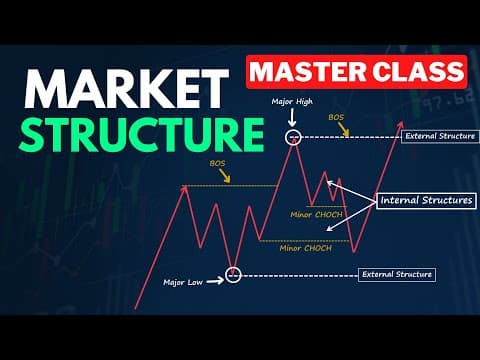
Market structure is significant in trading as it helps identify the trend direction and potential trade opportunities. By analyzing the formation of higher highs, higher lows, and changes in character, traders can determine whether the market is in an uptrend or downtrend. This understanding allows traders to align their strategies with the main trend, increasing the likelihood of successful trades by entering at optimal points within the market cycle.
Q: How can traders identify high-quality order blocks?
High-quality order blocks are identified by their alignment with market structure conditions. In an uptrend, bullish order blocks formed along the trend have a higher chance of rejecting price to the upside during pullbacks. Conversely, bearish order blocks in a downtrend signal strong selling opportunities. Traders should look for order blocks that coincide with significant market structure levels, such as changes in character, to increase the reliability of these zones as trade setups.
Q: What is the role of fair value gaps in order block trading?
Fair value gaps play a crucial role in order block trading as they indicate areas where price moved quickly, leaving unfilled orders. These gaps are created by large institutional trades and highlight zones where the market may return to fill these orders, creating potential trading opportunities. By marking the candle before the gap as an order block, traders can anticipate strong price reactions when the market revisits these areas, leveraging them for strategic trade entries.
Q: Why is risk management important in order block trading?
Risk management is vital in order block trading to ensure long-term success and protect trading capital. Even with a solid strategy, traders will encounter losing trades due to market unpredictability. By managing risk, such as limiting exposure to 2% per trade and not exceeding three open trades simultaneously, traders can mitigate potential losses. Consistent risk management allows traders to focus on achieving a positive overall result, despite the inherent risks in trading.
Q: How can traders use time frames effectively in this strategy?
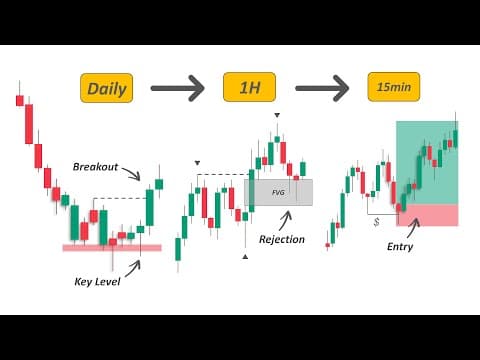
Traders use time frames effectively in this strategy by analyzing higher time frames to determine market direction and lower time frames for entry confirmation. The higher time frame provides the main trend context, while the lower time frame offers detailed price action insights for precise entry points. This approach helps traders align their trades with the prevailing trend and increases the accuracy of their entries, optimizing the risk-to-reward ratio for each trade.
Q: What steps should traders take before using this strategy with real money?
Before using this strategy with real money, traders should thoroughly back test it on historical data to assess its effectiveness and understand its nuances. This involves simulating trades based on past market conditions to evaluate the strategy's performance. Additionally, traders should refine their understanding of order blocks, market structure, and risk management practices. By doing so, they can build confidence in the strategy and ensure they are well-prepared for live trading scenarios.
Q: Can this trading strategy be applied to different asset classes?
Yes, this trading strategy can be applied to different asset classes, including forex, crypto, and stocks. The principles of order blocks and market structure are universal and relevant across various markets. Regardless of the asset class, traders should focus on identifying key supply and demand zones, aligning with the market trend, and applying effective risk management. This versatility makes the strategy a valuable tool for traders in diverse financial markets.
Summary & Key Takeaways
-
Order blocks are supply and demand zones where large institutional orders create price imbalances, making them key trading areas. By combining order blocks with market structure analysis, traders can identify high-probability trade opportunities across various markets. The strategy involves using higher time frames for trend direction and lower time frames for confirmation, emphasizing the importance of risk management and back testing.
-
To trade using order blocks, identify the market direction through market structure analysis, mark order blocks as key trading zones, and wait for a price pullback to these zones. Use lower time frames to confirm entry points, focusing on changes in character and the formation of new order blocks. This strategy is applicable to forex, crypto, and stocks, with a strong emphasis on managing risk.
-
The order block trading strategy involves analyzing market structure on higher time frames to identify trends and marking order blocks as potential trade zones. Traders should wait for price pullbacks and use lower time frames for entry confirmation. The strategy is versatile, applicable to various asset classes, and requires thorough back testing and disciplined risk management to achieve long-term success.
Read in Other Languages (beta)
Share This Summary 📚
Summarize YouTube Videos and Get Video Transcripts with 1-Click
Try YouTube Summary with ChatGPT & Claude or YouTube Transcript Generator
Explore More Summaries from Smart Risk 📚
Summarize YouTube Videos and Get Video Transcripts with 1-Click
Try YouTube Summary with ChatGPT & Claude or YouTube Transcript Generator